Author: Kartikey Dwivedi

  • Natural Parasite Cleanse for Dogs: The Ultimate Guide 2023

    Natural Parasite Cleanse for Dogs: The Ultimate Guide 2023

    Natural Parasite Cleanse for Dogs – You know as a dog owner how important it is to keep your pet healthy and happy. Parasite infestations are a regular health problem that dogs can have.

    Fleas, ticks, and worms are all examples of parasites that can make dogs feel bad and even hurt them in significant ways. 

    There are many commercial items to eliminate parasites, but some pet owners like to use natural remedies instead. 

    In this thorough guide, we’ll look at natural ways to eliminate parasites in dogs that work, so you can keep your pet safe and healthy.

    Understanding Common Parasites in Dogs: Fleas, Ticks, and Worms

    Parasites are unwelcome guests that can live in your pet’s body and cause pain, illness, and other problems. 

    It’s important to know what parasites most often affect dogs, how dangerous they can be, and what signs and symptoms to look out for.

    Types of parasites that commonly affect dogs

    Fleas: These tiny, wingless bugs can jump onto your dog’s fur and quickly spread, causing intense itching, skin irritation, and even allergic reactions. Flea bites can also cause dogs to get sick.

    Ticks: Ticks are spider-like creatures that stick to your dog’s skin and drink its blood. They can spread diseases like Lyme disease, and Rocky Mountain spotted fever to dogs, harming their health.

    Worms: Roundworms, hookworms, whipworms, and tapeworms are just some worms that can infect dogs. Dogs can get weak, lose weight, and have other health problems if they have these worms.

    The risks and health issues associated with parasite infestations

    Infestations of parasites can be very bad for your dog’s health. Some of the health problems and risks that come with bugs in dogs are:

    • Flea bites cause redness, itching, and swelling of the skin.
    • A serious tick infestation can lead to blood loss and anemia.
    • Diseases like Lyme disease, ehrlichiosis, and heartworm disease can be passed on by fleas, bugs, and worms.
    • Worms can cause problems with digestion, poor diet, and weight loss.

    How to tell if your dog has a parasite and what it looks like

    It’s important to stay alert and look for signs and symptoms that could mean your dog has parasites. 

    When dogs have parasites, these are some of the most common signs and symptoms:

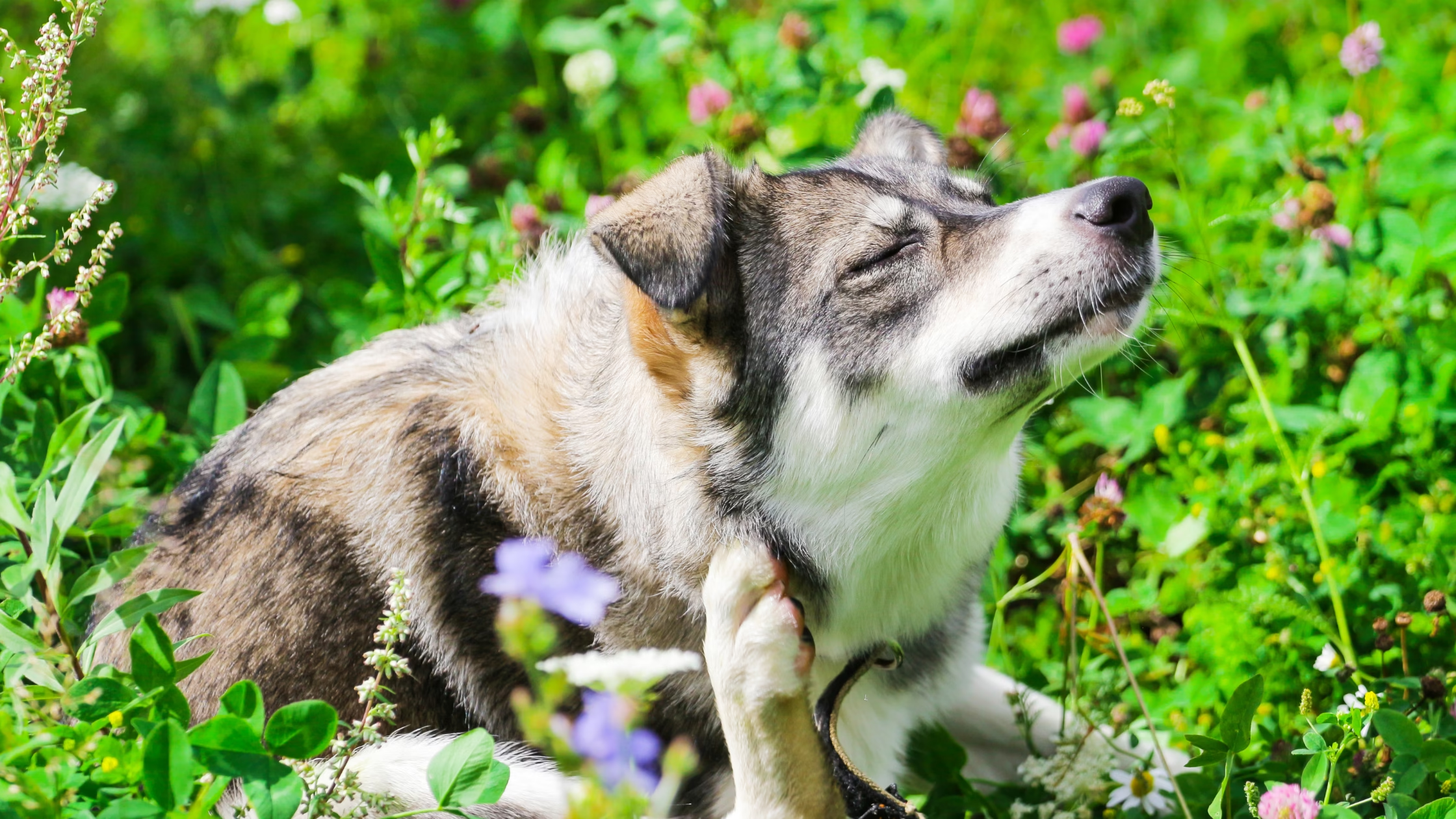
    • Scratching, kissing, or biting the skin too much.
    • Fleas, ticks, or worms are found in the fur or poop.
    • Redness, irritation, or infection of the skin.
    • Changes in hunger, loss of weight, or diarrhea.
    • Weakness, lack of energy, or less action.
    • Changes in the hair, like making it dull or losing its shine.

    As a good dog owner, it’s important to check your dog regularly for signs of parasites and take steps to keep them safe. 

    Talk to your vet about the best ways to protect your dog from fleas, ticks, and worms based on their needs and health.

    Benefits of Natural Parasite Cleanse for Dogs

    Controlling parasites is an important part of caring for a pet, and many owners choose natural treatments to keep their furry friends safe and healthy. 

    Natural ways to eliminate parasites in dogs have several advantages over commercial goods, and pet owners are becoming more aware of these benefits.

    Why some pet owners prefer natural remedies for parasite control

    Chemicals should be avoided: Most commercial items for getting rid of parasites contain harsh chemicals that can hurt dogs and cause side effects. 

    On the other hand, natural remedies are made from plant-based ingredients that are usually safe for dogs and don’t subject them to chemicals that could be dangerous.

    Reduced Risk of Toxicity: Some commercial items for getting rid of parasites, especially ones with chemicals like pyrethroids or organophosphates, can be harmful if too much is eaten or absorbed. 

    Most natural treatments with organic or herbal ingredients are less likely to make dogs sick.

    Eco-Friendly Option: Natural parasite cleanses for dogs are often thought to be better for the environment because they don’t contain artificial chemicals that can hurt rivers and wildlife when washed away or thrown away.

    Holistic Approach: When it comes to their pet’s health and well-being, many pet owners like to take a holistic approach, and natural parasite control fits in with this theory. 

    Natural treatments may help a dog’s health in general and can be used with other natural treatments or vitamins.

    Potential for Fewer Side Effects: Commercial items to eliminate parasites can sometimes cause side effects in dogs, such as skin irritations, allergies, or digestive problems. 

    When used as advised, natural remedies may have fewer side effects and be easier for sensitive or allergic dogs to handle.

    The advantages of using natural products for dogs

    Effective Against Parasites: Natural parasite cures for dogs can be just as good as commercial products at getting rid of fleas, ticks, and worms if used correctly and as part of a full program to get rid of parasites.

    Long-term Use: Natural treatments can often be used as a long-term way to get rid of parasites without having to apply chemicals often or give them to the person.

    Safe for Puppies and Older Dogs: Natural medicines are usually safe for puppies, older dogs, and dogs with health problems because they are usually made with milder ingredients and are less likely to cause side effects.

    Possible Health Benefits: Some natural items that kill parasites may also help dogs’ coats and skin stay healthy, boost their immune systems, or make it easier to digest food.

    Common concerns about commercial parasite control products

    Potential Side Effects: Some commercial parasite control products can cause dog side effects. These effects can range from mild skin irritations to more serious allergic responses or effects on the whole body.

    Chemical Exposure: Some dog owners may worry that their dogs could be exposed to strong chemicals in commercial parasite control products, especially if used often or for a long time.

    Effects on the environment: Using commercial products to eliminate parasites may add to pollution and hurt organisms that aren’t the goal, like helpful insects or wildlife.

    Resistance: Over time, parasites can become immune to some chemicals used in commercial goods. This makes them less effective at stopping infestations.

    As with any pet care choice, it’s important to talk to your vet about your options and choose the best way to keep your dog free of parasites based on its needs and health. 

    If you want to use natural remedies safely and effectively, do a lot of research, choose reputable products, and follow the manufacturer’s directions. 

    Regular tracking and preventive measures are key to keeping your furry friend parasite-free and healthy.

    Natural Remedies for Flea and Tick Control in Dogs
    Natural Remedies for Flea and Tick Control in Dogs |
    Natural Remedies for Flea and Tick Control in Dogs

    Fleas and ticks are common pests that can make dogs uncomfortable and hurt their health. 

    There are many commercial items for removing fleas and ticks, but some pet owners prefer natural remedies because they are safer and better for the environment. 

    Here are some harmless ways to protect your dog from fleas and ticks:

    Essential oils and herbs for repelling fleas and ticks

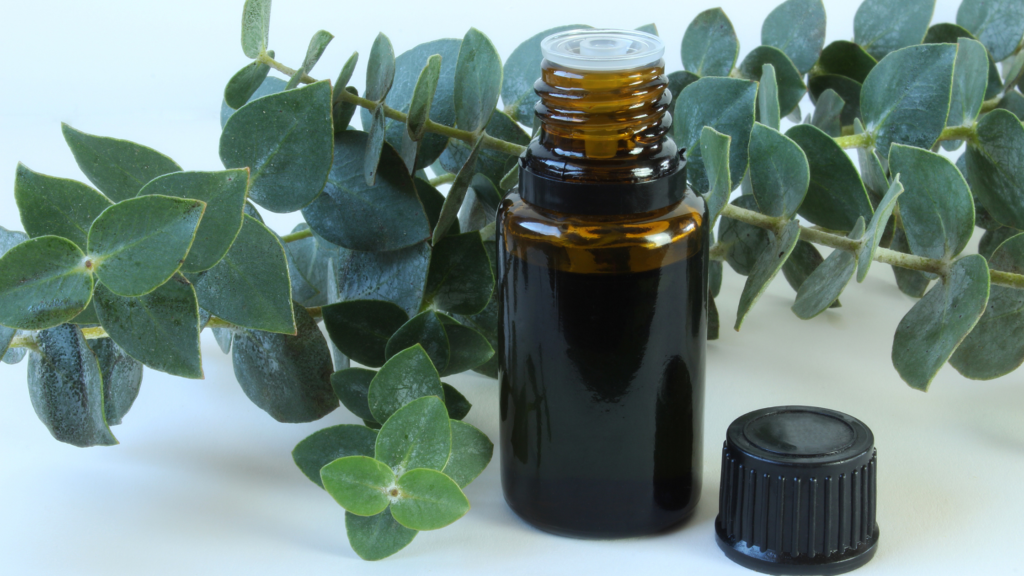
    Lemon Eucalyptus Oil: Lemon eucalyptus oil is a natural oil from the lemon eucalyptus tree. It has been shown to work well at keeping fleas and ticks away. It can be mixed with water to spray or with a carrier oil to put on a dog’s skin.

    Neem Oil: Neem oil comes from the neem tree. It kills insects and can keep fleas and ticks away. It can be mixed with water or other oils to spray or add to pet baths.

    Rosemary, Peppermint, and Lavender: Rosemary, Peppermint, and Lavender essential oils can keep fleas and ticks away. They can be mixed with water to spray or added to pet baths.

    Homemade flea and tick sprays and shampoos

    Vinegar Spray: Fleas and ticks can be kept away with a spray of equal parts water and white vinegar. It can be put on a dog’s fur but not near its eyes or mouth.

    Herbal Flea and Tick Spray: A natural flea and tick spray can be made by steeping dried herbs like rosemary, peppermint, and thyme in hot water and then straining the liquid. After it has cooled, it can be put on a dog’s fur.

    Homemade Herbal Shampoo: Natural ingredients like castile soap, neem oil, and essential oils can help keep fleas and ticks away while cleaning a dog’s hair.

    Natural flea and tick collars and powders for dogs

    Flea and Tick Collars: Some collars prevent fleas and ticks with natural ingredients like essential oils, neem oil, or cedarwood. Dogs can wear these collars, and they protect them from bugs all the time.

    Flea and Tick Powders: Some natural flea and tick powders for dogs, like those with diatomaceous earth, can kill and keep fleas and ticks away. You can put these powders on a dog’s body but avoid the eyes and mouth.

    It’s important to remember that natural remedies can keep fleas and ticks away, but they may not be as effective as commercial goods. 

    Before using a natural remedy on your dog, research, choose trusted products, and talk to your vet. 

    Also, always follow the directions from the maker for safe and correct use, and keep an eye on your dog for any signs of bad reactions. 

    Flea and tick infestations in dogs can be prevented by grooming them regularly, cleaning their bedding and living places, and using good hygiene.

    Worm prevention and treatment for dogs using natural methods

    Worm prevention and treatment for dogs using natural methods |
    Worm prevention and treatment for dogs using natural methods

    Worms are a common disease that can make dogs sick, and preventing and treating them is important for keeping their health in good shape. 

    There are commercial items to eliminate worms, but some pet owners like to use natural methods for a more holistic approach. 

    Here are some natural ways to treat and avoid worms in dogs:

    Herbal remedies for deworming dogs

    Wormwood: Wormwood is a plant that has been used for centuries because it kills parasites. Small amounts can be given to dogs as tea or extract or added as a dried or powdered herb to their food.

    Black Walnut: Another plant used to kill parasites is the black walnut. It can be given to dogs as medicine or added as dried or powdered leaves to their food.

    Pumpkin Seeds: An amino acid called cucurbitacin, found in pumpkin seeds, has been shown to kill parasites. Worms can be prevented and eliminated by mixing ground pumpkin seeds into a dog’s food or treating them.

    Worms can be prevented and treated with natural food supplements.

    Diatomaceous Earth: Diatomaceous earth is a natural material made from tiny algae called diatoms that have turned into fossils. It can be given as a supplement to a dog’s food, and it has been said to help avoid and get rid of worms by making them thirsty and hurting their outer shells.

    Coconut Oil: coconut oil can help fight parasites and supplement a dog’s food. It has been said to help avoid and treat worms by making the digestive tract an unfriendly place for parasites.

    Probiotics: Probiotics are good bacteria that help keep a dog’s digestive and immune systems healthy. They can be given to dogs as a supplement in the form of capsules or powders and have been said to help avoid and control worm infestations.

    Home remedies for eliminating worms in dogs

    Garlic: Garlic has been used naturally to treat dog worms for a long time. It can be put in a dog’s food in small amounts, but you should talk to a vet about the right amount because too much garlic can harm dogs.

    Papaya Seeds: Papaya seeds contain an enzyme called papain, which has been shown to kill parasites. To help eliminate worms, they can be ground up and added to a dog’s food or given as a treat.

    Raw Food Diet: A BARF (Biologically Appropriate Raw Food) diet, which means feeding dogs raw food, has been said to help avoid and treat worm infestations. 

    A raw food diet usually includes raw meat, bones, organs, and vegetables, and it can help improve a dog’s general health and immune system.

    It’s important to remember that natural ways to avoid and treat worms in dogs may not be as effective as commercial deworming products, and the infestation’s severity should be considered. 

    Talking to a vet is important to get the right evaluation, treatment, and dosage advice. 

    Dogs must also have good hygiene, clean their living places regularly, and get rid of their waste correctly to avoid getting worms.

    Proper Nutrition for Boosting Your Dog’s Immune System

    Dogs need a strong immune system to stay healthy and protect themselves from diseases and parasites. Dogs need good nutrition to keep their immune systems in good shape. 

    Here are some important things to know about giving your dog the right food to improve its immune system:

    The role of nutrition in maintaining a healthy immune system

    • A dog’s immune system works best when it gets the right food. A healthy, well-balanced food gives you all the vitamins, minerals, and antioxidants you need for a strong immune system.
    • Dogs with a healthy immune system can fight off parasitic infections like fleas, ticks, and worms by recognizing and killing the parasites before they can spread.
    • Protein, omega-3 fatty acids, and antioxidants are important nutrients that help dogs’ immune systems fight off infections, reduce inflammation, and improve their general health and well-being.

    Foods that can help prevent parasitic infestations in dogs

    Garlic: It has been said that garlic has natural qualities that keep fleas and ticks away. But it’s important to remember that dogs can get sick from too much garlic, so it should only be given in small amounts and under the supervision of a doctor.

    Pumpkin: Pumpkin has a lot of fiber, which can help a dog’s digestive system run smoothly. It can also help eliminate bugs by making you go to the bathroom more often.

    Carrots: Carrots have a lot of beta-carotene, which a dog’s body turns into vitamin A. Vitamin A is important for keeping your immune system strong and can help keep you from parasitic infections.

    Also Read: Rutabaga Cleanse for Dogs: The Perfect Detox for Your Dog!

    Nutritional supplements for supporting your dog’s immune system

    Probiotics: Probiotics are good bacteria that help keep a dog’s gut microbiome healthy, which is an important part of a dog’s defense system. 

    Probiotic pills can help dogs feel better about their digestion and boost their immune systems.

    Omega-3 Fatty Acids: Omega-3 fatty acids can help reduce inflammation and support a healthy immune reaction in dogs. 

    They are found in fish oil. Omega-3 pills can help dogs with allergies, skin problems, and other health problems that affect the immune system.

    Vitamin C: Vitamin C is an antioxidant that can help boost a dog’s immune system and help keep their health in general in good shape. 

    On the other hand, dogs can make their own vitamin C, so supplements are usually unnecessary unless a vet says so.

    Knowing that a dog’s immune system can only be kept healthy in several ways is important. 

    A dog’s general health and well-being also depend on exercising, drinking enough water, and living in a clean place. 

    You should always talk to a doctor about specific dietary suggestions and supplement dosages to ensure your dog’s nutritional needs are met.

    Environmental Management for Preventing Parasites in Dogs

    You need to do more than give your dog medicine to keep your dog from getting parasites. 

    Environmental management is key to keeping your dog’s surroundings clean and free of parasites. 

    Here are some tips and harmless ways to get rid of fleas, ticks, and worms in your dog’s environment:

    Tips for keeping your dog’s environment clean and parasite-free

    • Vacuum your home often, paying special attention to the floors, rugs, bedding, and upholstery where your dog spends most of its time. Vacuuming helps eliminate flea eggs, larvae, and adults, which lowers the number of fleas in your home.
    • Regularly washing your dog’s bed and toys in hot water will kill flea eggs, larvae, or ticks hiding in them.
    • Keep your yard and other outdoor areas clean and in good shape. Mow the grass, trim the bushes often, and eliminate any trash or piles of leaves that fleas and ticks can hide in.
    • Limit your dog’s time in places with lots of trees, tall grass, and still water, as this is where ticks and other parasites like to live.
    • Pick up your dog’s poop immediately to keep worm eggs from spreading around your yard.

    Natural ways to control fleas, ticks, and worms in your dog’s surroundings

    Diatomaceous Earth: Diatomaceous earth is a natural powder made from ancient algae that can eliminate fleas, ticks, and worms around your dog. It works by drying out the parasites and killing them on touch.

    Nematodes: Nematodes are tiny worms that can be used to get rid of fleas, ticks, and other insects in your yard in a harmless way. They eat the parasites’ eggs, which reduces the number of parasites.

    Essential Oils: Some essential oils, such as cedarwood, eucalyptus, and lemon, keep fleas and ticks away. You can use them to make sprays or diffusers to keep these bugs away from your dog.

    Proper hygiene practices for preventing parasitic infestations in dogs

    • You should regularly brush your dog’s body to remove loose hair and fleas or ticks. This can also help you find any early signs of an infection.
    • If you keep your dog’s nails short, it won’t be able to scratch and eat flea or tick eggs when it cleans itself.
    • Don’t let your dog play with other animals that might have parasites, especially in places like dog parks or training facilities where parasites are common.
    • To keep bugs from spreading to other parts of your home, wash your hands well with soap and water after playing with or cleaning up after your dog.

    By taking care of the surroundings and keeping them clean, you can make it less inviting for parasites to live in, which lowers the chance that they will infest your dog. 

    But it’s important to remember that these natural methods might not work as well as prescription drugs for severe infestations. 

    It’s always best to talk to your vet about how to avoid and eliminate parasites.

    Holistic Approaches to Parasite Control for Dogs

    Some dog owners prefer natural or alternative ways to keep parasites away from their dogs instead of traditional methods. 

    These methods focus on using natural treatments and therapies to boost the immune system and keep the health and well-being of the whole person. 

    Here are some ways to look at the whole picture:

    Homeopathy and Acupuncture for parasite control in Dogs

    Homeopathy is an alternative treatment that uses substances diluted to help the body heal itself. Some homeopathic medicines can help boost the body’s immune system and stop or eliminate dog parasites. 

    Talk to a trained homeopathic veterinarian about the best treatments and doses for your dog.

    Acupuncture is a form of traditional Chinese medicine that includes putting thin needles into certain points on the body to increase energy flow and help the body heal. 

    As part of a holistic plan to get rid of parasites in dogs, Acupuncture is thought to help boost the immune system and improve the health of the dog as a whole.

    Herbal remedies for strengthening your dog’s immune system

    Some herbs are known to boost the immune system and can be used as part of a balanced plan to get rid of parasites in dogs. Herbs like echinacea, astragalus, and garlic are examples of these. 

    But it’s important to remember that not all herbs are good for dogs, and dosages should be considered carefully. 

    Talk to a trained herbalist or holistic vet about which herbs and how much to give your dog.

    Alternative therapies for maintaining your dog’s overall health and well-being

    Alternative therapies, like herbs that boost the immune system, can help keep your dog’s overall health and well-being, which in turn can help their immune system and make them less likely to get parasites. 

    Some examples of alternative treatments are chiropractic care, massage, and hydrotherapy. 

    These therapies may improve your dog’s physical and mental health, making them stronger against parasites.

    It’s important to remember that holistic ways to keep parasites away from dogs might not have as much scientific proof or regulatory approval as traditional ways. 

    Before using alternative treatments or therapies on your dog, you should talk to a trained holistic veterinarian or another trusted health professional. 

    They can give you good advice and suggestions based on your dog’s specific health needs and situation. 

    Even if you choose to use holistic methods to care for your dog, keeping up with your vet’s recommendations for regular checkups and parasite protection is important.

    Also Read: The Ultimate Dog Training Checklist: Train Your Pup Like a Pro!

    Conclusion.

    Keeping your dog free of parasites is important for its health and happiness. 

    You can get rid of parasites on your furry friend naturally by using this guide’s tips and remedies. 

    By learning about common parasites, using natural remedies, ensuring your dog gets the right nutrition, taking care of the environment, 

    and thinking about holistic approaches, you can successfully clean your dog of parasites and keep them from returning. 

    Before changing your dog’s health routine, you should always talk to your vet first. 

    Using these natural methods, you can ensure your dog is healthy, happy, and free of parasites.
  • The Ultimate Dog Training Checklist: Train Your Pup Like a Pro!

    The Ultimate Dog Training Checklist: Train Your Pup Like a Pro!

    Bringing a new dog home can be exciting and fun, but it can also be stressful. Training is one of the most important parts of owning a dog.

    Training your dog can help ensure it is well-behaved, listens to you, and is happy. But where should you start? There are so many things to think about that it can be hard to know where to start.

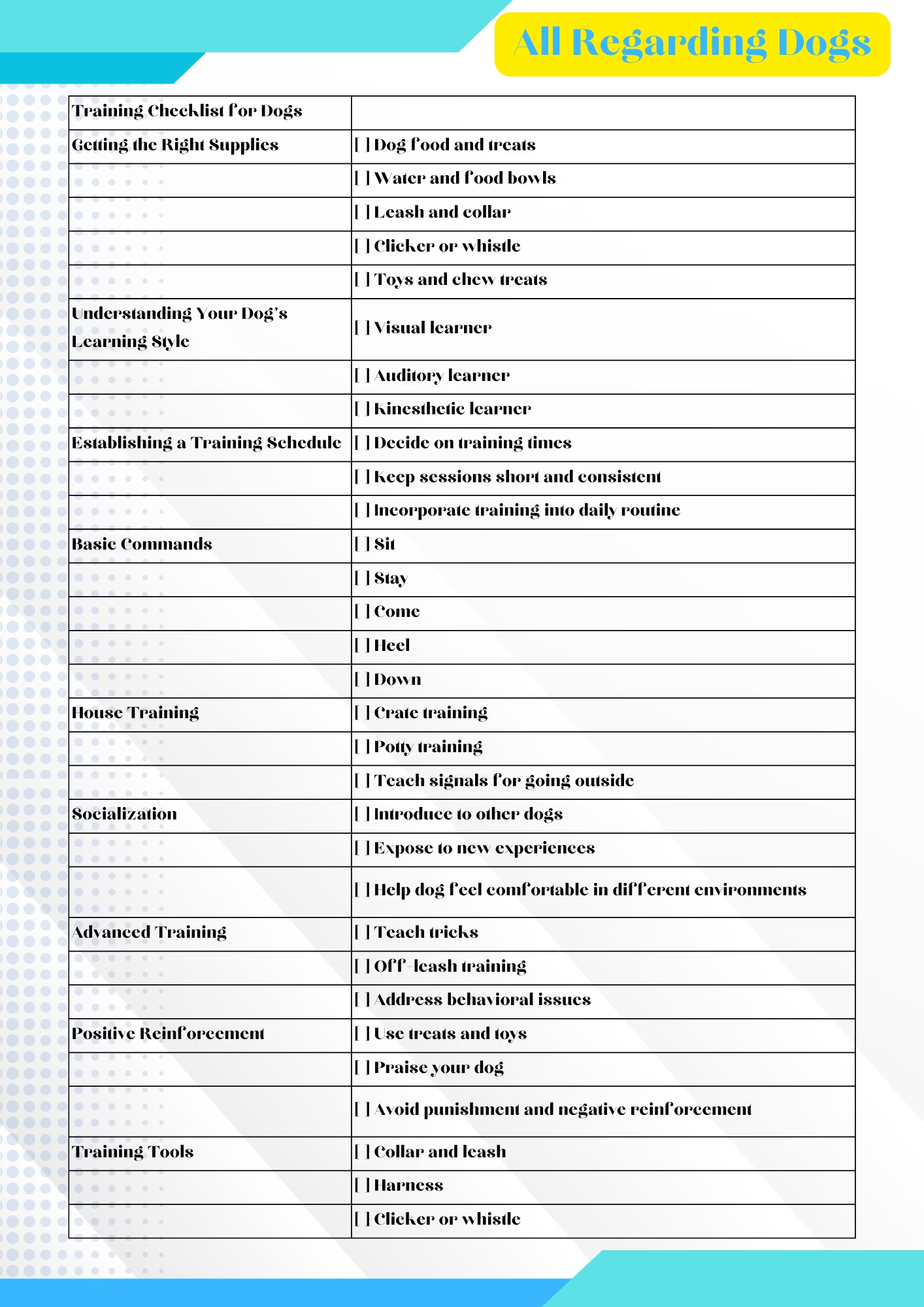
    So, we made a list of the most important things to do when teaching a dog. This Ultimate Dog Training Checklist has everything you need to know to start training your pet friend.

    Dog Training Checklist: Getting Started

    The first step to teaching a dog well is to devise a plan. Making a list of jobs during training can help you cover all the basics.

    Here are some important things to include on your training list for your dog:

    1. Preparing for Training: Setting Yourself Up for Success

    Preparing for dog training is very important if you want it to go well. Here are some important things to know before you start:

    Getting the Right Supplies

    It’s important to ensure you have everything you need before teaching your dog. Among the things you will need are the following:

    Treats: Use treats that your dog likes and that is of good quality to excite them about training.

    Toys: Dogs love to play, and toys can be a great way to keep them interested while being trained.

    Collar and leash: Get your dog a strong collar and a lead that fits well.

    Clicker: Clickers are useful for teaching with positive reinforcement because they make a clear sound that your dog can easily link to a treat.

    Treat pouch: During training classes, a treat pouch can help you keep your treats organized and easy to get to.

    Understanding Your Dog’s Learning Style

    Dogs, like people, have different learning styles. Some dogs learn best by seeing things, while others learn best by hearing or feeling things. 

    Knowing how your dog learns, you can adjust your teaching methods to meet their needs.

    Establishing a Training Schedule

    When teaching your dog, it’s important to be consistent. 

    Setting up a training plan can help you stay on track and let your dog know what to expect from you. 

    Try to train simultaneously every day and keep your workouts short and focused.

    Getting yourself and your dog ready for training will give you the best chance of doing well. 

    With the right tools, an understanding of how your dog learns, and a consistent training routine, you’ll be well on your way to reaching your training goals.

    2. Basic Commands: The Foundation of Obedience Training

    Basic commands are the basis for teaching a dog to obey. 

    By teaching your dog these basic directions, you can talk to your furry friend. 

    Here are the five most important orders every dog should know:

    Sit

    Telling your dog to sit is one of the easiest things you can teach him. 

    Start by holding a treat above your dog’s head and moving it back to get it to sit. 

    Once your dog is sitting, please give them the treat and praise.

    Stay

    The stay command is a must if you want to keep your dog safe in scenarios that could be dangerous. 

    Start by asking your dog to sit, then put your hand up like a stop sign and say, “Stay.” 

    As you repeat the order, gradually move farther away from your dog. 

    Give your dog a treat and some praise when they stay in one place.

    Come

    The “come” order is very important to keep your dog under control and stop it from running away. 

    First, get your dog’s attention, and then say “Come” in a happy, excited voice. 

    When your dog comes to you, could you give it a treat and some compliments?

    Heel

    Telling your dog to heel is a good way to keep them under control while walking them on a leash. 

    Start by putting a treat at your dog’s nose level with your left hand. Then say “heel” and begin to walk. 

    If your dog pulls, stop and tell him “no.” When your dog returns to you, give them a treat and some praise.

    Down

    Telling your dog to “down” is a great way to get them to calm down and chill out. 

    Start by asking your dog to sit. Then hold a treat before its nose and slowly lower it to the ground while saying “down.” 

    When your dog lays down, could you give it a treat and a lot of praise?

    By teaching your dog these simple commands, you’ll set them up for success in all parts of their life. 

    Remember to be calm and steady, and always give treats and praise for good behavior.

    3. House Training: Essential Tips for a Clean Home

    House training is an important part of having a dog, even though it can sometimes be hard. 

    But if you take the right steps and are patient, you can teach your dog to go outside and clean up after itself. 

    Here are some important tips for teaching your dog where the toilet is:

    Crate Training

    Crate training is a good way to teach your dog where the toilet is. 

    Start by slowly showing your dog the crate and getting them used to it. 

    Use good things, like treats and praise, to get your dog to go inside the box. 

    Over time, your dog will learn that the crate is a safe and cozy place and will be less likely to have accidents inside.

    Potty Training

    Potty training is an important part of learning how to live in a house. 

    Please set up a regular time to take your dog outside, like after it eats or when it wakes up from a nap. 

    Take your dog to the same spot every time and use a command like “go potty” to help them connect the behavior with an order. 

    When your dog safely goes outside, give them treats and praise.

    Teaching Your Dog to Signal When They Need to Go Out

    Another good way to house-train your dog is to teach it to show you when it needs to go out. 

    Hang a bell on your door and ring it whenever you take your dog outside. 

    Your dog will eventually figure out how to ring the bell on their own when they need to go outside. 

    Please give them a treat and praise whenever your dog rings the bell.

    Remember that house training takes time and patience and that mistakes will happen. 

    Be steady with your training, and always praise good behavior. 

    With the right plan, you can teach your dog to go to the toilet outside and have a clean, happy home.

    4. Socialization: Helping Your Dog Feel Confident and Happy

    Socialization is an important part of training your dog because it can help them feel happy, confident, and at ease in many different settings. 

    Here are some ways to help your dog make friends:

    Introducing Your Dog to Other Dogs

    It’s important to let your dog meet other dogs to learn how to get along with others. 

    Start by letting your dog play with calm, well-behaved pets. 

    Gradually get more involved, and always watch your dog when they are playing. 

    Reward good behavior, like playing well with other dogs, with positive feedback.

    Exposing Your Dog to New Experiences

    Introducing your dog to new things can help them feel more at ease in different settings. 

    Take your dog to new places, like the park or the beach, so they can see, hear, and smell new things. 

    Reward your dog with treats and praise when they go to new places.

    Helping Your Dog Feel Comfortable in Different Environments

    It’s important for your dog’s socialization that you help them feel at home in different places. 

    Gradually take your dog to new places, like busy or noisy streets or crowds, and reward good behavior with positive feedback. 

    Your dog will get used to being comfortable in different places over time.

    Remember that becoming social is a process that goes on over time and needs consistency and patience. 

    Make sure to watch your dog whenever they are around other dogs or in a new place. 

    You can make your dog feel happy and confident in many situations with the right technique.

    5. Advanced Training: Building on the Basics

    You can move on to more advanced training once your dog knows the basic orders and is used to meeting new people. 

    Here are some ideas to think about:

    Teaching Tricks

    Teaching your dog tricks can be fun to spend time with your pet and help them learn new things. 

    Teaching your dog tricks like “rollover” or “play dead” can be fun for both of you. 

    Reward good behavior with positive feedback, and break the trick down into small steps to make it easier for your dog to learn.

    Off-Leash Training

    If you want your dog to have more freedom and do things outside without being tied to a leash, off-leash training is necessary. 

    Start by training your dog to be off-leash in a safe, enclosed area, eventually making it harder. 

    Use positive feedback to praise your dog when it stays close to you and comes back when you call it.

    Addressing Behavioral Issues

    If your dog has bad habits like barking too much or jumping on people, you should handle these problems. 

    Start by figuring out why your dog is acting that way. 

    Then, use positive feedback training to teach your dog how to act instead. 

    If the problem continues, you should work with a skilled dog trainer.

    Training that is more complicated than simple obedience training takes more time and patience. 

    Be patient and break each skill down into small steps. 

    Your dog can learn new skills and behaviors if you train it regularly and give positive feedback.

    6. Positive Reinforcement: The Key to Success

    Positive feedback is the most effective and kind way to teach your dog new things when it comes to training. 

    Positive feedback is when you give a person treats, toys, or praise for good behavior. 

    Here are some ways to train your dog with good reinforcement:

    Using Treats and Toys

    Treats and toys are great ways to get a dog to do something. Use small, soft treats and toys that your dog loves. 

    When your dog does what you want, like sit or stay, immediately give it a treat or toy.

    Praising Your Dog

    Dogs respond very well to praise, and it’s free! Use a happy voice and tell your dog many good things when it does something right. 

    Say “good boy/girl” or “good job” when your dog sits when you tell it to.

    Avoiding Punishment and Negative Reinforcement

    Punishing your dog for bad behavior can backfire and hurt your pet’s trust in you. 

    Instead, you should pay attention to good behavior and ignore bad behavior. 

    If your dog does something you don’t like, turn their attention to something they’re doing well and treat them for that instead.

    Positive feedback is the best way to teach your dog new behaviors, but it can take time and patience. 

    Your dog can learn to obey you, act well, and be happy with consistent training and good reinforcement.

    7. Training Tools: Choosing the Right Gear

    It’s important to have the right tools to train your dog well. 

    Here are some of the most popular tools for training and how to use them well:

    Collars and Leashes

    For basic manners training, you need a collar and leash that fit well. 

    Choose a collar that fits your dog’s neck well without being too tight or open. 

    Most dogs would do well with a flat collar made of cotton or leather. 

    A standard six-foot leash is the best choice for teaching. 

    It would help if you didn’t use a flexible leash because you won’t have full control over your dog.

    Harnesses

    A harness may be better than a collar if your dog pulls on the leash or has a medical condition that makes having a collar uncomfortable. 

    A front-clip harness can help stop your dog from pulling, while a back-clip harness may be comfier for dogs with breathing problems.

    Clickers and Whistles

    You can use clickers and whistles to train and talk to your dog. 

    Clickers make a clear clicking sound that tells your dog they did something right, while whistles can be used to get your dog’s attention or send directions from a distance. 

    If you use these sounds often, your dog will learn to associate them with good things and will be likelier to do what you want.

    8. Training Tips for Specific Breeds: Addressing Breed-Specific Challenges

    When teaching a dog, it’s important to remember that different breeds have different personalities and temperaments. 

    This means some dog breeds may respond better to certain teaching methods than others. 

    In this part, we’ll look at training tips for different breeds.

    Training Tips for High-Energy Breeds

    Border Collies, Australian Shepherds, and Siberian Huskies all have a lot of energy and need a lot of exercises and mental activity. 

    Without it, they can get out of hand and be hard to control. 

    To train a high-energy breed, it’s important to: 

    • Give the dog many chances to exercise, like long walks, runs, and playtime in a fenced yard or dog park.
    • Use good behavior as a way to show appreciation.
    • Use puzzles and interactive toys to keep their minds busy.
    • Teach the dog orders like “fetch” and “go find it” that let them use their energy well.
    • Don’t use physical punishment or negative rewards, which can lead to fear and aggression.

    Training Tips for Stubborn Breeds

    Dogs like Beagles, Basset Hounds, and Dachshunds that are stubborn and want to do their own thing can be hard to train. 

    To train a stubborn breed, it’s important to:

    • It’s important to be patient and consistent when teaching a stubborn breed.
    • Use treats with high value as rewards for good behavior.
    • Keep training short and on point.
    • Use a strong but kind voice.
    • Don’t fight with the dog over who is in charge.

    Training Tips for Large Breeds

    Due to their size and strength, big dogs like Great Danes, Mastiffs, and Saint Bernards need different training methods. 

    To train a large breed, it’s important to: 

    • Reward good behavior with positive feedback
    • Start teaching the dog when it is young before it gets too big to handle.
    • Use a strong collar and leash; consider using a harness if you want more control.
    • Teach simple commands like “sit,” “stay,” and “come.”
    • Don’t use physical force to control the dog because it could hurt or make it angry.

    If you know your dog’s breed needs, you can change how you train them to help them do well. 

    Use positive feedback to teach your dog to be good and listen to you if you are patient and consistent.

    Conclusion

    In conclusion, you must train your dog to be a good pet owner. 

    You can help your dog become a happy, well-behaved part of your family by using a training checklist and positive reinforcement. 

    Remember to be gentle and consistent, and deal with any behavior problems as they come up. 

    With the right tools and methods, you can build a strong relationship with your dog and ensure they are a joy to be around for years.

  • Can Dogs Smell Shrooms? 5 Best Tips for Shroom Safety

    Can Dogs Smell Shrooms? 5 Best Tips for Shroom Safety

    Dogs are known for having a great sense of smell, so police often use them to find drugs, bombs, and other illegal items. People may wonder if dogs can smell psilocybin shrooms because they are becoming increasingly famous as recreational drugs. In this piece, we’ll look at dogs’ sense of smell and ability to find things to answer the question: Can dogs smell shrooms?

    Understanding Dogs’ Sense of Smell

    Understanding Dogs' Sense of Smell
    Understanding Dogs’ Sense of Smell

    Dogs have an amazing sense of smell that is much better than ours. Dogs have more than 300 million olfactory sensors in their noses, while people only have about 6 million.

    In addition to having more smell sensors, dogs also have a part of their brain that is 40 times bigger than the same part in a human brain used to analyze smells.

    Because their sense of smell is much better than ours, dogs can smell many different smells, even ones we can’t.

    Dogs can smell a single drop of blood in a gallon of water or the smell of a hidden bomb in a crowded place, for example.

    Dogs can also tell the difference between different smells and sort them. Because of this, they are often used for search and rescue missions and to find drugs and bombs.

    Their sense of smell is so good that they can find certain smells even when buried underground or wrapped in layers of plastic.

    Dogs have a very strong sense of smell, but they also use their noses in other ways, like to talk to other dogs and find their way around.

    They can also smell changes in a person’s body chemistry, telling them about things like low blood sugar or the start of a seizure.

    Overall, dogs’ sense of smell is a unique and amazing trait that lets them see the world in a way that is very different from how people do.

    What are Shrooms? How do Psilocybin Shrooms work?

    What are  Shrooms?
    What are Shrooms?

    What are Shrooms?

    Psilocybin shrooms, also called “magic mushrooms,” are a fungus that contains psilocybin, a substance that makes people feel high.

    Psilocybin is a naturally occurring drug that can change your state of mind and make your senses feel very strong.

    The effects of psilocybin depend on the person taking it, how much they take it, and where they take it.

    Some say they feel happy, more creative, and connected to the world around them. Some people may feel anxious, paranoid, or even have scary dreams.

    Psilocybin mushrooms have been used in many countries worldwide for a long time, usually for spiritual or medical reasons.

    People have also used them for fun, especially in the last few years, as views toward psychedelic drugs have loosened.

    Even though psilocybin mushrooms are not physically addictive, they can still be dangerous, especially for people with mental health problems or prone to panic attacks or anxiety.

    In many places, including the United States, it is against the law to own, sell, or use psilocybin mushrooms.

    Can Dogs Smell Shrooms?

    Dogs have a great sense of smell and are known for being able to smell many different things, including drugs and other illegal substances. This makes me wonder if dogs can smell mushrooms.

    Yes, psilocybin mushrooms can be smelled by dogs. Psilocybin has a distinct smell that people might not be able to pick up on immediately, but dogs can smell it.

    If you have psilocybin mushrooms, a trained tracking dog can let the police know. Drug detection dogs are often used at airports, border lines, and other places to find illegal substances, like psilocybin mushrooms.

    It’s important to remember that dogs can smell psilocybin mushrooms, but that doesn’t mean they can always help the police.

    Dogs can be taught to smell certain things but can also be affected by their owners or surroundings. Also, not all dogs have been trained to find psilocybin mushrooms, so their ability can range.

    If you own a dog, it’s also important to know that psilocybin mushrooms can be dangerous for your pet.

    Even though psilocybin mushrooms don’t usually smell appealing to dogs, they may still eat them if they find them.

    Psilocybin can poison dogs, making them throw up, have diarrhea, and have seizures. It can even be deadly in the worst cases.

    In conclusion, dogs can smell psilocybin mushrooms, but it’s not a perfect science to use them in law enforcement. As a pet owner, it’s important to keep your dog safe and away from possible dangers like psilocybin mushrooms.

    The Science Behind Dogs That Can Find Drugs

    Drug-sniffing dogs are a useful tool for law enforcement, and you can see them more and more often at airports, border lines, and other places where illegal drugs might be.

    These dogs have been taught to find many drugs, such as marijuana, cocaine, heroin, and methamphetamine.

    The science behind dogs that can find drugs is based on how well they can smell. The part of a dog’s brain used to analyze smells is much bigger than the part of a human brain that does the same thing.

    They also have more than 300 million smell sensors in their noses, while people only have 6 million. Because of their strong sense of smell, they can smell even small amounts of drugs that people might not be able to.

    Dogs that can sniff out drugs are trained with conditioning and positive reward. During training, dogs are introduced to the smell of different drugs and learn to associate that smell with a reward, like a treat or a toy.

    As they get better at finding the smell, the training gets harder and more complicated until they can find drugs in various situations.

    Dogs sniffing drugs can be taught to recognize certain drugs or a wide range of chemicals.

    They can also be taught to find drugs in different ways, like when they are in powder, liquid, or even when they are hidden in items.

    But it’s important to remember that drug detection dogs could be better.

    Their ability to find drugs depends on many things, such as the type and quality of the drug, the surroundings, how well the dog and its handler have been trained, and how much experience they have.

    Law enforcement has found that dogs that can sniff out drugs are useful tools. However, there are some worries about how they are used, especially regarding false positives and possible biases.

    There are also worries about the dogs’ health and safety, especially in high-stress settings.

    Overall, drug detection dogs are a complicated topic. They should be carefully examined to ensure they are used fairly and effectively.

    Also Read: Biocan L Vaccine for Dogs: Best Guide 2023

    Whether or not it’s legal to have psilocybin mushrooms?

    Whether or not you can have psilocybin mushrooms, also called “magic mushrooms,” depends on where you live.

    Under the federal Controlled Substances Act, psilocybin mushrooms are a Schedule I controlled drug, which means it is against the law to own, sell, or use them in the United States.

    This classification is based on the idea that psilocybin mushrooms have a high potential for misuse, have no accepted medical use, and are unsafe to use even when supervised by a doctor.

    But in the US, psilocybin mushrooms are no longer illegal in some states and cities. For example, in 2019, Denver was the first city in the US to stop making psilocybin mushrooms illegal.

    This made them the lowest priority for law enforcement and stopped the city from prosecuting or arresting people for having, using, or growing them.

    Since then, other towns like Oakland and Santa Cruz have done the same.

    Some states have also made it okay to use psilocybin mushrooms for medical reasons. For example, in November 2020, Oregon became the first US state to allow the use of psilocybin mushrooms for mental health care in a supervised setting.

    This means qualified therapists can use psilocybin mushrooms to help people with depression, anxiety, and other mental health problems.

    Even in states or towns where psilocybin mushrooms are no longer illegal, they are still against the law at the federal level, and if you have them or use them, you could be prosecuted by the feds. Also, federal and state laws make it illegal to sell or give away psilocybin mushrooms.

    In conclusion, whether or not it’s legal to own psilocybin mushrooms is complicated and always changing.

    Before you own or use them, you should know the law in your area. Also, it’s important to know that psilocybin mushrooms can have risks and side effects, so they should only be used under the supervision of a medical professional.

    Source for this Legal info – Wikipedia.

    How to Keep Your Dog Safe Near Mushrooms

    As a responsible pet owner, you should know that psilocybin mushrooms, also called “magic mushrooms,” can pose health and safety risks to your dog.

    Even though psilocybin mushrooms don’t usually smell or taste good to dogs, they can still eat them by accident if left in places where they grow, like woods or fields.

    The effects of psilocybin mushrooms on dogs can differ based on how much they eat and how sensitive each dog is.

    If a dog eats psilocybin mushrooms, it can cause a wide range of symptoms, such as vomiting, diarrhea, tiredness, anger, and changes in behavior. It can cause seizures, coma, or even death in the worst cases.

    Here are some tips to keep your dog safe around psilocybin mushrooms:

    1. When you walk your dog in a place where mushrooms grow, could you keep it on a leash? This will help keep them from eating mushrooms by chance.
    2. Be aware of the symptoms of mushroom poisoning in dogs, which can include vomiting, diarrhea, lethargy, restlessness, and changes in behavior. If you think your dog has eaten mushrooms, call your vet immediately.
    3. Know what mushrooms grow in your area and how to tell them apart. This will help you avoid places where toxic mushrooms might be growing.
    4. If you think you have psilocybin mushrooms growing in your yard, immediately remove them so your dog doesn’t eat them by chance.
    5. Keep your dog away from psilocybin mushrooms and any other drugs or chemicals. This means putting them in cases hard for your dog to open and keeping them out of places where your dog can get to them.

    In conclusion, psilocybin mushrooms can be dangerous to your dog’s health and safety, but you can keep your dog safe by being aware of the risks and taking steps to keep your dog from eating them by chance. If you think your dog has eaten psilocybin mushrooms, call your vet immediately.

    Also Read : Are Praying Mantises Dangerous to Dogs? Best Guide

    Frequently asked questions 

    Can shrooms be smelled by dogs?

    Yes, dogs have a good sense of smell and can pick up on many smells, including psilocybin mushrooms.

    Can drug dogs smell shrooms?

    Yes, dogs have been taught to sniff many drugs, including psilocybin mushrooms.

    Can police dogs smell shrooms?

    Yes, police dogs are often taught to sniff out psilocybin mushrooms and other illegal drugs.

    How well do dogs sniff out mushrooms?

    Dogs can be taught to find psilocybin mushrooms with high accuracy, but their success rate depends on the dog and how well it has been trained.

    Do dogs like the way that shrooms smell?

    Psilocybin mushrooms don’t usually smell or taste good to dogs, but they can still eat them by accident if left where they grow.

    What are the signs that a dog has eaten too many shrooms?

    Dogs can get sick from eating psilocybin mushrooms if they vomit, have diarrhea, feel tired, get angry, or act differently. It can cause seizures, coma, or even death in the worst cases.

    How can I keep my dog from eating shrooms by accident?

    To keep your dog from eating psilocybin mushrooms by accident, keep them on a leash when walking in areas where mushrooms grow, know the signs of mushroom poisoning, know the common types of mushrooms in your area and how to identify them, remove mushrooms from your yard, and keep psilocybin mushrooms and other drugs out of reach of your dog.

    Can dogs be taught to find drugs other than shrooms?

    Yes, dogs can be taught to sniff out drugs like weed, cocaine, heroin, and methamphetamine. They are often used by police to find illegal drugs and stop the trade of drugs.

    The Implications of Dogs Being Able to Find Things

    In conclusion, dogs have a great sense of smell that has been used for many things, like finding drugs. Dogs have been taught to find drugs, like psilocybin mushrooms, with high accuracy.

    Law enforcement has used this skill to help find illegal drugs and stop the drug trade.

    But using dogs to find drugs had also raised ethical questions, especially when the dogs reacted as if drugs were present when they weren’t.

    This can lead to people being wrongfully arrested and searched, hurting their privacy and civil rights.

    Also, it’s important to know the possible health and safety risks that drugs, like psilocybin mushrooms, can cause to dogs.

    As responsible pet owners, it’s important to stop dogs from eating drugs by mistake and know what to look for if your dog has been poisoned.

    Overall, dogs’ ability to find things is complicated and has many effects. Even though a dog’s sense of smell can be very helpful in some situations, it’s important to consider the moral and practical aspects of using it and keeping the dog safe and healthy.

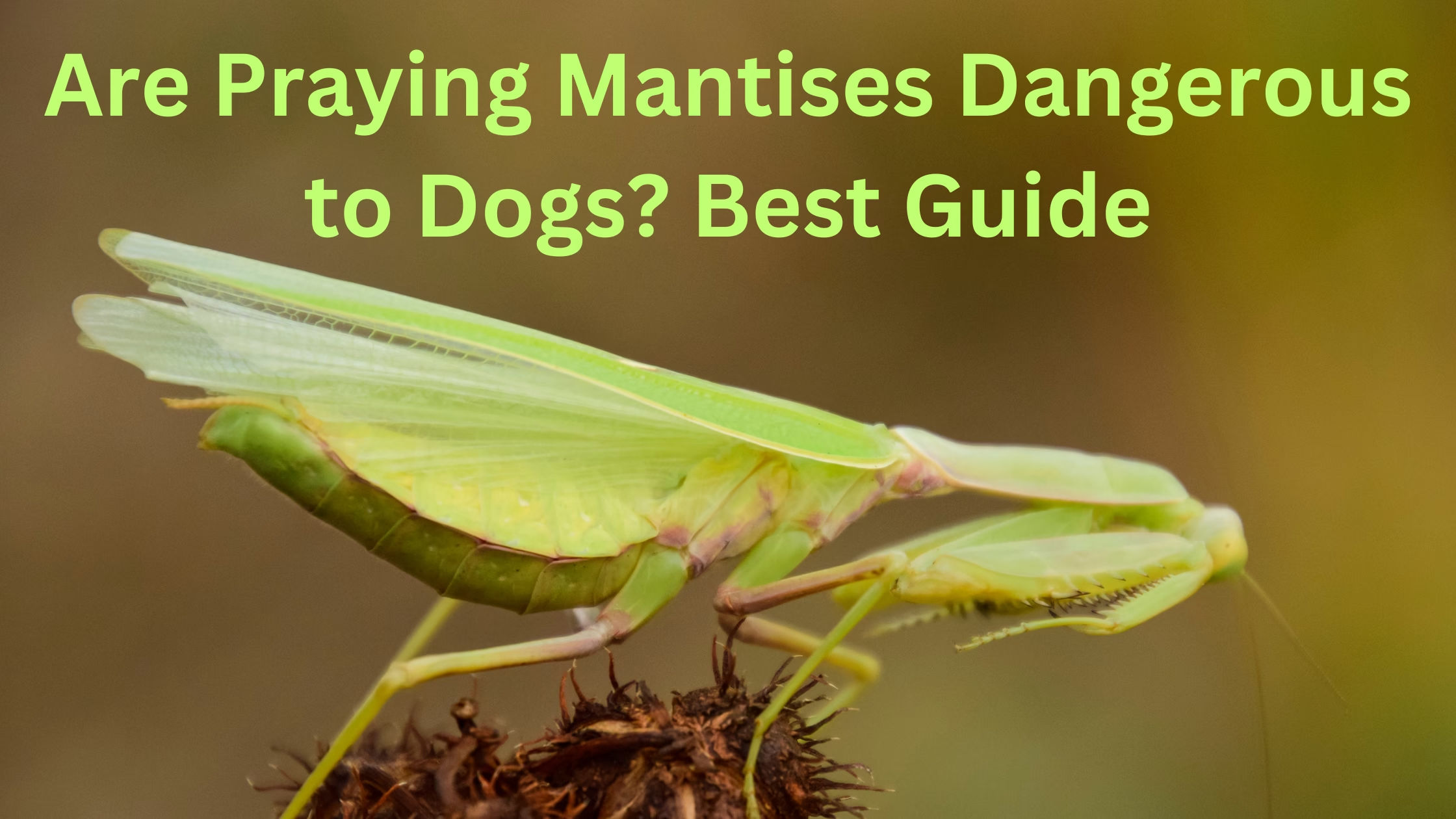
  • Are Praying Mantises Dangerous to Dogs? Best Guide

    Are Praying Mantises Dangerous to Dogs? Best Guide

    Are Praying Mantises Dangerous to Dogs? Praying mantises are intriguing insects noted for their unusual appearance and predatory nature. As a pet owner, you may wonder if these insects are dangerous to your companion. While praying mantises are not usually dangerous to dogs, there are several precautions you should take to keep your pet safe. This post will look at praying mantises and dogs and answer common questions concerning their interactions.

    What are Praying Mantises?

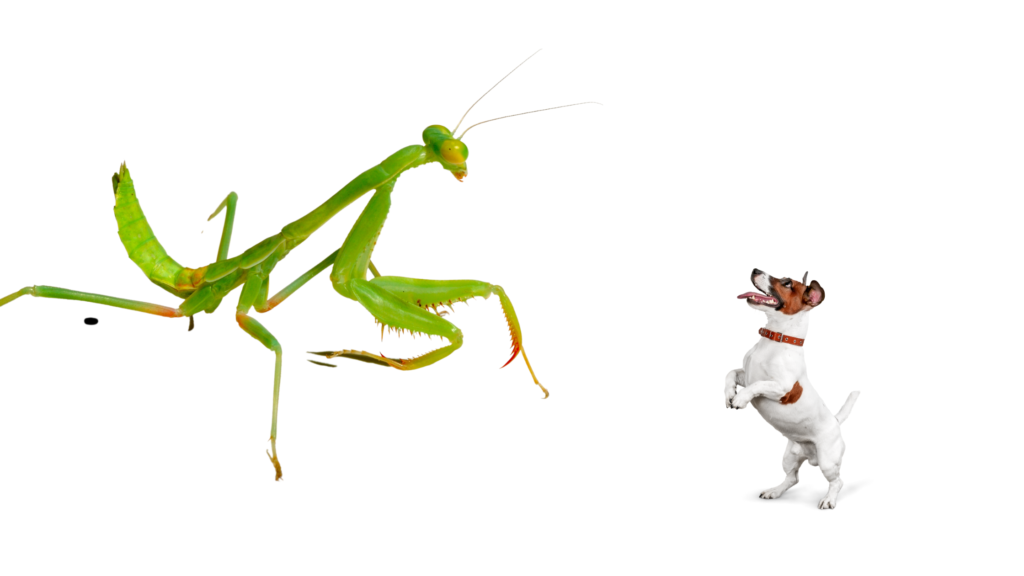
    Praying mantises are predatory insects recognized for their distinct appearance and hunting activity. They are members of the Mantodea order, which has around 2,400 species worldwide.

    Praying mantises are distinguished by their elongated bodies, triangular heads, and big, compound eyes.

    They use two gripping forelegs to acquire and hold their prey, which can include insects, spiders, and even tiny vertebrates like lizards and frogs.

    Praying mantises are found worldwide, and many species are considered helpful to ecosystems because they help manage insect populations.

    Also Read : Yorkie Pomeranian Mix: The Adorable and Active Yoranians

    Are Praying Mantises Dangerous to Dogs?

    Are Praying Mantises Dangerous to Dogs |
    Are Praying Mantises Dangerous to Dogs?

    Praying mantises are generally not considered dangerous to dogs. While they are known to capture and swallow insects and other small creatures, they are not often a menace to larger animals such as dogs. Nonetheless, numerous variables could make praying mantises dangerous to dogs.

    To begin, praying mantises are known to use their forelegs to protect themselves when threatened. While they are unlikely to attack a dog, they may swipe at a curious or aggressive dog, perhaps causing harm.

    Furthermore, some species of praying mantises can release a protective chemical that might irritate dogs if they come into touch with it.

    It’s also worth noting that consuming a praying mantis by a dog could result in gastrointestinal distress or obstructions, especially if the mantis has eaten pesticides or other chemicals.

    However, it is not typical for dogs to eat praying mantises, and if your dog does take one, it is generally not a cause for panic until they develop indications of sickness.

    Ultimately, while praying mantises are not normally a hazard to dogs, it is still vital for pet owners to be vigilant and keep a watch on their pets to avoid any potential mishaps or health issues.

    What to Do If Your Puppy Meets a Praying Mantis

    If your dog encounters a praying mantis, it is usually not a cause for concern unless the mantis is injured or your dog gets extremely aggressive. But, if you detect any unusual behavior or symptoms in your dog following an encounter with a praying mantis, you should immediately seek veterinarian attention.

    If your dog comes into contact with a praying mantis, take the following precautions:

    Keep your dog quiet: If your dog becomes agitated or violent, try to calm them down to avoid any potential harm to the mantis or your pet.

    Keep an eye on your dog: Keep an eye out for any strange behavior or symptoms, such as vomiting, diarrhea, or lethargy, which could indicate that your dog has consumed a praying mantis or been exposed to toxins.

    Inspect for injuries: If the praying mantis has swung at your dog, look for any evidence of injury, such as scratches or cuts.

    Remove the praying mantis: If it is damaged or appears in distress, removes it from your pet’s area and release it outside. It is critical not to injure or kill the mantis since they are useful insects that help manage pest populations.

    Call your veterinarian: If you observe any symptoms or signs of harm in your dog or have any worries about their health following an encounter with a praying mantis, call your veterinarian immediately for assistance and advice.

    Following these simple procedures, you can ensure that your pet remains safe and healthy after an encounter with a praying mantis.

    Avoiding Praying Mantis and Dog Relations

    Avoiding interactions between praying mantises and dogs can help avoid potential risks or injury to insects and pets. These are some pointers to bear in mind:

    Keep your dog on a leash: While walking where praying mantises are present, put your pet on a leash to protect them from getting into contact with insects.

    Monitor outside playtime: If your dog spends time in a yard or outdoor location where praying mantises are present, watch them to ensure they don’t step on or eat the insects.

    Avoid using pesticides: Because praying mantises are helpful insects that help manage pest populations, it is critical to avoid using pesticides that could harm them. If you must use pesticides, consider pet-friendly ones and apply them when your dog is not there.

    Keep your yard clean: Praying mantises are drawn to dense foliage, so keeping your yard tidy and well-maintained can help limit their presence.

    Train your dog to avoid insects: By utilizing orders and positive reinforcement, you may teach your dog to avoid insects and other small creatures.

    By following these easy guidelines, you can prevent interactions between praying mantises and dogs, ensuring the safety and well-being of both your pet and the insects.

    Commonly Asked Questions About Praying Mantises and Dogs

    Here are some often-asked questions concerning praying mantes and dogs:

    Can prayer mantises harm or kill dogs?

    Praying mantises are generally not considered a hazard to dogs. While they can protect themselves with their forelegs and may irritate dogs if they emit a defensive chemical, they are unlikely to harm or kill dogs.

    Are praying mantis dangerous to cats?

    Praying mantises are generally not considered dangerous to cats. While they can defend themselves using their forelegs, they are not likely to harm or kill cats.

    Are praying mantis poisonous if eaten?

    Praying mantises are not poisonous, but they could cause gastrointestinal upset or blockages if ingested. Additionally, if the mantis has ingested pesticides or other toxins, this could pose a risk to the health of the animal that has eaten it.

    Can dogs eat praying mantises?

    While it is uncommon for dogs to consume praying mantises, they can induce gastrointestinal discomfort or obstructions if consumed. Furthermore, if the mantis ingested pesticides or other toxins, this could endanger your dog’s health.

    Are praying mantises good for the environment?

    Yes, praying mantises are beneficial insects that help control pest populations. They are natural predators of insects and other small animals and can help keep populations in check.

    Are praying mantis good luck?

    In some cultures, praying mantises to symbolize good luck or spiritual guidance. However, this belief is not universal and varies depending on cultural and regional beliefs.

    How can I keep my dog away from praying mantises?

    Keep your dog on a leash when walking in areas where praying mantises are present, supervise outdoor playtime, avoid using pesticides, keep your yard clean, and teach your dog to avoid insects using commands and positive reinforcement.

    What should I do if my dog eats a praying mantis?

    If your dog consumes a praying mantis, watch for any signs of stomach discomfort or obstructions. Get veterinarian attention as soon as you observe any strange behaviour or symptoms. However, in most cases, eating a praying mantis will not harm your dog.

    Are praying mantises endangered?

    Some praying mantis species are considered endangered due to habitat loss, pesticide use, and other factors. On the other hand, many species of mantises are abundant and not threatened with extinction.

    What is a brown praying mantis?

    A brown praying mantis is a type of mantis that is predominantly brown in colour. Many different species of mantises can be brown, including the European mantis and the Chinese mantis.

    Are praying mantis friendly?

    Praying mantises are not social animals and do not seek out human interaction. However, they are generally not aggressive toward humans and will only defend themselves if provoked. As long as they are left alone and not disturbed, praying mantises are unlikely to cause harm to humans or animals.

    What should I do if I discover a praying mantis in my home?

    If you find a praying mantis in your home, gently capture it and release it outside. Mantises are beneficial insects that can help control pest populations in your garden or yard, so it’s best to release them back into the wild.

    Can pray mantises fly?

    Most praying mantis species are incapable of sustained flight, but they can glide short distances using their wings.

    Are praying mantises harmful to humans?

    Praying mantises are generally not considered dangerous to humans. While they can bite if provoked, their bites are rarely painful or dangerous.

    How can I attract praying mantises to my garden?

    Plant various flowering plants and herbs that provide a habitat and food source for praying mantises to attract them to your garden. You can also avoid using pesticides and other chemicals that can harm praying mantises and their prey.

    Also Read : Alfalfa Pellets for Dog Litter: Best Guide 2023

    Conclusion:

    Finally, praying mantises are not commonly considered dangerous to cats, dogs, humans, or other animals.

    While they can defend themselves with their forelegs and exude an annoying protective chemical, they are unlikely to damage or kill larger creatures.

    Praying mantises are beneficial insects that help manage pest populations and are usually considered safe for humans and pets.

    Nonetheless, care must be taken to avoid encounters between mantises and animals, including keeping dogs on a leash and refraining from using pesticides.

    Also, if praying mantises are discovered in your home or garden, they must be returned to the wild.

  • Yorkie Pomeranian Mix: The Adorable and Active Yoranians

    Yorkie Pomeranian Mix: The Adorable and Active Yoranians

    Yorkie Pomeranian mix may be the ideal breed for you if you’re searching for a petite, playful, and affectionate companion.

    These designer canines, sometimes known as “Yoranians,” are a hybrid between Yorkshire Terriers and Pomeranians, two of the most popular toy breeds.

    In this post, we’ll go over all you need to know about Yorkie Pomeranian mixes, from their appearance and disposition to their health and care requirements.

    Whether you’re a first-time dog owner or a seasoned pet parent, you’ll find useful information and advice to help you give your Yoranian the best life possible.

    CharacteristicDescription
    BreedYorkshire Terrier and Pomeranian mix
    SizeSmall (4-7 pounds, 6-12 inches tall)
    TemperamentAffectionate, playful, intelligent, sometimes stubborn
    CoatLow-shedding, requires regular grooming
    Lifespan12-15 years on average
    Health concernsDental problems, patellar luxation, hypoglycemia, collapsed trachea
    Exercise needsModerate exercise and mental stimulation required
    Training needsEarly socialization and basic obedience training recommended
    SuitabilityGood choice for families with older children and other pets, as well as individuals or couples who want a small and loyal companion
    Activity levelModerate
    Energy levelHigh
    Barking tendencyModerate
    TrainabilityModerate
    Apartment-friendlyYes
    Good for novice ownersYes
    Coat colorsBlack, brown, tan, cream, sable
    Life stage suitabilityAll life stages, but may be better suited for older individuals or couples
    Feeding requirementsSmall breed-specific diet with frequent meals to prevent hypoglycemia
    Grooming requirementsRegular brushing and trimming, occasional bathing, dental care, and ear cleaning
    Yorkie Pomeranian Mix: The Adorable and Active Yoranians

    Yorkie Pomeranian Mix History and Origin

    The Yorkie Pomeranian mix, commonly known as the Yoranian, is a relatively new breed that resulted from the crossbreeding of Yorkshire Terriers and Pomeranians in the early 2000s.

    While the breed’s actual beginnings are unknown, it is believed that breeders in the United States and Canada began purposely breeding these two toy breeds to develop a new designer dog with attractive qualities from both parent breeds.

    Yorkshire Terriers and Pomeranians both have a long and fascinating history.

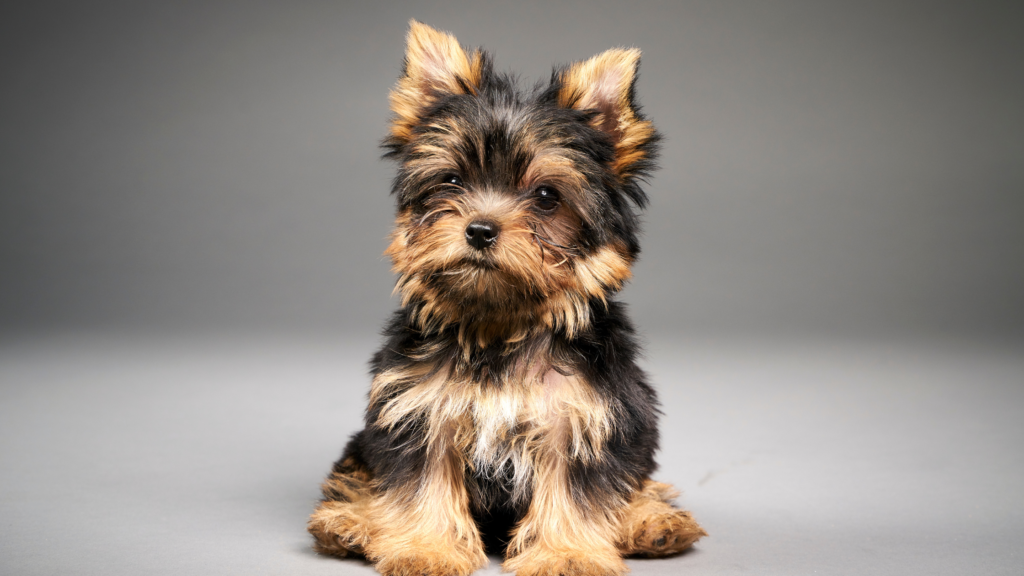
    Yorkshire Terrier
    Yorkshire Terrier

    The Yorkshire Terrier, or “Yorkie,” was developed in the nineteenth century in England to trap rats and other tiny vermin in textile mills.

    Because of its small stature and lovely disposition, the breed quickly acquired popularity as a companion dog among aristocratic families.

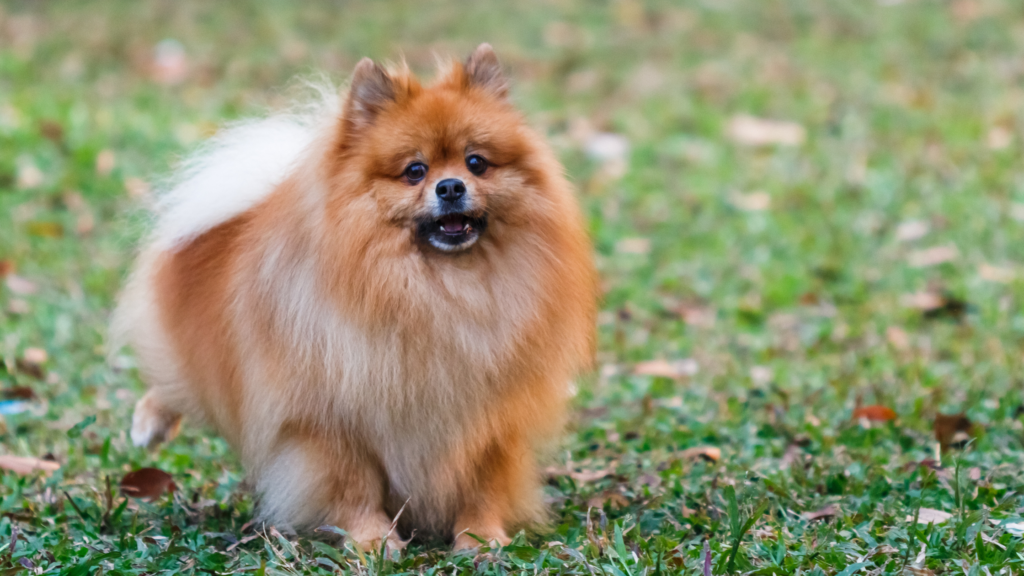
    Pomeranian
    Pomeranian

    On the other hand, Pomeranians were developed in the 18th century in Germany as larger sled dogs. The breed was selectively bred down to a smaller size over time, and it became a favorite companion among European nobility.

    Pomeranians are now known for their energetic and friendly personality, as well as their characteristic fluffy coats.

    Yorkie Pomeranian mixes swiftly acquired popularity among dog lovers worldwide due to their adorable appearances and loving personalities.

    Various designer dog organizations now recognize Yoranians, and they remain a popular breed among people looking for a small, lively, and devoted companion.

    Also Read : Mini Walrus Dogs Breed Info: A Comprehensive Guide

    Yoranians’ Appearance and Size

    Yoranians are a petite, toy-sized breed that weighs between 4 and 7 pounds and stands between 6 and 12 inches at the shoulder.

    They are compact and strong, with a round head, short nose, and attentive, almond-shaped eyes that are usually dark in color.

    One of the most apparent characteristics of Yorkie Pomeranian mixes is their coat, which can vary based on the individual dog’s genetics.

    Yoranians might have a dense, fluffy double coat like their Pomeranian parent or a smooth, straight coat like their Yorkshire Terrier father.

    The coat colors can also vary, with black, tan, white, cream and various hues of brown being popular.

    Yoranians are also distinguished by their short, upright ears that stand up straight on their heads. They also have a curling tail that curls up behind them.

    Overall, Yoranians are a charming breed with many personalities, making them a popular choice for individuals looking for a lovely little companion.

    Personality and temperament traits

    Yoranians are known for their playful and caring nature, which makes them an excellent choice for families with children or anybody searching for a devoted and loving pet.

    They are bright dogs that are easy to train, making them an excellent choice for first-time dog owners.

    Yoranians are high-energy and love to play because they are a cross of two toy breeds. They enjoy fetch and tug-of-war games, walking, and exploring their surroundings.

    They are also friendly dogs who get along well with other pets and people; however, they can sometimes be suspicious of strangers.

    While Yoranians are generally amiable and good-natured, they can be stubborn sometimes, especially if they are not properly trained or socialized.

    They can also be noisy dogs, barking excessively when anxious or stressed. Early training and socialization can assist in reducing these behaviors and ensure that Yoranians grow up to be well-adjusted dogs.

    Overall, Yoranians are happy, amiable dogs who thrive on human company. Because of their modest size and exercise requirements, they make excellent family pets and are well-suited to apartment living.

    Yoranians can be great and devoted companions for many years if properly trained, socialized, and cared for.

    Exercise and Training Requirements

    All dogs, including Yoranians, require training and exercise for their health and well-being.

    Yoranians, being a high-energy breed, require regular exercise to keep them physically and psychologically occupied.

    Yoranians can stay active and involved by taking daily walks, playing in the garden, and playing interactive games like fetch and hide-and-seek.

    Training, in addition to exercise, is essential for Jordanians. Early socialization and obedience training can aid in developing excellent manners and preventing behavioral issues later in life.

    For Yoranians, positive reinforcement training approaches, such as excellent rewarding behavior with goodies or praise, are often the most effective.

    Yoranians can be difficult, but patience and persistence are essential in training. Training sessions should be kept short and enjoyable to avoid boredom and dissatisfaction.

    Yoranians can succeed in agility and obedience competitions, which can give them mental and physical stimulation while building their bond with their owners, in addition to basic obedience training.

    Yoranians generally require frequent exercise and training to stay happy and healthy. Training can be an enjoyable experience for both the dog and the owner if done correctly.

    Health Concerns and Care Needs

    Yoranians, like other dogs, are prone to several health concerns, some of which may be inherited from their parent breeds.

    It’s critical to be aware of these potential health issues and take efforts to prevent or manage them so that your Yoranian can have a happy and healthy life.

    Dental disorders, such as tooth decay and gum disease, are among the most common health difficulties that Yoranians encounter, and they can be avoided with regular teeth cleaning and dental examinations.

    Yoranians may have respiratory issues, especially if they have their Pomeranian parent’s short noses. They may also be susceptible to hypoglycemia, or low blood sugar, which can be avoided by providing them with small, frequent meals throughout the day.

    Yoranians require frequent grooming and preventative maintenance to maintain their coat healthy and free of tangles and mats.

    This may include daily brushing, bathing occasionally, and frequent nail and hair clipping around their eyes and ears.

    Yoranians must also have frequent veterinary examinations to evaluate their overall health and spot potential health problems early on.

    Yoranians can also benefit from regular exercise, a nutritious diet, and love and attention.

    To summarize, Yoranians require regular preventative care, such as dental checks, grooming, and veterinarian visits, to stay healthy and happy.

    Being aware of potential health issues and taking precautions to prevent or treat them will help your Yoranian live a long and happy life with you.

    Guidelines for Feeding and Nutrition

    Feeding and nutrition are critical components of Yoranian care. Yoranians, as a petite breed, have certain dietary requirements that should be considered while selecting a food.

    A high-quality dog food designed exclusively for little breeds is usually the best option for Yoranians. Look for food with a good balance of protein, fat, and carbohydrates, with high-quality protein sources such as chicken, fish, or lamb.

    Avoid foods with fillers or artificial substances, which can be difficult for little dogs to digest and may contribute to health problems in the long run.

    The amount of food required by your Yoranian will vary depending on their age, size, and activity level. Yoranians should be fed two to three small meals daily to avoid hypoglycemia, which is prevalent in small breeds.

    To avoid overfeeding and obesity, make sure to measure out their meals precisely.

    Yoranians may benefit from occasional indulgences such as little portions of cooked chicken or vegetables in addition to their regular diet.

    Treats, on the other hand, should be consumed in moderation to avoid overfeeding and weight gain.

    Ensuring that your Yoranian has constant access to fresh, clean water is also critical. Change their water bowl daily and keep track of their water intake to ensure they are getting enough.

    In conclusion, eating and nutrition are crucial factors when caring for your Yoranian.

    Choose a high-quality dog food developed exclusively for little breeds, feed them small meals throughout the day, and monitor their water consumption to keep them healthy and happy.

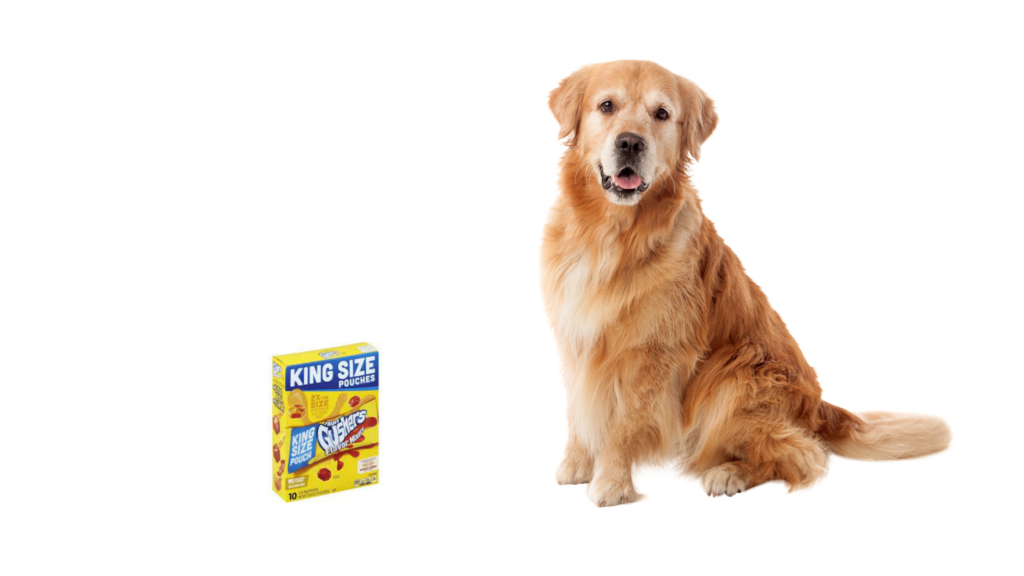
    Also Read : Can Dogs Eat Gushers? Are Gushers safe to feed to dogs?

    Maintenance and Grooming

    Grooming and maintenance are critical components in Yoranian care. This breed has a long, dense coat that needs to be groomed regularly to keep it healthy and free of tangles and mats. Here are some pointers to keep your Yoranian looking and feeling great:

    Brush their coat regularly.

    Yoranians’ coats should be brushed daily to prevent tangles and mats from forming. Gently remove any knots or dirt from their coat using a slicker brush or comb, paying special attention to their legs, ears, and tail, as these regions are prone to tangles.

    Bathe them as needed.

    Yoranians do not need to be bathed regularly, although they may benefit from occasional baths to maintain their coat clean and healthy.

    Bathe your Yoranian using a gentle dog shampoo and warm water, and rinse thoroughly to eliminate any soap residue.

    Trim their nails regularly.

    Yoranians have small, delicate paws that require frequent nail clipping to keep them from becoming too long and causing discomfort or harm.

    Trim their nails with dog nail clippers, being careful not to cut into the quickly. (the pink part of the nail that contains blood vessels).

    Clean their ears

    Yoranians are prone to ear infections. Therefore, cleaning their ears regularly is critical to eliminate any wax or debris.

    Gently clean the inside of their ear flap with a cotton ball or soft cloth, careful not to introduce anything into the ear canal.

    Check for dental problems.

    Yoranians are prone to dental problems, so it’s critical to periodically inspect their teeth and gums for symptoms of decay or inflammation.

    Brush their teeth daily with dog toothpaste, and consider giving them dental chews or toys to help keep their teeth clean.

    In conclusion, regular grooming and upkeep are required to maintain your Yoranian healthy and happy.

    To keep them looking and feeling their best, brush their coats regularly, cut their nails, clean their ears, and check for dental concerns.

    What Is the Price of a Yorkie Pomeranian Mix?

    The price of a Yorkie Pomeranian or Yoranian mix varies depending on various factors, including the breeder, location, and demand. A Yoranian can range in price from $500 to $2,500 on average.

    It is crucial to understand that purchasing a Yoranian is only the beginning of the expenses associated with dog ownership.

    You’ll also need to budget for food, grooming supplies, veterinarian care, and other essentials.

    When considering obtaining a Yoranian, it is critical to research and verifies that you are getting a healthy and well-socialized puppy.

    Purchases from puppy mills or backyard breeders should be avoided since these sources frequently prioritize profit over the health and well-being of the dogs.

    Consider adopting a Yoranian from a local animal shelter or rescue organization. While these dogs are not purebred, they can be excellent companions and frequently need loving homes.

    In conclusion, the price of a Yoranian varies, but it’s necessary to consider the additional costs of dog ownership and to investigate reputable breeders or consider adoption from a shelter or rescue organization.

    Tips and Tricks for Living with a Yorkie Pomeranian Mix

    Living with a Yoranian, or Yorkie Pomeranian mix, maybe a pleasant experience, but it’s critical to understand the breed’s distinct traits and characteristics to give them a happy and healthy home. Here are some pointers on how to live with a Jordanian:

    Provide plenty of exercises and mental stimulation: 

    Yoranians are lively and bright dogs that require frequent exercise and mental stimulation to stay happy and healthy.

    To keep them cognitively and physically busy, take them for daily walks, supply them with interesting toys, and involve them in training exercises.

    Create a routine

    Yoranians thrive on routine, so create one for feeding, exercise, and playtime. This will make children feel safer and lessen the risk of behavioral issues.

    Be patient with training.

    Yoranians can be stubborn so training may require patience and effort. Avoid harsh training methods and use positive reinforcement strategies such as treats and praise.

    Socialize them early

    Yoranians, if not properly socialized, might be suspicious of strangers and other dogs. Begin socializing children at a young age by exposing them to new people, places, and experiences in a pleasant and controlled environment.

    Consider their health requirements.

    Yoranians are prone to dental problems, skin allergies, and other health issues. Maintain frequent veterinary check-ups for them, feed them balanced food, and be aware of any changes in their behavior or health.

    Invest in good grooming tools.

    Yoranians have a long, dense coat that needs to be groomed regularly to keep it healthy and tangle-free. Invest in premium grooming products, including a slicker brush and comb, and groom them regularly to avoid mats and tangles.

    In conclusion, living with a Yoranian may be a delightful experience, but it is critical to provide them with enough exercise and mental stimulation, establish a schedule, be patient with training, socialize them early, be conscious of their health needs, and invest in quality grooming supplies.

    Your Yoranian can be a happy and loving companion for many years with the proper care and attention.

    Choosing and Finding a Yorkie Pomeranian Mix

    If you’re looking for and selecting a Yoranian, or Yorkie Pomeranian hybrid, there are a few steps you can take to ensure you discover a healthy and happy puppy:

    Research breeders

    Look for trustworthy breeders specializing in Yoranians and having a track record of producing healthy, well-socialized puppies.

    Avoid puppy mills and backyard breeders because they frequently prioritize profit over the health and well-being of the dogs.

    Visit the breeder

    Once you’ve found a possible breeder, visit their facility or house to see the puppies and observe their upbringing. Look for a clean, safe setting with plenty of socialization and human connection.

    Inquire about health clearances.

    A good breeder will give you health clearances for the litter’s dam and father.

    Screenings for genetic health issues, such as hip dysplasia, and certifications from organizations such as the Orthopedic Foundation for Animals (OFA) or the Canine Eye Registration Foundation (CERF).

    Meet the puppy’s parents.

    Request to meet them to understand their temperament and personality qualities. This will also give you an indication of how your puppy will look as an adult.

    Consider adoption

    If you want something other than a purebred Yoranian, consider adopting a mixed-breed dog from a local animal shelter or rescue organization.

    These dogs can make excellent companions and frequently need loving homes.

    When selecting a Yoranian, remember that temperament and personality qualities can differ based on the individual dog and its upbringing.

    To help your puppy become a happy and well-adjusted part of your family, give them plenty of love, socialization, and training.

    Frequently Asked Questions About Yoranians 

    How long does a Yorkie Pomeranian mix live?

    A Yoranian’s average lifetime is 12 to 15 years, which might vary based on heredity, nutrition, and overall health.

    Are Yoranians hypoallergenic?

    While no dog breed is entirely hypoallergenic, Yoranians are suitable for allergy sufferers due to their low-shedding coat. It’s important to note that other variables like dander and saliva can still cause allergies.

    Do Yorkie Pomeranian crossbreeds shed a lot?

    Yoranians have a low-shedding coat but must still be groomed and maintained regularly to keep it healthy and tangle-free.

    How big do Yorkie Pomeranian crossbreeds grow?

    Yoranians are little canines that weigh between 3 and 7 pounds and stand between 6 and 12 inches at the shoulder.

    Are there any health concerns that Yoranians should be aware of?

    Yoranians, like all dog breeds, are prone to various health difficulties, including dental disorders, patellar luxation, and hypoglycemia.Engaging with a reliable breeder who tests their dogs for these illnesses is critical, and taking your Yoranian to the vet regularly is critical.

    Is having a Yorkie Pomeranian mix around children and other pets safe?

    Yoranians make excellent family pets and are generally good with children and other pets; nevertheless, it is critical to socialize them early and manage interactions to avoid disputes.

    What kind of training does Yoranians require?

    Yoranians are smart dogs who react well to positive reinforcement training. Early socialization and basic obedience training are required to guarantee that they develop excellent behavior habits and grow into well-adjusted adult canines.It is also critical to offer regular exercise and mental stimulation to keep them from becoming bored and engaging in destructive behavior.

    Is a Yoranian the right person for you?

    A Yoranian may be the ideal companion dog for you if you want a small, affectionate, intelligent, playful, and low-shedding companion dog.

    These lovely mixed breed dogs are a cross between a Yorkshire Terrier and a Pomeranian and have grown in popularity in recent years due to their endearing personalities and adorable appearance.

    However, it’s crucial to remember that Yoranians, like all dogs, require care, attention, and training to thrive.

    They might not be ideal for families with very young children or those who cannot give them essential exercise and socialization.

    If you want to add a Yoranian to your family, do your homework and find a reliable breeder, or consider adopting from a local shelter or rescue organization.

    A Yoranian, with proper care and attention, maybe a devoted and loving companion for many years.

  • Can Dogs Eat Gushers? Are Gushers safe to feed to dogs?

    Can Dogs Eat Gushers? Are Gushers safe to feed to dogs?

    Can Dogs Eat Gushers? Many dog owners like sharing their favorite snacks with their canine companions. However, not all human meals are suitable for dogs to consume. If you’re wondering if your dog can eat Gushers, the fruit-flavored candy, keep reading to learn more about the hazards and benefits.

    What exactly are Gushers?

    What exactly are Gushers |
    What exactly are Gushers?

    Gushers are a popular fruit-flavored candy with a chewy texture and liquid-filled core. They are available in various tastes, including strawberry, grape, and tropical punch. Gushers are a popular snack among children and adults, and many like sharing them with their pets. Can dogs, however, consume Gushers? Continue reading to learn more.

    Can Dogs Eat Gushers? Are Gushers safe to feed to dogs?

    Can Dogs Eat Gushers |
    Can Dogs Eat Gushers? Are Gushers safe to feed to dogs?

    Gushers, or any other form of candy or sugary snack, should not be given to dogs. While dogs may be drawn to Gushers because of their delicious smell and flavor, these treats can harm their health.

    The high sugar content of Gushers is one of the biggest issues with providing them to dogs.

    Dogs are not meant to process large amounts of sugar, and consuming too much can result in various health issues such as obesity, diabetes, and dental difficulties.

    Also, Gushers’ artificial colors and tastes can cause stomach discomfort in some dogs.

    If you do decide to offer your dog Gushers, do it in moderation and only occasionally as a reward.

    Be sure to carefully read the contents list and avoid Gushers containing xylitol, a sugar substitute hazardous to dogs.

    While Gushers are okay for dogs to eat in limited quantities, it’s recommended to stick to dog-friendly snacks specifically made for their nutritional needs.

    Also Read : Can Dogs Have Miso Soup? Is it Safe or Dangerous?

    The Advantages of Feeding Gushers to Dogs

    While Gushers may not be the healthiest snack for dogs, offering these sweets as a treat on occasion has a few potential benefits.

    Giving Gushers to dogs has the bonus of being a fun and tasty method to encourage good behavior.

    Dogs like treats just as much as humans do, and rewarding your canine companion with a Gusher can be an excellent way to reinforce pleasant behaviors and teach them new tricks.

    Another potential advantage of offering Gushers to dogs is that they can help your dog satisfy his sweet craving without resorting to unhealthy human foods.

    Many dogs have an innate desire for sweet foods, and giving them a Gusher can be a safer option than sharing your sugary treats.

    Finally, offering Gushers to dogs in moderation can be a great way to bond with your dog and share a wonderful moment.

    Sharing snacks with your dog may be a fun and gratifying way to improve your bond and demonstrate your love.

    While Gushers should not be a regular part of your dog’s food, providing them as a tiny treat can sometimes be a safe and pleasurable way to brighten your furry friend’s day.

    The Dangers of Feeding Gushers to Dogs

    While Gushers may appear to be a harmless snack to share with your dog, there are several hazards linked with offering these sweets to dogs.

    The high sugar content of Gushers is one of the most serious concerns of administering them to dogs.

    Dogs are not meant to process significant amounts of sugar, and excessive consumption can lead to obesity, dental difficulties, and other health issues.

    Furthermore, Gushers‘ high sugar content may contribute to the development of diabetes in dogs.

    Another issue with offering Gushers to dogs is using artificial colors and tastes in this candy. These components may cause stomach discomfort in certain dogs, including vomiting and diarrhea.

    Finally, if Gushers are fed to dogs in big quantities or regularly, they may cause a loss of taste for their usual dog food. Over time, this might lead to dietary deficits and health issues.

    You should carefully balance the hazards and benefits when providing Gushers to your dog.

    While Gushers are fine to give in tiny amounts as a treat, it’s typically preferable to stick to dog-friendly treats specifically made to satisfy your dog’s nutritional needs.

    How to Feed Gushers to Your Dog Safely

    If you occasionally offer Gushers to your dog as a treat, you must do so safely and responsibly. Here are a few things to remember when feeding Gushers to your pet:

    Moderation is essential. Gushers should never be a regular component of your dog’s diet and should only be given as an occasional treat in modest amounts. Try to give one or two Gushers at a time.

    Keep an eye out for any signs of intestinal distress. If your dog develops vomiting, diarrhea, or other digestive disorders after eating Gushers, it’s best to stop giving them this treat.

    Gushers should not be given to dogs who have dietary restrictions. If your dog is on a particular diet for medical reasons, it’s best only to give them goodies specially prepared for their dietary needs.

    Take note of the sugar content. Gushers are heavy in sugar, so if you give this treat to your dog, adjust their usual meal consumption accordingly.

    Follow the serving size recommendations. Gushers are not intended to be consumed in large quantities, and overfeeding can result in various health complications in dogs.

    You can safely feed Gushers to your animal buddy as an occasional treat by following these guidelines and exercising common sense. Like any reward, watching your dog’s reaction and changing your feeding habits is critical to guarantee their continued health and well-being.

    Gusher Alternatives for Dogs

    There are various things to consider if you’re seeking a tasty and safe alternative to Gushers for your dog:

    Fruits like bananas, apples, and blueberries are popular with dogs. These snacks are low in sugar and contain various vitamins and minerals that are good for your dog’s health.

    Raw or cooked veggies: like carrots, green beans, and sweet potatoes, can be a fantastic substitute for Gushers. These snacks are low in calories and fiber, and other essential nutrients.

    Peanut butter: A modest peanut butter can make an excellent dog treat. Use natural peanut butter with no added sugar or salt and sparingly to avoid overeating.

    Meat: Unseasoned cooked meats like chicken or beef can be a delightful dog treat. Please avoid giving your dog any bones or fatty chunks of meat.

    Commercial dog treats: Many are specifically created for canine health and nutrition. Choose sweets manufactured with high-quality ingredients and avoid ones with artificial preservatives, flavors, or colors.

    You can help keep your dog happy, healthy, and well-fed by giving them a range of healthful and nutritional treats instead of sugary snacks like Gushers. Don’t hesitate to contact your veterinarian with questions or concerns about your dog’s food or treat selections.

    Also Read :Mini Walrus Dogs Breed Info: A Comprehensive Guide

    Conclusion: Should You Feed Your Dog Gushers?

    While Gushers may be a tempting treat for your dog, they are not a healthy alternative. The high sugar content and artificial substances might cause obesity and dental problems.

    While a modest amount of Gushers may not cause immediate harm to your dog, it is advised to avoid them entirely and instead choose healthier treatment options.

    You can help your dog stay happy and healthy for years by feeding them a well-balanced diet and a choice of nutritious treats.

    Before introducing new meals or treats to your dog’s diet, please consult your veterinarian to ensure they are safe and acceptable for your pet.

  • Mini Walrus Dogs Breed Info: A Comprehensive Guide

    Mini Walrus Dogs Breed Info: A Comprehensive Guide

    Mini Walrus Dogs, the Ba-Shar breed, is a unique and adorable crossbreed between a Basset Hound and a Shar Pei. If you are considering adding a Mini Walrus Dog to your family, there are some things you should know about this special breed. This article will explore everything from their appearance and temperament to their exercise needs and health issues.

    Mini Walrus Dogs Breed Info

    Breed NameMini Walrus Dog
    Cross betweenShar Pei and Basset Hound
    AppearanceShort, wrinkled face and body, short legs
    Size20-60 pounds, 12-18 inches tall at the shoulder
    TemperamentFriendly, loyal, and playful
    SheddingModerate
    Good with kids?Generally good with children, should always be supervised
    Exercise needsModerate exercise, daily walk or playtime in a fenced yard
    Health issuesProne to hip dysplasia, eye problems, and skin allergies
    Lifespan10-12 years
    Cost$1,000-$3,000 depending on breeder and location
    Training needsIntelligent and eager to please, but can be stubborn at times
    Grooming needsRegular grooming, including brushing, wrinkle cleaning, and nail trims
    Note that the lifespan of a Mini Walrus Dog is typically around 10-12 years, but this can vary depending on the individual dog’s health and lifestyle.

    The Origins and Characteristics of Mini Walrus Dogs

    The Mini Walrus Dog, also known as the Ba-Shar breed, is a relatively new and unique hybrid breed that originated in the United States.

    The breed is a cross between a Basset Hound and a Shar Pei and was first introduced in the late 1990s. Since then, it has gained popularity among dog lovers for its charming and affectionate personality.

    One of the most distinctive characteristics of Mini Walrus Dogs is their adorable wrinkled faces, which they inherit from their Shar Pei parent.

    They also have a compact and sturdy build, with short legs and a long body similar to a Basset Hound. Mini Walrus Dogs are typically small to medium, weighing between 30 and 40 pounds.

    In terms of temperament, Mini Walrus Dogs are known for being friendly, loyal, and playful. They are social animals that thrive on human interaction and love to be around people.

    They are also known to be great with children, making them excellent family pets.

    While the breed is still relatively new, it is becoming increasingly popular due to its unique appearance and affectionate personality.

    Suppose you are considering adding a Mini Walrus Dog to your family. In that case, it is important to understand their origins and characteristics to ensure they are a good fit for your lifestyle and home.

    Mini Walrus Dog Appearance: Coat, Color, and Size

    Mini Walrus Dog Appearance |
    Mini Walrus Dog Appearance

    Mini Walrus Dogs’ unique appearance differentiates them from other dog breeds. They have a short, dense, and coarse coat that can be either solid or a mix of colors.

    Some of the most common colors for Mini Walrus Dogs include black, brown, tan, and white.

    The breed has a compact, sturdy build, short legs, and a long body.

    Mini Walrus Dogs are typically small to medium in size, with males averaging between 12 and 18 inches in height, while females are usually slightly smaller. They also typically weigh between 20 and 60 pounds.

    One of the most distinctive features of the Mini Walrus Dog is its adorable wrinkled face, which they inherit from their Shar Pei parent.

    They also have floppy ears hanging down and a tail curls upwards. Overall, the Mini Walrus Dog’s appearance combines its Basset Hound and Shar Pei parents, making it a unique and charming breed.

    Suppose you are considering adopting a Mini Walrus Dog. In that case, it is important to understand its appearance to ensure you are prepared for its specific grooming needs.

    They require regular brushing and bathing to keep their coat clean and healthy, and their wrinkles should be kept dry and clean to prevent infections.

    Mini Walrus Dog Temperament: Friendly, Loyal, and Playful

    Mini Walrus Dogs are known for their friendly, loyal, and playful temperament. They are social animals who love being around people and make great family pets.

    One of the most endearing qualities of Mini Walrus Dogs is their loyalty. They are fiercely devoted to their owners and will go to great lengths to protect their loved ones.

    They are also known for their friendly and outgoing personalities and enjoy interacting with people of all ages.

    Mini Walrus Dogs are playful and active and enjoy games and activities that engage their mind and body.

    They thrive on physical activity and require regular exercise to stay healthy and happy.

    Taking your Mini Walrus Dog for walks, playing fetch, or engaging in other physical activities can help prevent boredom and ensure they get the necessary exercise.

    Despite their playful nature, Mini Walrus Dogs can sometimes be stubborn and require consistent training to ensure good behavior.

    They respond well to positive reinforcement and praise, and their intelligence and eagerness to please make them relatively easy to train.

    Mini Walrus Dogs is an excellent choice for families looking for a friendly, loyal, playful companion.

    Their outgoing personalities and love for people make them great pets for families with children or those who enjoy an active lifestyle.

    Mini Walrus Dog Health Issues: Common Concerns and How to Prevent Them

    Mini Walrus Dogs are prone to certain health issues like all dog breeds. By understanding these health concerns, you can take steps to prevent them and ensure that your Mini Walrus Dog stays healthy and happy.

    One of the most common health concerns for Mini Walrus Dogs is obesity. This is due to their love for food and tendency to overeat if given the opportunity.

    To prevent obesity, providing your Mini Walrus Dog with a healthy diet and regular exercise is important.

    Avoid overfeeding your dog, and ensure they get enough physical activity to maintain a healthy weight.

    Another health concern for Mini Walrus Dogs is ear infections. This is due to their floppy ears that can trap moisture and debris, leading to infections.

    To prevent ear infections, keeping your Mini Walrus Dog’s ears clean and dry is important. You should also regularly inspect their ears for signs of infection, such as redness or discharge.

    Mini Walrus Dogs are also prone to skin infections, which can be caused by their wrinkles trapping moisture and bacteria.

    To prevent skin infections, keeping your Mini Walrus Dog’s wrinkles clean and dry is important. You should also inspect their skin regularly for signs of infection, such as redness or a foul odor.

    Other common health concerns for Mini Walrus Dogs include hip dysplasia, allergies, and eye problems. Regular veterinary check-ups and proper care can help prevent these health issues from becoming serious.

    Overall, by being aware of the common health concerns for Mini Walrus Dogs and taking preventative measures, you can ensure that your furry companion remains healthy and happy for years to come.

    Mini Walrus Dog Exercise and Training Needs: Keeping Them Happy and Healthy

    Mini Walrus Dogs are active and playful dogs that require regular exercise to stay healthy and happy. Exercise helps them maintain a healthy weight, provides mental stimulation, and can help prevent behavior issues.

    Mini Walrus Dogs have moderate exercise needs and should be given at least 30 minutes of physical activity each day.

    This can include walks, playtime in the backyard, or interactive games such as fetch or tug-of-war. It is important to remember that Mini Walrus Dogs are prone to obesity, so monitoring their food intake and providing regular exercise is essential.

    Training is also important for Mini Walrus Dogs, who can be stubborn and may require consistent training to ensure good behavior.

    Positive reinforcement and reward-based training methods work best for Mini Walrus Dogs, as they respond well to praise and treats.

    Socialization is also important for Mini Walrus Dogs, as they can be prone to separation anxiety if left alone for long periods.

    Introducing your Mini Walrus Dog to new people and other animals at a young age can help them develop social skills and prevent anxiety.

    It is important to remember that Mini Walrus Dogs are sensitive and can become easily stressed, so providing them with a calm and positive environment is essential.

    Avoid harsh discipline or punishment, as this can cause fear and anxiety in your dog.

    Mini Walrus Dogs require regular exercise, training, and socialization to keep them happy and healthy.

    You can ensure that your furry companion is well-behaved, happy, and healthy by providing them with a healthy diet, regular exercise, and positive reinforcement training methods.

    Mini Walrus Dog Grooming: Tips for Keeping Them Clean and Healthy

    Mini Walrus Dogs have short, smooth coat that requires minimal grooming. However, they have wrinkles that can trap moisture and debris, making it important to keep them clean and healthy.

    Here are some grooming tips to keep your Mini Walrus Dog looking and feeling their best:

    • Brush your Mini Walrus Dog’s coat regularly: Use a soft-bristled brush to remove loose hair and dirt from your dog’s coat. Brushing your Mini Walrus Dog’s coat regularly can also help distribute its natural oils, keeping its skin healthy and coat shiny.
    • Clean their wrinkles: Mini Walrus Dogs have wrinkles on their face, neck, and body that can trap moisture and bacteria, leading to skin infections. Use a damp cloth to gently clean your dog’s wrinkles and dry them thoroughly afterward.
    • Bathe your Mini Walrus Dog when necessary: Mini Walrus Dogs do not require frequent baths but should be bathed when they get dirty or smelly. Use a gentle dog shampoo and avoid getting water in their ears or eyes.
    • Trim their nails: Mini Walrus Dogs have small, delicate paws and nails that can easily become overgrown. Trim their nails regularly to prevent discomfort and potential injury.
    • Clean their ears: Mini Walrus Dogs have floppy ears that can trap moisture and debris, leading to ear infections. Clean their ears regularly with a damp cloth or ear-cleaning solution recommended by your veterinarian.
    • Brush their teeth: Regular brushing can help prevent dental issues such as gum disease and bad breath. Use a soft-bristled toothbrush and dog toothpaste to brush your Mini Walrus Dog’s teeth at least twice to thrice weekly.

    Following these grooming tips can help keep your Mini Walrus Dog clean, healthy, and looking its best.

    Mini Walrus Dog Nutrition: What to Feed Them for Optimal Health

    Feeding your Mini Walrus Dog a balanced and nutritious diet is essential for their optimal health and well-being. Proper nutrition can help prevent health issues and keep your Mini Walrus Dog at a healthy weight. Here are some tips for feeding your Mini Walrus Dog:

    • Choose a high-quality dog food: Look for a dog specifically formulated for small-breed dogs that meet the Association of American Feed Control Officials (AAFCO) guidelines for a complete and balanced diet. Avoid dog foods that contain fillers, by-products, or artificial preservatives.
    • Please pay attention to portion sizes: Mini Walrus Dogs are prone to obesity, so it is important to feed them the appropriate portion size according to their age, weight, and activity level. Use a measuring cup to ensure that you are not overfeeding your dog.
    • Provide fresh water: Make sure your Mini Walrus Dog has access to clean water at all times.
    • Consider feeding a combination of dry and wet food: A combination of dry and wet food can provide your Mini Walrus Dog with various textures and flavors while ensuring that they get the proper amount of moisture in their diet.
    • Avoid feeding table scraps: Table scraps can be high in fat and calories and lead to obesity and digestive issues. Stick to feeding your Mini Walrus Dog a balanced and nutritious dog food.
    • Consider supplements: Consult your veterinarian about whether your Mini Walrus Dog may benefit from omega-3 fatty acids or joint supplements.

    Feeding your Mini Walrus Dog a balanced and nutritious diet can help prevent health issues and keep them happy and healthy.

    Also Read : Can Dogs Have Miso Soup? Is it Safe or Dangerous?

    Make sure to consult with your veterinarian about the appropriate diet and portion sizes for your Mini Walrus Dog, and monitor their weight regularly to ensure that they are maintaining a healthy weight.

    Mini Walrus Dog Cost and Availability: Where to Find and Adopt a Mini Walrus Dog

    Mini Walrus Dogs are relatively rare and unique, so finding one for sale or adoption may require some effort. Here are some tips on where to find and adopt a Mini Walrus Dog:

    • Breeders: You can search for Mini Walrus Dog breeders online or through breed directories. It’s important to do your research and find a reputable breeder who prioritizes the health and well-being of their dogs. Be prepared to pay a premium for a Mini Walrus Dog from a breeder.
    • Rescue organizations: Check with local rescue organizations or animal shelters to see if they have any Mini Walrus Dogs available for adoption. This can be a more affordable option and provide a loving home to a needy dog.
    • Online marketplaces: Websites such as Greenfield Puppies, PuppyFind, and NextDayPets may have Mini Walrus Dogs for sale, but it’s important to research and ensure that you are buying from a reputable seller.
    • Social media: You can also search for Mini Walrus Dog breeders or rescue organizations on social media platforms such as Facebook and Instagram.

    When considering the cost of a Mini Walrus Dog, it’s important to factor in the initial purchase price and ongoing expenses such as food, grooming, veterinary care, and training. 

    Mini Walrus Dogs can range from $1,000 to $3,000, depending on the breeder and location.

    Finding and adopting a Mini Walrus Dog requires patience, research, and a commitment to providing a loving home for this unique and adorable breed.

    Mini Walrus Dog FAQ: Common Questions and Answers About This Breed

    What is a Mini Walrus Dog? 

    A Mini Walrus Dog is a crossbreed between a purebred Shar Pei and a purebred Basset Hound. They are known for their wrinkled face and body, short legs, and friendly personality.

    How big do Mini Walrus Dogs get? 

    Mini Walrus Dogs typically weigh between 20 to 40 pounds and stand about 12 to 16 inches tall at the shoulder.

    What is the temperament of a Mini Walrus Dog? 

    Mini Walrus Dogs are known for their friendly, loyal, and playful temperament. They are affectionate with their owners and enjoy spending time with their families.

    Do Mini Walrus Dogs shed a lot? 

    Mini Walrus Dogs have short, smooth coat that sheds moderately. Regular grooming can help reduce shedding.

    Are Mini Walrus Dogs Good with Children? 

    Mini Walrus Dogs are generally good with children and make great family pets. However, like any dog, they should always be supervised around children to ensure safe and positive interactions.

    How much exercise does a Mini Walrus Dog need? 

    Mini Walrus Dogs require moderate exercises, such as a daily walk or playtime in a fenced yard. They also enjoy interactive games and activities with their owners.

    Are Mini Walrus Dogs prone to any health issues? 

    Like any breed, Mini Walrus Dogs may be prone to certain health issues such as hip dysplasia, eye problems, and skin allergies. Regular veterinary care and preventative measures can help keep them healthy.

    How much does a Mini Walrus Dog cost? 

    Mini Walrus Dogs can range from $1,000 to $3,000, depending on the breeder and location.

    Are Mini Walrus Dogs Easy to Train? 

    Mini Walrus Dogs are intelligent and eager to please, but can sometimes be stubborn. Consistent and positive training methods can help them learn quickly and respond well to commands.

    Do Mini Walrus Dogs require a lot of grooming? 

    Mini Walrus Dogs require regular grooming to keep their coat clean and healthy. This includes brushing their coat weekly, cleaning their wrinkles, and regular nail trims.

    Conclusion: Is a Mini Walrus Dog Right for You?

    In conclusion, a Mini Walrus Dog can make a great addition to a family looking for a friendly, playful, and loyal companion.

    However, it’s important to consider their exercise and grooming needs, potential health issues, and the cost of ownership.

    Mini Walrus Dogs require regular exercise, training, and grooming to stay happy and healthy.

    They may be prone to certain health issues, so providing them with regular veterinary care and preventative measures is important.

    Also Read : Biocan L Vaccine for Dogs: Best Guide 2023

    Suppose you are willing to dedicate time and resources to properly care for a Mini Walrus Dog. In that case, they can be a wonderful addition to your family.