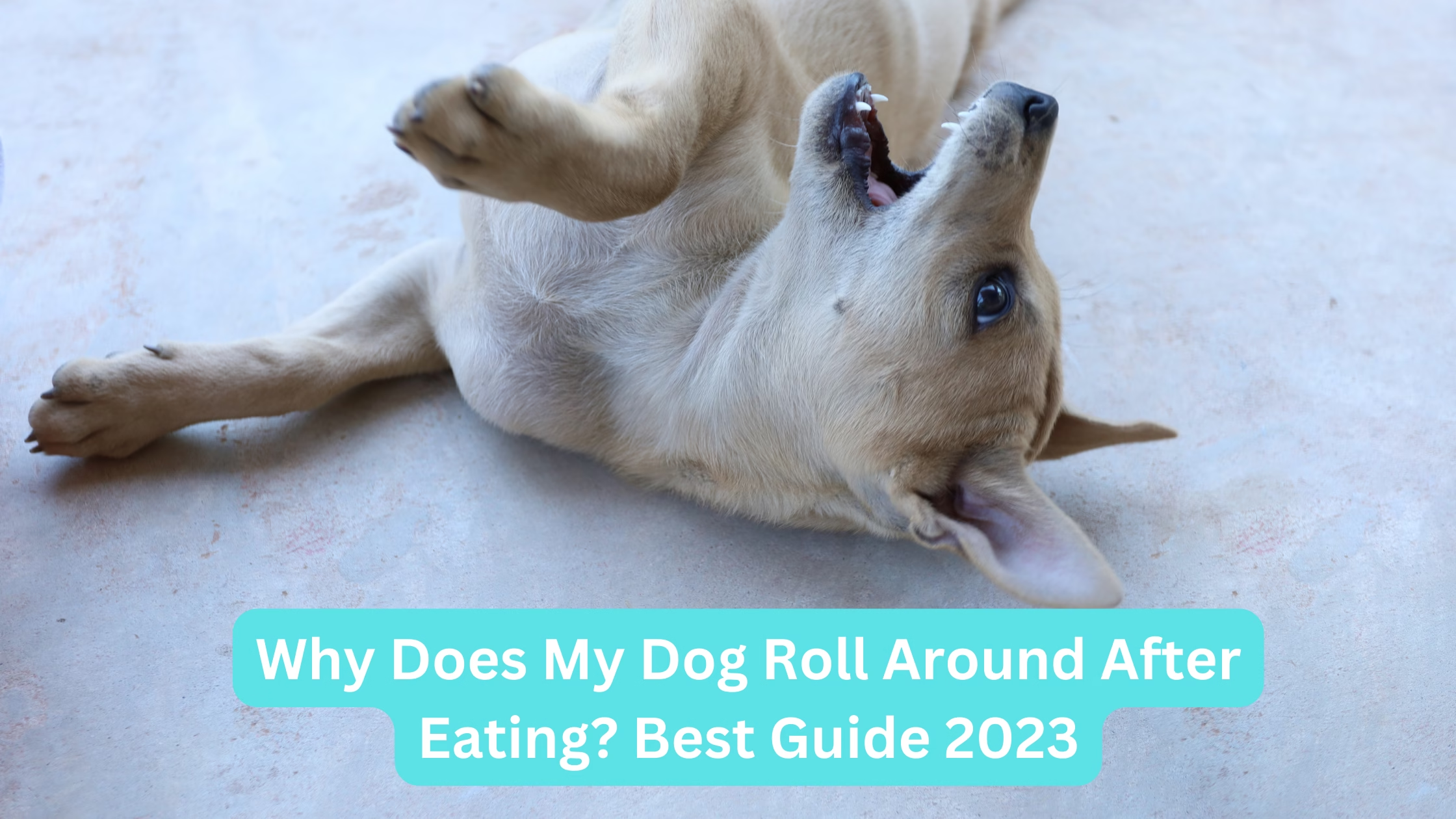
Why Does My Dog Roll Around After Eating? Have you ever wondered why your furry friend takes a little victory lap around the room after finishing a meal?
You’re not alone if you’ve noticed your dog joyfully rolling around on the floor or in the grass after eating.
This peculiar behavior often leaves pet owners puzzled but is quite fascinating.
This article delves into the reasons behind this post-meal ritual and sheds light on its significance in your dog’s world.
While it may seem like a random burst of energy or a bizarre quirk, the truth is that dogs have deep-rooted instincts that drive them to perform such actions.
Understanding the reasons behind their post-meal rolling behavior can provide valuable insights into their natural tendencies and emotional state.
Why Does My Dog Roll Around After Eating?
Why Does My Dog Roll Around After Eating?
So, let’s uncover the secrets behind why your dog engages in this intriguing ritual and explore the fascinating world of canine behavior!
1. The Natural Instinct of Rolling
To understand why dogs roll around after eating, we must delve into their evolutionary history and the instincts inherited from their ancestors.
These canines had to rely on various survival skills, including marking their territory and concealing their scents from potential prey or predators.
Rolling behavior in dogs can be traced back to these primal instincts.
In the wild, wolves would roll in the grass, dirt, or other surfaces to leave their scent behind and mark their territory.
By rolling, they would transfer their unique odor onto the surrounding environment, signaling their presence to other wolves and animals in the area.
Additionally, rolling helped wolves disguise their scent, making detecting prey animals or rival predators more challenging.
By coating themselves in different environmental scents, wolves could temporarily camouflage their natural odor, increasing their chances of successful hunting or avoiding detection.
Even though domesticated dogs have evolved from their wolf ancestors, traces of these instincts remain ingrained in their behavior.
Rolling after eating can manifest their inherent need to mark their territory and mask their scent, albeit in a more tame and playful manner.
Moreover, rolling provides dogs with a sense of security.
Rolling on the ground is an instinctual way for them to establish familiarity with their environment and leave their scent as a form of self-identification.
By doing so, they create a personal space that carries their unique odor, giving them a comforting sense of belonging and ownership.
So, the next time you see your dog happily rolling around after a meal, remember that it’s not just a random act.
It’s a remnant of their ancestral instincts, marking their territory, concealing their scent, and satisfying their primal need for security.
Embracing this behavior allows us to appreciate the deep-rooted connections between our beloved canine companions and their wild heritage.
2. Displacement Behavior
Have you ever noticed your dog rolling around after a meal and wondered why they engage in such seemingly random behavior?
Displacement behavior refers to actions animals exhibit when faced with conflicting emotions or a build-up of excess energy. It’s like a temporary release valve for their inner conflicts.
When dogs roll around after eating, it can be seen as a form of displacement behavior.
After a satisfying meal, your dog might experience a mix of emotions, such as contentment, excitement, or even mild restlessness.
Rolling provides an outlet for these conflicting feelings, allowing your furry friend to release pent-up energy and find balance.
Think of it this way: your dog has just enjoyed a delicious meal and feels satiated.
However, they might also be brimming with energy as their metabolism kicks into gear to digest the food.
This surge of energy can create a temporary state of restlessness or an internal conflict between feeling full and having excess vitality.
Rolling after eating allows dogs to redirect this surplus energy positively and instinctually.
It’s like a mini celebration of their satisfaction while allowing them to release any restlessness they may feel.
Dogs find a physical and mental equilibrium by engaging in this displacement behavior, bringing harmony to their post-meal experience.
In addition, rolling helps dogs maintain emotional balance.
Like humans, dogs can experience a wide range of emotions, and sometimes these emotions can clash or overlap.
Rolling provides a soothing and automated mechanism for dogs to manage these conflicting emotions.
So, the next time you witness your dog joyfully rolling around after a meal, remember that it’s their way of coping with inner conflicts and finding equilibrium.
It’s an engaging and instinctual behavior that allows them to release excess energy, maintain emotional balance, and embrace the satisfaction of a well-enjoyed meal.
Embrace and celebrate this fascinating aspect of your canine companion’s nature!
3. Sensory Stimulation and Comfort
Have you ever watched your dog roll around after a meal and wondered why it seemed so blissfully absorbed in the experience?
Rolling after eating provides dogs with a delightful sensory adventure beyond mere satisfaction.
Let’s explore the sensory stimulation and comfort aspects of this fascinating behavior.
When dogs roll around after eating, they feast for their senses.
Imagine the joy they experience as they immerse themselves in the physical sensations of rolling on different textures.
The grass, carpet, or even a soft blanket provides a variety of tactile experiences.
This rich sensory stimulation adds a layer of pleasure to their post-meal routine.
The physical sensation of rolling on different surfaces can be akin to a massage for dogs.
It stimulates their skin, muscles, and nerve endings, which feels good and promotes better blood circulation.
This increase in blood flow can positively affect their overall well-being, from aiding digestion to supporting a healthy coat and skin.
Moreover, rolling around after eating may comfort dogs in various ways.
As they roll, they engage in gentle stretching and flexing movements, which can help alleviate any digestion-related discomfort.
The rolling motion applies light pressure on the abdomen, potentially aiding the digestive process and providing a soothing sensation.
For dogs, rolling is like a self-administered therapy session. It allows them to indulge in a sensory experience that brings pleasure, relaxation, and a sense of well-being.
Combining tactile stimulation, improved circulation, and potential digestive relief creates a harmonious and comforting post-meal ritual.
So, the next time you observe your dog rolling around after a satisfying meal, appreciate the sensory journey they embark upon.
From the blissful tactile sensations to the potential comfort it brings, rolling provides them with a holistic sensory experience that enhances their overall post-meal satisfaction.
Embrace this delightful aspect of their behavior and cherish the joy it brings your furry friend’s life.
4. Communication and Social Significance
Did you know that when your dog rolls around after eating, they may try to communicate something to you and their furry friends?
Rolling isn’t just a post-meal ritual but a form of communication with both dogs and humans.
Let’s explore how dogs use rolling to convey emotions, seek attention, and even leave messages through scent.
When a dog rolls around after a meal, it can display contentment and satisfaction.
Just like how we stretch or sigh with contentment after a delicious meal, dogs have their way of expressing their joy and fulfillment.
Rolling is their exuberant proclamation of happiness, saying, “I’m completely satisfied and feeling great!”
In addition to expressing satisfaction, dogs may roll to seek attention from their human companions or fellow canines.
Rolling can be an attention-grabbing behavior, especially if they want to play or interact socially.
It’s their way of saying, “Hey, look at me! I’m here, and I want your attention and companionship.”
Furthermore, rolling plays a role in scent-based communication.
Dogs have a highly developed sense of smell. During rolling, they distribute their unique scent onto the surfaces they encounter.
This scent marking serves as a form of communication, leaving behind messages for other dogs and animals to decipher.
By transferring their scent through rolling, dogs leave an olfactory calling card, indicating their presence and providing information about their identity, territory, and emotional state.
It’s like a scented bulletin board where other dogs can gather information about who has been there, helping them navigate their social interactions and establish connections within their canine community.
So, the next time your dog rolls around after a meal, consider it their way of communicating their happiness, seeking attention, and leaving a scented message for others.
Embrace this behavior as a means of connection and understanding among their fellow canines and with you as their beloved human companion.
A fascinating aspect of their social and communicative repertoire adds depth to your bond with your furry friend.
While rolling around after eating is a natural and normal behavior for dogs, excessive rolling may sometimes warrant attention from dog owners.
If you notice your dog engaging in unusually high rolling or it starts interfering with its daily activities, here are some helpful tips for managing and redirecting this behavior if necessary.
1. Training and Distraction
Consider incorporating training exercises into your dog’s routine to redirect their energy and focus.
Teach them alternative behaviors or commands that they can perform after eating, such as sitting, lying down, or fetching a toy.
By providing mental stimulation and engaging their attention, you can divert their inclination to roll excessively.
2. Interactive Play
Engaging in interactive play sessions after meals can be an effective way to redirect your dog’s energy.
Grab their favorite toy and engage them in a game of fetch or a stimulating puzzle toy that requires mental effort.
By channeling their energy into play, you can reduce the likelihood of excessive rolling and promote a more balanced post-meal routine.
3. Environmental Enrichment
Enhance your dog’s environment with interactive toys, treat-dispensing puzzles, or sensory experiences.
Providing them with opportunities for mental and physical stimulation throughout the day can help alleviate any excess energy that might otherwise manifest as excessive rolling.
4. Health Check
Suppose you observe a sudden increase in rolling behavior or notice any other changes in your dog’s behavior or health.
In that case, it’s essential to consult a veterinarian. Excessive rolling can sometimes indicate an underlying medical condition or discomfort.
Your vet can assess your dog’s overall health, address concerns, and provide appropriate guidance.
Remember, every dog is unique, and their rolling behavior may vary.
Maintaining a watchful eye and observing any significant changes in their behavior or health is essential.
Excessive rolling, if persistent or accompanied by other symptoms, might warrant professional evaluation.
By implementing these strategies and staying attentive to your dog’s well-being, you can ensure a balanced and healthy post-meal routine for your furry friend.
Frequently Asked Questions (FAQs) about Dogs Rolling Around After Eating
Why does my dog roll around after eating?
Dogs may roll around after eating due to a combination of instincts, such as marking territory, masking their scent, releasing energy, and expressing contentment.
Should I discourage my dog from rolling after eating?
Rolling after eating is generally a harmless behavior. However, if it becomes excessive, interferes with their well-being, or is accompanied by other concerning signs, it’s advisable to consult a veterinarian.
Can rolling after eating be a sign of happiness?
Yes, rolling after eating can indicate contentment and satisfaction. It’s a way for dogs to communicate their positive emotions and celebrate a well-enjoyed meal.
Does the surface my dog rolls on affect their behavior?
The surface can contribute to the sensory experience of rolling. Dogs may prefer different textures like grass, carpet, or blankets. However, the behavior is more closely related to their instincts and communication methods.
Is rolling after eating related to my dog’s digestion?
Rolling can help relieve mild digestion-related discomfort by applying gentle pressure on the abdomen. However, if you suspect digestive issues or observe persistent signs of discomfort, it’s important to consult a veterinarian.
Can I train my dog to stop rolling after eating altogether?
It may be challenging to eliminate a natural behavior like rolling after eating. However, you can manage excessive rolling through training, redirection, and environmental enrichment techniques.
Should I be concerned if my dog doesn’t roll after eating?
Not all dogs exhibit rolling behavior after eating, and it’s perfectly normal. Rolling is just one of many ways dogs express themselves, and the absence of this behavior doesn’t necessarily indicate a problem.
How can I redirect my dog’s excessive rolling behavior?
Training exercises, interactive play, and environmental enrichment can help redirect your dog’s excessive rolling behavior. Providing mental and physical stimulation after meals can help channel their energy into more productive activities.
Can excessive rolling be a sign of a medical problem?
Excessive rolling can sometimes indicate an underlying medical condition or discomfort. It’s important to consult a veterinarian if you observe persistent or unusual rolling behavior or if other concerning symptoms accompany it.
Is it normal for dogs to roll excessively after meals?
Occasional rolling after meals is normal. However, excessive rolling or if it interferes with their daily activities may warrant attention and should be monitored.
Understanding why dogs roll around after eating provides insights into their instincts, communication methods, and well-being.
While rolling is a natural behavior with various underlying reasons, it’s important to be aware of any excessive or unusual rolling that may require attention.
Dog owners can manage excessive rolling if necessary by incorporating training, redirecting their attention, and engaging in interactive play.
As responsible pet owners, observing any changes in behavior or health is crucial, and consulting a veterinarian for guidance and assistance.
With proper care and understanding, you can ensure a happy and balanced life for your canine companion.
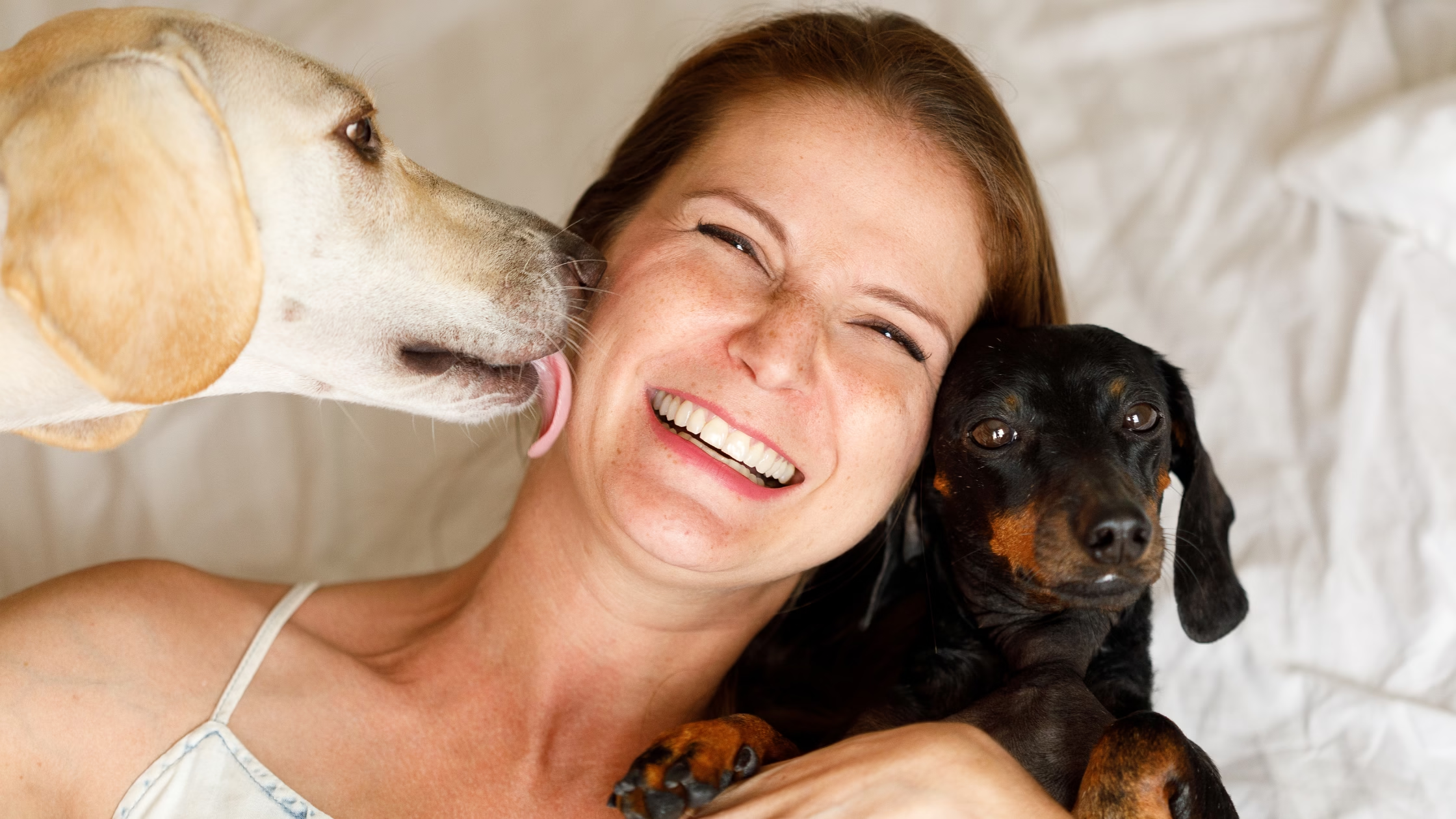
Imagine this scenario: You’re relaxing on the couch, enjoying some quality time with your furry companion, when suddenly, out of nowhere, your dog leans in and starts giving your armpit a thorough lick.
It’s an odd and unexpected behavior that leaves you puzzled and wondering, “Why does my dog lick my armpit?”
In this article, we delve into the fascinating world of canine behavior to shed light on this peculiar act of affection.
We’ll explore the instinctual motivations that drive our furry friends to engage in such behavior, uncovering the surprising reasons behind their seemingly odd choices of body parts to shower with licks.
Whether you find it endearing or slightly bizarre, understanding why dogs lick armpits can provide valuable insights into the intricate bond between humans and their canine companions.
Why does my dog lick my Armpit?
So, let’s embark on this intriguing journey to uncover the secrets behind your dog’s armpit-licking adventures.
The Curious Behavior of Armpit Licking by Dogs
A. Explanation of the behavior
When it comes to our canine companions, their actions can often leave us scratching our heads in bewilderment.
One such perplexing behavior is the act of dogs licking their owners’ armpits.
Yes, you read that right! It may seem strange, but many dog owners have experienced this unique display of affection firsthand.
Picture your dog approaching you with a wagging tail, only to make a beeline for your armpit and start showering it with licks.
It’s undoubtedly an attention-grabbing behavior that raises eyebrows and prompts the question, “What on earth is going on?”
B. Addressing the common concerns
Before we delve deeper into the reasons behind this intriguing behavior, it’s important to address any concerns you might have.
Rest assured, armpit licking by dogs is typically harmless.
Unlike other canine behaviors that may warrant immediate attention, this particular act doesn’t usually indicate serious problems.
That being said, it’s crucial to understand the underlying reasons behind this behavior.
By gaining insight into your dog’s motivations, you can deepen your bond, nurture your relationship, and foster a greater understanding of your furry friend’s unique ways of expressing affection.
So, let’s embark on a journey of discovery and unravel the fascinating secrets behind your dog’s penchant for armpit licking.
By the end of this article, you’ll have a newfound appreciation for the complexity and depth of the bond you share with your four-legged companion.
Understanding the Instinctual Motivations Behind dog licking armpit
Understanding the Instinctual Motivations Behind dog licking armpit
A. Dogs’ natural inclination for grooming
Dogs have an innate instinct for grooming, and it goes beyond simply keeping their coats clean.
Grooming is deeply rooted in their evolutionary history, as it serves various purposes, including bonding, social interaction, and maintaining pack harmony.
In the wild, pack members engage in grooming rituals to strengthen social bonds and establish trust and unity.
B. Armpits as appealing areas for licking
Now, why do dogs specifically target our armpits for their grooming endeavors? The unique combination of scent and sweat glands concentrated in this area is the answer.
Armpits contain apocrine glands that secrete sweat with a distinct odor.
These glands produce pheromones, chemical substances that play a crucial role in dog communication.
Pheromones carry information about an individual’s identity, emotions, and reproductive status.
Dogs, with their incredible olfactory senses, are highly attuned to these pheromones.
When they lick your armpits, they are grooming you and gathering valuable information about your scent. It’s their way of deepening their understanding of you and strengthening the bond you share.
C. Licking as a bonding and social behavior
Licking is a multifaceted behavior for dogs, serving as a means of communication, affection, and bonding.
When your dog licks your armpits, it expresses its desire to connect with you deeper.
Licking is a behavior that begins early in a dog’s life, as puppies often lick their mother and littermates as a way of soliciting attention, comfort, and nourishment.
As your dog grows, licking becomes a way to establish and maintain social bonds.
They extend this bonding behavior from their canine companions to their human family by licking your armpits.
It’s their way of showing love, trust, and a desire for closeness.
So, the next time your furry friend decides to give your armpits a thorough lick, remember their instinctual behavior rooted in their need for grooming, their fascination with scents, and their profound desire to connect with you.
Embrace this unique form of canine affection and cherish your special bond.
Possible Explanations for Armpit Licking
A. Salt content in sweat
It’s no secret that dogs are attracted to the salty taste of human sweat.
Sweat glands in our armpits produce sweat with a higher salt content compared to other areas of our bodies.
This saltiness is a flavor incentive for dogs, making our armpits an enticing target for their licks. So, when your dog indulges in armpit licking, it might simply enjoy the salty goodness emanating from your skin.
B. Seeking attention and affection
Dogs are social creatures and thrive on attention and affection from their owners.
Armpit licking can be their way of seeking your undivided attention and basking in the warmth of your affectionate response.
They learn that this behavior captures your focus and elicits a positive reaction.
So, if your dog licks your armpit, it’s their way of saying, “Hey, pay attention to me! I want some love and cuddles!”
C. Behavioral cues and stress relief
Licking can also be a self-soothing behavior for dogs when they feel stressed, anxious, or bored. It releases endorphins, which act as natural calming agents.
Armpits, being soft and accessible areas, provide dogs with a convenient target for their self-soothing rituals.
So, if your dog licks your armpit during moments of stress or when they’re feeling restless, it’s their way of finding comfort and relief.
By licking your armpit, dogs may also be responding to behavioral cues they’ve learned over time.
They may have observed that this specific action garners attention or soothing responses from you, reinforcing the behavior.
Consequently, armpit licking becomes a learned behavior tied to seeking comfort or attention in certain situations.
It’s important to note that while armpit licking is generally harmless, excessive or obsessive licking may indicate an underlying issue.
Suppose your dog displays an abnormal licking pattern, discomfort, or skin irritation.
In that case, it’s advisable to consult a veterinarian or animal behaviorist for a professional evaluation.
Understanding the potential reasons behind your dog’s armpit licking can deepen your connection and empathy toward their needs.
So, the next time your canine companion starts targeting your armpits with their affectionate licks, embrace the moment, provide the attention they crave, and enjoy the unique bond that sets you apart as loyal friends.
When to Seek Professional Advice
When to Seek Professional Advice
A. Recognizing excessive or compulsive licking
While armpit licking is generally a harmless and natural behavior, there are instances where it may become excessive or compulsive.
Suppose you notice your dog obsessively and persistently licking your armpits or displaying abnormal licking patterns.
In that case, paying attention and considering seeking professional advice is essential.
Excessive licking can lead to skin irritation, hair loss, and discomfort for your furry friend. It may indicate an underlying issue that requires attention.
If you observe such behavior, it’s recommended to consult with a veterinarian or an animal behaviorist who can assess your dog’s behavior and provide guidance on how to address it effectively.
B. Medical conditions and allergies
Excessive licking, including armpit licking, can sometimes be a symptom of an underlying medical condition or allergies.
Dogs may develop skin allergies, dermatitis, or other health issues that trigger persistent licking behavior.
It’s important to be aware of any signs of discomfort or irritation your dog may exhibit, such as redness, swelling, or changes in their coat.
Suppose you suspect your dog’s armpit licking is due to a medical condition or allergies.
In that case, it’s crucial to have them evaluated by a professional.
A veterinarian can conduct necessary tests, identify potential underlying causes, and recommend appropriate treatment options.
By ruling out any health concerns, you can ensure the well-being and comfort of your canine companion.
Professional advice is invaluable when understanding and addressing unusual or concerning behaviors in your dog.
The expertise of a veterinarian or animal behaviorist can help you navigate any potential health issues and provide appropriate solutions to promote your dog’s overall well-being.
In conclusion, while armpit licking is often harmless and affectionate, it’s important to be aware of excessive or compulsive patterns.
By recognizing when to seek professional advice, you can ensure your dog receives the care and attention they need, promoting a happy and healthy life for your beloved furry friend.
Dogs licking human sweat is generally considered safe. However, it’s essential to consider a few factors. Sweat is mostly harmless to dogs, but certain circumstances should be considered. Suppose you have applied lotions, deodorants, or other substances to your armpits. In that case, it’s best to discourage your dog from licking as these products may contain ingredients that can be harmful to them. Additionally, suppose you have any open wounds or cuts in the armpit area. In that case, preventing your dog from licking is advisable to avoid potential infection. As always, it’s recommended to consult with your veterinarian if you have any specific concerns about your dog’s health.
Why does my dog lick other parts of my body besides my armpit?
Dogs intuitively groom and show affection through licking, which may extend beyond your armpit. Dogs may also lick other areas of your body, such as your hands, face, or feet. These behaviors allow dogs to explore scents, seek attention, or establish social bonds. Additionally, some dogs may have learned through positive reinforcement that licking certain areas elicits a desired response from their owners. As long as the licking is not excessive or causing discomfort, it is generally considered a normal part of canine behavior and a way to express their love and connection with you.
Throughout this journey into the world of dog armpit licking, we have unraveled the fascinating reasons behind this behavior.
We’ve discovered that armpit licking stems from dogs’ instincts, the inclination for grooming, and the desire to bond with their human companions.
Armpits, with their unique scent and sweat glands, hold a special allure for our canine friends.
Dogs are attracted to the saltiness of human sweat and use their sense of taste and smell to gather information about us.
Licking is not only a grooming behavior but also a way for dogs to communicate their affection and seek attention from their owners.
While armpit licking is generally harmless and should be embraced as a sign of love and bonding, it’s crucial to remain vigilant.
Recognize when the behavior becomes excessive or compulsive, as it may indicate an underlying issue that requires professional attention.
Skin allergies, medical conditions, or stress can contribute to abnormal licking patterns, and seeking guidance from a veterinarian or animal behaviorist can help ensure your dog’s well-being.
So, the next time your furry companion surprises you with an armpit lick, appreciate the unique bond you share.
Embrace this behavior as a demonstration of their love and trust.
Pay attention to changes in their licking patterns and seek professional advice if needed.
By understanding and nurturing their instincts, you can continue to foster a strong and enduring relationship with your beloved dog.
Remember, armpit licking is one of the many endearing and sometimes quirky ways our dogs express affection.
Cherish these moments, and enjoy the delightful journey of companionship with your loyal and loving canine friend.
The Power of Aggressive Dog Board and Train Programs – In dog training, aggressive behavior can be a significant challenge for dog owners and their furry companions.
However, there is hope! Board and train programs have emerged as a highly effective solution for addressing and rehabilitating aggressive dogs.
In this article, we will delve into the concept of aggressive dog board and train programs, exploring their benefits, methodologies, and much more.
Whether you’re a concerned dog owner or a professional in the field, this content will provide valuable insights into how aggressive dogs can find their path to a happier, more balanced life.
Understanding Aggression in Dogs
Understanding Aggression in Dogs
Aggression in dogs can be a complex behavior that stems from various factors.
Dog owners and enthusiasts need to thoroughly understand aggression to ensure the well-being of their pets and those around them.
Differentiating between Types of Aggression
Regarding aggression, dogs can exhibit different types with underlying causes.
Recognizing and differentiating between these types is crucial to address the issue effectively.
Some common types of aggression in dogs include:
Fear Aggression: Dogs may display aggression when they feel threatened or afraid. This type of aggression often stems from past traumatic experiences or lack of socialization.
Territorial Aggression: Dogs may become protective of their territory, showing aggression towards unfamiliar people or animals that enter their perceived space.
Resource Guarding Aggression: Some dogs may display aggression when they need to protect their resources, such as food, toys, or sleeping areas.
Dog-to-Dog Aggression: This type of aggression occurs when dogs show hostility towards other dogs. It can be rooted in competition, fear, or a lack of social skills.
Identifying Signs and Triggers of Aggression
To effectively manage and address aggression in dogs, it’s crucial to identify the signs and triggers that lead to aggressive behavior.
These signs may include:
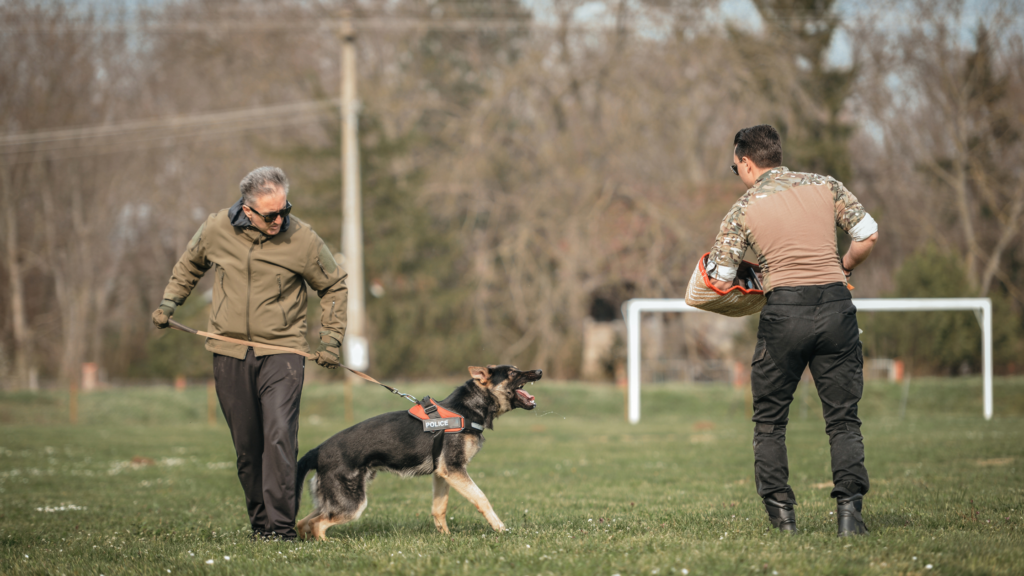
Growling or snarling
Barking excessively
Lunging or snapping
Raised fur and rigid body posture
A stiff tail or wagging tail held high.
Triggers for aggression can vary among dogs, but common ones include:
Fear or anxiety-inducing situations
Threats to their territory or resources
Lack of socialization or improper training
Pain or discomfort
Previous traumatic experiences
By recognizing these signs and triggers, dog owners can take proactive steps to manage aggression and create a safe environment for their pets and those around them.
Seeking professional help from a qualified dog behaviorist or trainer is often recommended to address aggression issues effectively and safely.
Remember, understanding and addressing aggression in dogs requires patience, consistency, and a commitment to providing appropriate training and socialization.
Aggressive behavior can be managed with the right approach, allowing dogs to live happy and balanced lives.
The Aggressive Dog Board and Train Approach
The Aggressive Dog Board and Train Approach
When addressing the specific needs of aggressive dogs, the board-and-train approach has gained popularity as an effective training method.
This approach involves sending the dog to a specialized facility or trainer for an intensive training program, where they receive dedicated attention and guidance.
What is Board and Train?
Board and train, also known as “doggie boot camp,” is a comprehensive training program that provides a structured environment for dogs to learn and modify their behavior.
During the program, the dog resides at the training facility for a set duration, typically ranging from a few weeks to a few months, depending on the severity of the aggression.
How it Differs from Traditional Training Methods
Board and train differs from traditional training methods in several ways.
While traditional training often involves regular classes or sessions with the owner and dog, board and train offers a more immersive and intensive approach.
Trainers work closely with the dog daily, providing consistent training, socialization, and behavior modification.
In a board and train program, trainers can observe the dog’s behavior in various situations and environments, allowing for a more thorough understanding of the underlying causes of aggression.
This comprehensive approach enables them to address the dog’s specific needs and implement tailored training techniques accordingly.
Why It’s Effective for Aggressive Dogs
Board and train programs are particularly effective for aggressive dogs due to the structured and controlled environment they provide.
Aggressive behaviors can be deeply ingrained and challenging to address, requiring dedicated time, expertise, and consistency.
By immersing the dog in a focused training program, trainers can work closely with the dog to modify their behavior and teach them alternative, more appropriate responses.
Furthermore, board and train programs often incorporate controlled socialization with other dogs and humans, gradually exposing the dog to different stimuli and helping them learn proper social skills.
This exposure, combined with consistent training, helps to reshape the dog’s behavior and reduce aggressive tendencies over time.
It’s important to note that board and train is not a quick fix or a substitute for ongoing owner involvement.
After completing the program, owners must continue reinforcing the training techniques and strategies learned during the board and train program to maintain the dog’s progress.
Overall, the board and train approach provides a focused, intensive, and controlled training environment that can effectively address the specific needs of aggressive dogs.
Combined with ongoing owner involvement and reinforcement, it can help these dogs learn new behaviors, reduce aggression, and improve their overall well-being.
Choosing the Right Board and Train Program
When selecting a board and train program for your aggressive dog, it’s important to make an informed decision that suits your dog’s needs and expectations.
Here are some key factors to consider when choosing the right program:
Program Structure and Approach
Different board and train programs may have varying structures and training methodologies.
It’s important to understand the specific approach used by each program and ensure that it aligns with your goals and training philosophy.
Some programs focus on positive reinforcement techniques, while others employ more balanced training methods.
Consider what training approach you feel comfortable with and what you believe will be most effective for your dog.
Qualifications and Expertise of Trainers
The qualifications and expertise of the trainers should be a crucial consideration.
Look for trainers with experience working with aggressive dogs and a solid understanding of behavior modification techniques.
Ask about their certifications, education, and any specialized training they have received.
A reputable program will have knowledgeable and skilled trainers who can address the unique needs of your aggressive dog.
Facility and Environment
Take the time to visit the facility where the board and train program is conducted.
Assess the cleanliness, safety, and overall environment of the facility.
A well-maintained facility with adequate space and proper equipment can provide a positive training experience for your dog.
Success Stories and Testimonials
Look for reviews, testimonials, or success stories from previous clients who have enrolled their aggressive dogs in the board and train program.
Positive feedback and success stories can provide insights into the program’s effectiveness and the trainers’ abilities to handle aggressive behavior.
Don’t hesitate to contact past clients or ask for references to understand their experiences better.
Follow-up Support and Continued Training
Inquire about the post-program support provided by the trainers.
A reputable board and train program will offer guidance and resources for owners to continue reinforcing the training once the dog returns home.
Ongoing support is crucial for maintaining the progress achieved during the program and ensuring a smooth transition back into the home environment.
Remember, each dog is unique, and what works for one dog may not work for another.
Take the time to research and evaluate different board and train programs, ask questions, and consider your dog’s specific needs before making a decision.
By selecting a program with qualified trainers, a tailored approach, and positive reviews, you increase the likelihood of finding a board and train program that will help address your dog’s aggression and set them on the path to behavioral improvement.
Aggressive Dog Board and Train – The Training Process
When enrolling your aggressive dog in a board and train program, you can expect a structured training process designed to address their specific behavioral issues.
Here are the key components of the training process:
Assessment and Evaluation
The first step is to assess and evaluate your dog’s aggressive behavior thoroughly.
This helps the trainers understand the root causes of the aggression, identify triggers, and assess the severity of the issue.
Through this evaluation, they can develop a customized training plan tailored to your dog’s needs.
Tailored Training Techniques
Each aggressive dog requires a unique approach to training.
Trainers will employ specialized techniques that are specifically designed to address aggression.
These techniques may include desensitization and counterconditioning, impulse control exercises, and obedience training.
The trainers will adapt the training methods to suit your dog’s temperament, learning style, and specific behavioral challenges.
Positive Reinforcement
Positive reinforcement is a key aspect of training aggressive dogs.
Trainers will utilize rewards such as treats, praise, and play to reinforce desired behaviors and create positive associations.
This approach focuses on rewarding good behavior rather than punishing or correcting negative behavior.
Using positive reinforcement, trainers can encourage your dog to respond appropriately and reduce aggressive tendencies.
Behavior Modification Strategies
Behavior modification strategies aim to change your dog’s emotional response to triggers that elicit aggression.
Trainers will gradually expose your dog to controlled situations where they encounter these triggers, helping them learn new, more positive behaviors.
This process may involve gradual exposure, desensitization, and counterconditioning to replace negative reactions with calm and appropriate responses.
Throughout the training process, trainers will closely monitor your dog’s progress and make necessary adjustments to the training plan.
They will provide consistent guidance and support to ensure your dog makes positive progress in behavior improvement.
It’s important to note that training aggressive dogs requires patience, consistency, and commitment from both the trainers and the dog owners.
The training process may take several weeks or even months, depending on the severity of the aggression and the individual dog’s progress.
However, with a tailored approach, positive reinforcement, and behavior modification strategies, the goal is to help your dog overcome aggression and develop more desirable behaviors.
By enrolling your aggressive dog in a board and train program that focuses on assessment, tailored techniques, positive reinforcement, and behavior modification, you are allowing them to learn new behaviors, gain self-control, and improve their overall quality of life.
Aggressive Dog Board and Train – Aftercare and Continued Support
Once your aggressive dog completes the board and train program and returns home, it’s crucial to ensure a smooth transition and maintain its progress in the long term.
Here are some key aspects of aftercare and continued support:
Transitioning Back Home
Returning home after the board and train program can be an exciting but potentially challenging time.
Trainers will guide how to create a structured and supportive environment for your dog.
They may recommend gradual reintroduction to familiar surroundings, family members, and other pets to help your dog adjust comfortably.
Following the trainers’ instructions during this transition period is essential to reinforce the newly learned behaviors.
Maintenance Exercises
To maintain the progress achieved during the board and train program, trainers will provide you with specific exercises and techniques to practice with your dog at home.
These exercises are designed to reinforce the training, strengthen the bond between you and your dog, and help them continue to exhibit desired behaviors.
Regularly practicing these exercises will ensure that your dog retains their training and continues to improve over time.
Importance of Ongoing Training and Reinforcement
Continued training and reinforcement are vital for the long-term success of your dog’s behavior improvement.
This may involve attending follow-up sessions with the trainers or enrolling in additional training classes.
Ongoing training helps solidify your dog’s training foundation, address any new challenges, and reinforce positive behaviors.
It also allows you to strengthen the bond with your dog further and enhance their overall obedience and social skills.
Professional Support
Even after the board and train program, it’s beneficial to have access to professional support and guidance.
Trainers can offer advice, answer questions, and provide assistance when needed.
They understand your dog’s unique needs and can offer valuable insights into managing their behavior and ensuring long-term success.
Remember, each dog is unique, and the duration of aftercare and continued support may vary.
It’s important to follow the trainers’ recommendations and communicate openly with them to address any concerns or challenges.
By prioritizing aftercare and continued support, you can maximize the benefits of the board and train program and help your dog maintain their improved behavior.
Consistency, ongoing training, and reinforcement significantly ensure your dog’s long-term success and create a harmonious and balanced relationship between you and your furry friend.
With the right program and professional guidance, aggressive dogs can transform remarkably, finding a new lease on a life filled with love, trust, and harmony.
By exploring the topics covered in this article, we aim to empower dog owners and professionals alike to make informed decisions and provide the best possible care for their furry friends.
Let’s pave the way for a brighter future for aggressive dogs through effective board and train programs.
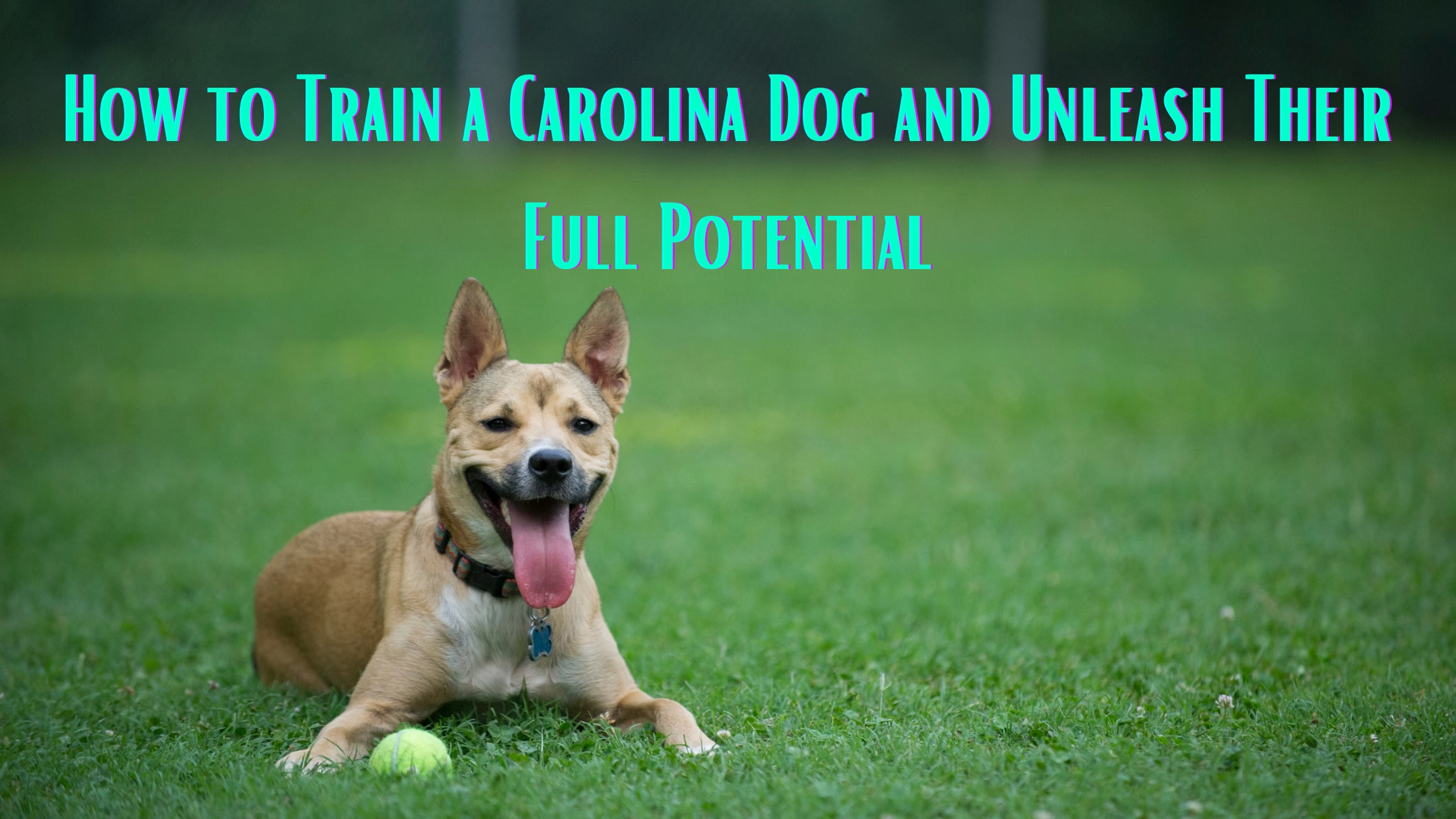
Welcome to our comprehensive guide on how to train a Carolina Dog! This article will delve into this fascinating breed’s world, providing valuable insights and expert tips to train your Carolina Dog successfully.
Whether you’re a first-time dog owner or an experienced trainer, we’ve got you covered.
So let’s dive in and discover the secrets to bringing out the best in your Carolina Dog through effective training methods.
Understanding the Carolina Dog Breed
Understanding the Carolina Dog Breed
Origins and History of Carolina Dogs
The origins and history of the Carolina Dog are fascinating and provide insight into this unique breed.
The Carolina Dog, also known as the American Dingo or Carolina Dingo, is believed to have descended from ancient Asian pariah dogs that crossed the Bering Land Bridge with early human settlers around 9,000 years ago.
These dogs eventually found their way to the southeastern region of the United States.
Carolina Dogs were initially found in rural areas of South Carolina, Georgia, and North Carolina, where they lived as free-roaming dogs in the wilderness.
They were known for their ability to survive in harsh environments, hunting small game, and adapting to their surroundings.
In the 1970s, Dr. I. Lehr Brisbin, a biologist, began studying these dogs, leading to the recognition and preservation of the breed.
Physical Characteristics and Temperament of Carolina Dogs
Carolina Dogs possess distinct physical characteristics that set them apart.
They are medium-sized dogs with strong and athletic build.
Their short and dense coats protect them from various weather conditions.
Carolina Dogs have erect ears and almond-shaped eyes that convey a sense of intelligence and alertness.
Regarding temperament, Carolina Dogs are known for their keen senses and instincts.
They have a strong prey drive and a natural inclination to explore their surroundings.
However, they are also loyal and affectionate towards their human families.
These dogs form deep bonds with their owners and are often described as independent yet highly trainable.
Carolina Dogs are intelligent and adaptable, making them suitable for various lifestyles.
They can be reserved with strangers but are generally friendly and social with familiar faces.
Early socialization and positive training methods are essential to help them develop into well-rounded dogs.
Understanding the origins, history, physical characteristics, and temperament of Carolina Dogs provides a solid foundation for effective training and caring for this unique breed.
Unique Traits and Instincts of Carolina Dogs
Carolina Dogs possess unique traits and instincts that make them a fascinating breed.
One notable trait is their pack mentality.
These dogs have a strong sense of hierarchy and thrive in a structured environment.
They exhibit loyalty and form strong bonds with their human family members.
Another distinctive trait is their keen sense of hearing and smell.
Carolina Dogs have highly developed senses, which make them excellent watchdogs and hunters.
Their ability to detect subtle sounds and scents allows them to excel in various activities, such as search and rescue or scent detection.
In terms of instincts, Carolina Dogs retain their natural hunting instincts from their ancestral lineage.
They have a strong prey drive and may exhibit chasing behaviors towards smaller animals.
Providing appropriate outlets for their instincts through mental and physical stimulation is important to ensure a balanced and well-behaved companion.
Size and Weight of Carolina Dogs
Carolina Dogs fall into the medium-sized dog category.
Males typically stand between 17 to 20 inches (43 to 50 cm) at the shoulder.
Regarding weight, adult Carolina Dogs usually weigh between 30 to 55 pounds (14 to 25 kg), with males tending to be larger than females.
Coat Type and Colors of Carolina Dogs
Carolina Dogs have a short, dense double coat that helps protect them from various weather conditions.
Their coat provides insulation, keeping them warm in colder climates and offering some protection against the sun in warmer environments.
The coat is relatively low-maintenance, requiring occasional brushing to remove loose hair.
When it comes to colors, Carolina Dogs display a range of variations.
Common coat colors include Black, Black & Tan, Buff, Red, Tawny, White, and Yellow.
Some individuals may exhibit a combination of these colors or have a solid coat color.
Lifespan Expectancy of Carolina Dogs
On average, Carolina Dogs have a lifespan of around 12 to 15 years.
However, some individuals can live even longer with proper care, nutrition, and regular veterinary check-ups.
Providing them with a balanced diet, regular exercise, and mental stimulation is important to promote their overall health and well-being.
Understanding these unique traits, instincts, size, weight range, coat type and colors, and lifespan expectancy of Carolina Dogs will help you appreciate their individuality and tailor your training approach to their specific needs.
Health Concerns and Care Needs for Carolina Dogs
Carolina Dogs are generally healthy and hardy dogs with few breed-specific health issues.
However, like all dogs, they can be prone to certain health concerns. Awareness of these potential issues is important to ensure their well-being.
Regular veterinary check-ups, a balanced diet, exercise, and preventive measures, such as vaccinations and parasite control, are essential for maintaining their health.
Exercise and Activity Requirements for Carolina Dogs
Carolina Dogs have a moderate to high energy level and require regular exercise and mental stimulation.
Daily physical activity is crucial to keep them physically fit and mentally engaged.
They enjoy long walks, jogging, hiking, and interactive play sessions.
Providing them with opportunities for exploration and mental challenges, such as puzzle toys or obedience training, helps prevent boredom and promotes a well-balanced and contented Carolina Dog.
Feeding and Nutrition Guidelines for Carolina Dogs
Proper nutrition is vital for the overall health and well-being of your Carolina Dog.
Providing them with a high-quality, balanced diet is essential.
Feed them a diet formulated for their life stage (puppy, adult, or senior) and consider their size, age, activity level, and any specific dietary needs or sensitivities they may have.
It’s recommended to divide their daily food portions into two or three meals to prevent overeating and promote digestion.
Always ensure access to fresh water throughout the day.
Regarding feeding guidelines, consult your veterinarian for personalized advice based on your Carolina Dog’s needs.
Monitoring their body condition and adjusting their portion sizes is crucial to maintaining a healthy weight.
By addressing the health concerns and care needs, understanding their exercise and activity requirements, and providing appropriate feeding and nutrition, you can ensure your Carolina Dog’s overall well-being and enhance its quality of life.
Maintenance and Grooming Needs of Carolina Dogs
Carolina Dogs have relatively low grooming needs, thanks to their short and dense coat.
However, regular maintenance is necessary to keep them looking and feeling their best.
Brushing their coat once or twice a week helps remove loose hair, distribute natural oils, and minimize shedding.
During seasonal shedding periods, more frequent brushing may be required.
Additionally, routine care includes:
Checking and cleaning their ears to prevent infections.
Trimming their nails to maintain a comfortable length.
Maintaining good dental hygiene by brushing their teeth regularly.
It’s also important to look for skin issues or irritations and seek veterinary advice if necessary.
The average price of a Carolina Dog can vary depending on various factors such as location, breeder reputation, pedigree, and demand.
On average, you can expect to find Carolina Dogs ranging from around $500 to $2,000.
However, it’s crucial to ensure that you obtain a Carolina Dog from a reputable breeder who prioritizes the health and well-being of their dogs.
Adoption or rescue options may also be available, offering a more affordable alternative while providing a loving home to a deserving Carolina Dog in need.
When considering the price, it’s essential to remember that the cost of a Carolina Dog extends beyond the initial purchase.
Ongoing expenses such as food, veterinary care, grooming, training, and supplies should be factored into your budget to provide the best care and quality of life for your Carolina Dog.
By following a regular grooming routine and understanding the average price range of a Carolina Dog, you can ensure their coat remains healthy and well-maintained while being prepared for the financial responsibilities of owning a Carolina Dog.
Tips and Tricks for Living with a Carolina Dog
Living with a Carolina Dog can be a rewarding experience.
Still, it’s important to consider their unique characteristics and provide them with the right environment and care.
Here are some tips and tricks to enhance your life with a Carolina Dog:
Establish a Routine: Carolina Dogs thrive on routine and structure. Set a consistent schedule for feeding, exercise, training, and rest to create a sense of stability for your dog.
Socialize Early and Often: Early socialization is crucial for Carolina Dogs to develop good manners and positive interactions with other dogs and people. Expose them to various environments, sights, sounds, and experiences in a controlled and positive manner.
Provide Mental Stimulation: Carolina Dogs are intelligent and curious. Engage them in mental stimulation activities such as puzzle toys, obedience training, scent games, and interactive play sessions to keep their minds active and prevent boredom.
Positive Reinforcement Training: Carolina Dogs respond well to positive reinforcement training methods. Use rewards such as treats, praise, and play to motivate and reinforce desired behaviors. Avoid harsh punishment, which can negatively impact their trust and relationship with you.
Secure Fencing: Carolina Dogs have the instinct to roam and explore. Ensure your outdoor space is securely fenced to prevent them from wandering off. Supervise them during outdoor activities to ensure their safety.
Provide Exercise Opportunities: Carolina Dogs need regular exercise to channel their energy and prevent behavioral issues. Aim for daily walks, playtime, and opportunities for them to run and explore safely. A tired Carolina Dog is a happy and well-behaved companion.
Choosing and Finding a Carolina Dog
When choosing and finding a Carolina Dog, it’s essential to consider reputable sources and responsible breeding practices.
Here are some guidelines to follow:
Research Breeders: Look for reputable breeders who prioritize their dogs’ health, temperament, and well-being. If possible, visit the breeder’s facilities and ask questions about their breeding practices, health testing, and socialization efforts.
Consider Adoption: An adoption is a wonderful option for welcoming a Carolina Dog into your family. Check local shelters, rescue organizations, and breed-specific rescues for Carolina Dogs needing a loving home.
Meet the Parents: If purchasing from a breeder, ask to meet the parent dogs to assess their temperament and confirm they are well-cared for. A responsible breeder will be open to such visits.
Health Checks and Documentation: Ensure the breeder provides health clearances and documentation for the parent dogs, including screenings for hip dysplasia, PRA, and other potential genetic health issues.
Follow Your Instincts: Trust your instincts when choosing a Carolina Dog. Ensure you have a good connection with the dog. Observe their behavior and temperament to see if they align with your lifestyle and expectations.
Remember, welcoming a Carolina Dog into your life is a long-term commitment.
Take the time to find the right match and provide a loving and nurturing home environment for your new furry companion.
How to Train a Carolina Dog Step by Step.
How to Train a Carolina Dog Step by Step
A. Setting the Foundations for Training a Carolina Dog:
Creating a Positive Training Environment for your Carolina Dog
Creating a positive training environment is essential for successful training sessions with your Carolina Dog.
Here are some tips for creating an environment conducive to learning:
Choose a quiet and distraction-free area for training sessions.
Use positive reinforcement techniques, such as treats, praise, and rewards, to motivate and encourage your dog.
Keep training sessions short and engaging to maintain your dog’s focus and prevent boredom.
Use clear and consistent cues and commands to communicate with your Carolina Dog.
Avoid harsh punishments or forceful training methods, as they can harm the trust and bond between you and your dog.
Establishing Trust and Bonding with Your Carolina Dog
Building trust and a strong bond with your Carolina Dog is the foundation for successful training.
Here are some ways to establish trust and strengthen your bond:
Spend quality time together, engaging in activities your dog enjoys, such as playtime and walks.
Use positive reinforcement techniques to reward good behavior and build positive associations with training.
Practice patience and understanding, as each dog learns at their own pace.
Maintain consistency in your interactions and expectations to establish clear boundaries and routines.
Engage in activities that promote trust, such as gentle grooming, massages, and reassuring interactions.
Selecting Appropriate Training Tools and Equipment for training your Carolina Dog
When training your Carolina Dog, choosing the right tools and equipment is important.
Here are some considerations:
Use a well-fitting collar or harness that provides control without causing discomfort or injury.
Use a sturdy, non-retractable leash to maintain control during training sessions.
Select appropriate training treats that are small, soft, and enticing for your dog.
Utilize interactive toys, clickers, or target sticks as additional tools for specific training exercises.
Consider using positive reinforcement-based training methods that focus on rewarding desired behaviors rather than relying on aversive techniques.
By creating a positive training environment, establishing trust and bonding with your Carolina Dog, and selecting appropriate training tools and equipment, you’ll set a strong foundation for successful training sessions.
Remember to be patient, consistent, and always prioritize the well-being and happiness of your furry companion.
Teaching essential commands is crucial for effective communication and control over your Carolina Dog.
Here are some tips for teaching these commands:
Start with one command at a time, such as “sit.” Use a treat to lure your dog into the sitting position while saying the command.
When your dog sits, immediately reward them with the treat and praise. Repeat this process several times until they understand the association between the command and the action.
Gradually introduce other commands like “stay” and “come” using the same positive reinforcement technique.
Practice in different environments and gradually increase distractions to reinforce your dog’s ability to follow commands.
Housebreaking and Crate Training your Carolina Dog
Housebreaking your Carolina Dog is an important aspect of their training. Crate training can aid in housebreaking and provide a safe space for your dog.
Here’s how to approach it:
Choose an appropriately sized crate for your dog, allowing them to stand, turn around, and lie down comfortably.
Introduce the crate gradually, making it a positive and comfortable space by placing bedding and toys inside.
Use positive reinforcement to encourage your dog to enter the crate and reward them for calm behavior inside.
Establish a consistent schedule for outdoor bathroom breaks, and take your dog outside immediately after crate time, meals, and naps.
When your dog eliminates outside, reward them with praise and treats to reinforce the desired behavior.
Leash Training and Loose-Leash Walking with your Carolina Dog
Leash training is essential to ensure controlled and enjoyable walks with your Carolina Dog.
Here are some steps to leash train and achieve loose-leash walking:
Begin by introducing your dog to the leash in a positive and relaxed manner. Before attaching it to their collar or harness, allow them to sniff and explore the leash.
Start walking with your dog on a loose leash, encouraging them to walk beside you. Use treats and praise to reward them for staying by your side.
If your dog starts pulling on the leash, stop walking and wait for them to return to your side. Reward them for returning and walking calmly.
Practice turns and changes in direction to reinforce your dog’s focus on you and to discourage pulling.
Increase the duration and difficulty of walks, introducing distractions gradually to build your dog’s ability to maintain a loose leash.
Remember, training takes time and patience.
Consistency, positive reinforcement, and clear communication will help your Carolina Dog understand and respond to the basic commands, become housebroken, and learn to walk on a loose leash.
Enjoy the training process and celebrate your dog’s progress along the way.
C. Advanced Training Methods for Carolina Dogs:
Socialization Skills and Avoiding Behavioral Issues for Carolina Dogs
Socialization is crucial for Carolina Dogs to develop good behavior and interact positively with people, other animals, and various environments.
Here’s how to focus on socialization
Expose your Carolina Dog to different environments, sounds, sights, and experiences from an early age.
Gradually introduce them to new people and animals, ensuring each interaction is positive and controlled.
Use positive reinforcement to reward calm and appropriate behavior during socialization experiences.
Continually reinforce socialization throughout their life to prevent behavioral issues and promote a well-rounded, confident dog.
Teaching Tricks and Agility Training to your Carolina Dog
Teaching tricks and engaging in agility training can provide mental stimulation and strengthen the bond between you and your Carolina Dog.
Here are some tips:
Start with basic commands like “sit,” “stay,” and “lie down” before progressing to more complex tricks.
Use positive reinforcement, such as treats, praise, and play, to motivate and reward your dog for successfully performing tricks.
Break down each trick into smaller steps and gradually increase the difficulty level as your dog becomes more proficient.
Incorporate agility equipment, such as jumps, tunnels, and weave poles, to challenge your dog physically and mentally.
Off-Leash and Recall Training for Carolina Dogs
Off-leash training and reliable recall are important for Carolina Dogs to enjoy off-leash activities safely.
Here’s how to work on off-leash training:
Start in a secure, enclosed area where distractions are minimal and gradually increase the level of distraction as your dog progresses.
Use a long training leash to provide some freedom while controlling your dog’s movements.
Practice recall exercises using a consistent cue, such as “come” or a whistle, and reward your dog with high-value treats and praise when they come to you.
Gradually increase the distance and distractions during off-leash sessions, reinforcing the importance of reliable recall.
Remember, advanced training methods require patience, consistency, and clear communication.
Always prioritize your Carolina Dog’s safety and well-being during training sessions.
If you encounter any challenges or feel unsure, consider consulting with a professional dog trainer experienced in advanced training techniques for additional guidance and support.
D. Addressing Specific Challenges in Carolina Dog Training
Handling Separation Anxiety and Excessive Barking in Carolina Dogs
Separation anxiety and excessive barking can be common challenges in Carolina Dogs.
Here are some strategies to address these issues:
Gradual desensitization: Help your dog become more comfortable with being alone by gradually increasing your time away from them. Start with short periods and gradually extend the duration.
Create a positive association: Provide your dog with interactive toys or treat-dispensing puzzles to keep them occupied while you’re away. This can help alleviate boredom and anxiety.
Counter-conditioning: Teach your dog to associate your departure cues (such as picking up keys or putting on a coat) with positive experiences, such as receiving treats or engaging in a favorite activity.
Seek professional help: If the separation anxiety or excessive barking persists despite your efforts, consider consulting a professional dog trainer or behaviorist for specialized guidance.
Dealing with Resource Guarding and Possessiveness in Carolina Dogs
Resource guarding can be challenging when a dog exhibits possessive behavior over certain items or spaces.
Here’s how to address it:
Prevention: Teach your Carolina Dog early on that having people near their resources is positive. Gradually introduce people near their food bowls, toys, or other items while rewarding them with treats and praise.
Trade and reward: Teach your dog to trade one item for another by offering a high-value treat or toy in exchange for the item they are guarding. This helps create positive associations and reduces possessive behavior.
Consult a professional: If the resource guarding behavior is severe or persists, consult a professional trainer or behaviorist who can provide guidance specific to your dog’s needs.
Overcoming Fear and Shyness in Carolina Dogs
Some Carolina Dogs may exhibit fear or shyness, impacting their training.
Here are some tips to help them overcome these challenges:
Create a safe environment: Provide a calm and secure space for your dog, ensuring they have a comfortable retreat area where they can relax and feel secure.
Positive exposure: Gradually expose your Carolina Dog to new environments, people, and stimuli in a controlled and positive manner. Use treats, praise, and encouragement to build their confidence.
Patience and reassurance: Be patient with your dog’s progress and avoid forcing them into situations that may overwhelm them. Offer reassurance, gentle encouragement, and rewards for calm and confident behavior.
Professional assistance: If your Carolina Dog’s fear or shyness is severe or hindering their quality of life, consider seeking the help of a professional trainer or behaviorist experienced in working with fearful dogs.
Each Carolina Dog is unique, so it’s important to tailor your training approach to address their specific challenges.
Remember to be patient, use positive reinforcement, and seek professional help.
With time, consistency, and understanding, you can help your Carolina Dog overcome these challenges and thrive.
E. Training Tips for Carolina Dog Owners
Consistency and Patience: Key Factors for Successful Training of your Carolina Dog.
Consistency and patience are crucial when training your Carolina Dog.
Here’s why they are important and how to implement them:
Consistency: Dogs thrive on routine and clear expectations. Use consistent cues, commands, and training methods to help your Carolina Dog understand what is expected of them. Establish a regular training schedule and stick to it.
Patience: Training takes time, and dogs learn at their own pace. Be patient with your Carolina Dog and avoid becoming frustrated or discouraged. Celebrate small victories and focus on positive progress.
Positive Reinforcement vs. Punishment: Choosing the Right Approach to training Carolina Dogs
Positive reinforcement is generally the most effective and humane approach to training Carolina Dogs. Here’s why it’s preferred and how to use it effectively:
Positive reinforcement involves rewarding desired behaviors with treats, praise, or play. It encourages your dog to repeat those behaviors in the future.
Avoid using punishment or aversive techniques. They can create fear and anxiety and damage the trust between you and your dog.
Instead of focusing on what your dog is doing wrong, redirect their attention to the desired behavior and reward them when they get it right.
Consistently reinforce positive behaviors and ignore or redirect unwanted behaviors.
Seeking Professional Assistance: When to Consider Hiring a Trainer for your Carolina Dog.
While you can accomplish a lot on your own, there are situations where seeking professional assistance can greatly benefit both you and your Carolina Dog.
Here are some signs that it may be time to consider hiring a professional trainer:
Your dog displays severe behavioral problems, such as aggression or extreme anxiety.
You’re struggling to address specific training challenges despite your best efforts.
You’re unsure how to communicate with or train your Carolina Dog effectively.
You want to participate in advanced training or specialized activities with your dog.
A professional trainer can provide guidance, expertise, and personalized training plans tailored to your Carolina Dog’s needs.
They can help you overcome obstacles, enhance your training techniques, and ensure a positive and productive experience.
Remember, training your Carolina Dog is a journey that requires time, dedication, and a strong bond.
Stay consistent, patient, and positive throughout the process, and don’t hesitate to seek professional help when needed.
With the right approach, you can foster a strong relationship with your Carolina Dog and enjoy the rewards of a well-trained and happy companion.
Do Dogs Have Wet Dreams? As a dog owner, you may have noticed various actions while your pet slept, like movement, barking, and even leg Twitches. However, have you ever questioned whether dogs can have wet dreams? We’ll go into the interesting world of canine sleep behavior in this extensive post and look into the reasons behind the frequency of wet dreams in dogs.
Understanding Canine Sleep Cycles
Understanding canine sleep cycles requires an understanding of several critical factors:
Rapid Eye Movement (REM) Sleep
Dogs have Rapid Eye Movement (REM) sleep, which is the phase of sleep connected to dreaming, just like humans do. Dogs may engage in various behaviors during REM sleep, including twitching, vocalizing, and moving their legs. This implies that dogs do dream while they sleep.
Non-REM sleep
Dogs also experience this type of sleep, which is deeper and more vital and during which they are less prone to move around or act out in any way.
Sleep Patterns
Dogs normally alternate between REM and non-REM sleep cycles throughout the night. Depending on the age, breed, size, and general health of the particular dog, the length and frequency of these cycles may change.
Sleep Duration
Dogs typically sleep 12 to 14 hours daily, though this might change based on the dog’s age, breed, and degree of activity. While working or extremely active dogs may need less sleep, puppies and seniors may need more.
Sleep Environment
It’s crucial to give your dog a cozy and secure sleeping space. Dogs prefer to sleep in a calm, snug, dark, and warm environment where they can feel safe and at ease.
By being aware of your dog’s sleep patterns and creating a comfortable sleeping environment, you can ensure that your furry companion receives the good night’s rest they require for their general well-being.
You can spot odd patterns or habits, such as the incidence of wet dreams, by watching how your dog sleeps. If necessary, you can then see your veterinarian.
Do Dogs Dream?
Do Dogs Dream?
Indeed, dogs dream. According to studies, dogs have REM sleep, which is connected to dreaming, much like people do.
The brain activity of a dog during REM sleep matches that of an awake dog, and they may display a variety of actions that allude to dreaming.
Dogs can twitch, move their legs, wag their tails, vocalize, and even make facial expressions as physical manifestations of dreaming.
These sleep-related actions are thought to reflect the dog’s dream content. For instance, a dog may twitch its legs to appear as though it is running or bark to appear to be chasing something in its dreams.
A dog’s daily experiences, memories, and emotions are believed to impact the details of its dreams.
Dogs occasionally have dreams about things they have experienced in their waking lives, including familiar locations, people, animals, and activities.
However, the precise nature and significance of dogs’ dreams remain a mystery because we cannot converse with them about their dreams.
It’s crucial to remember that dogs also experience non-REM sleep stages, which are deeper and less likely to involve dreaming.
These stages are not all that dogs experience while sleeping. However, it is generally accepted that dogs do dream due to their REM sleep characteristics.
Unveiling the Mystery: Wet Dreams Explained
Wet dreams are spontaneous ejaculations that take place while you’re asleep. They are also known as nocturnal emissions or sleep orgasms.
Wet dreams are the term used to describe the release of semen during sleep in dogs, which can happen to male canines.
Male dogs have reproductive organs that generate and release semen, like humans and other animals.
A male dog’s reproductive system may get engaged during REM sleep, which is connected to dreaming, resulting in an erection and ejaculation. Semen may be released. As a result, causing a wet dream.
It’s crucial to understand that wet dreams in male dogs are considered a typical physiological process and are not always signs of medical problems.
They are a typical occurrence brought on by the canine reproductive system and slumbering habits.
Why Do Dogs Have Wet Dreams?
Why Do Dogs Have Wet Dreams?
Since we cannot interact with dogs to learn about the details of their dreams or underlying motivations, it isn’t easy to pinpoint the precise causes of dogs having wet dreams.
However, there are several potential causes for wet dreams in male dogs, including the following:
Hormonal changes
Changes in hormone levels during sleep could cause the discharge of semen, as hormones have an important part in a dog’s reproductive system. During sleep, hormones like testosterone, which control sexual behavior and reproductive function, may fluctuate, resulting in irruptive ejaculations.
Sexual stimulation
Similar to humans, dogs may experience sexual arousal when they are sleeping, which may cause the production of semen. Dogs can experience sensory events while they sleep, and their dreams may contain explicit sexual material or be stimulating enough to cause ejaculation.
Lack of sexual activity
Semen may accumulate in the reproductive system of dogs that are not sexually active or who have been neutered. The body may naturally release more semen and maintain reproductive health by having wet dreams.
Age and reproductive status
Male dogs who are sexually mature or have not been neutered in their adolescence may experience wet dreams more frequently. Compared to neutered dogs, dogs that are intact or have not undergone neutering may be more likely to have wet dreams.
Individual variability
Dogs’ levels of sexual activity and reproductive health can vary, much like in humans, which can impact how frequently they have wet dreams. Some dogs could experience wet dreams more regularly than others, while others might not.
It’s crucial to remember that wet dreams in male dogs are frequently seen as a normal physiological process and are not always a sign of any medical problems.
However, it’s ideal for checking with your veterinarian for a comprehensive evaluation and recommendations if you have concerns about your dog’s reproductive health or notice any strange symptoms.
Factors That Influence Wet Dreams in Dogs
Several variables could affect whether dogs, particularly male dogs, experience wet dreams. These elements may consist of the following:
Hormone levels
Changes in hormone levels can impact the frequency of wet dreams. Hormones are important for a dog’s reproductive system. Age, health, and stress levels can all affect hormones like testosterone, which regulate sexual behavior and reproductive function. This could affect how frequently you have wet dreams.
Sexual activity
Wet dreams may be more common in dogs who are sexually active or intact (not spayed or neutered). The frequency of wet dreams in male dogs can be influenced by sexual arousal or activity, especially while sleeping.
Status of neutering
Neutering, surgically removing a male dog’s testicles, can impact the frequency of wet dreams. Wet dreams may be impacted by hormonal changes and alterations in the reproductive function that may occur in neutered male canines.
Age
A male dog’s age can also affect whether or not he has wet dreams. Male dogs in their adolescence or sexually mature may be more likely than younger or older canines to have wet dreams.
Health
A dog’s overall health and happiness can impact its ability to reproduce and the frequency of wet dreams. Medical disorders affecting hormone levels or reproductive organs may impact the frequency of wet dreams in male dogs.
Environmental aspects
Stress levels, for example, can affect a dog’s ability to reproduce and the likelihood of having wet dreams.
High stress, anxiety, or environmental changes may cause hormone changes in dogs, impacting how frequently they have wet dreams.
The frequency of wet dreams in dogs can vary significantly from person to person, and some male dogs may never experience wet dreams at all.
The best action is to visit your veterinarian for a proper diagnosis and recommendations if you worry about your dog’s reproductive health or observe any strange symptoms.
How Often Do Dogs Have Wet Dreams?
Individual differences in the frequency of wet dreams in dogs may exist, and several variables, including age, hormonal balance, sexual activity, neutering status, general health, and environmental circumstances, may have an impact.
While some male dogs may occasionally have wet dreams, others may never do so.
Wet dreams in dogs are normally not a reason for alarm and are thought to be a normal physiological process.
Wet dreams in dogs can occur at any frequency or pattern, and there is no set frequency or pattern that can be considered “normal” because of the vast range of individual characteristics that can affect this.
It’s crucial to keep an eye on your dog’s behavior and reproductive health, and it’s ideal for visiting your veterinarian for an accurate assessment and advice if you detect any strange symptoms or changes in your dog’s reproductive function.
Your dog’s general health can be evaluated by your veterinarian, who can then provide recommendations based on that dog’s particular requirements.
Other Sleep Behaviors in Dogs
In addition to having wet dreams, dogs display other interesting and unique sleep characteristics. Some of these canine sleeping habits include:
Rapid Eye Movement (REM)
Like us, dogs also go through Rapid Eye Movement (REM) sleep, linked to dreaming. Dogs may display a variety of actions during REM sleep, including fast eye movements, muscle twitching, wagging tails, vocalizations, and even leg movements resembling running or chasing.
Non-REM sleep
Dogs also go through Non-Rapid Eye Movement (NREM) sleep, which is more deeply restorative. During NREM sleep, dogs may move less and display symptoms of deep relaxation, such as slow breathing and relaxed muscles.
Changing postures while sleeping
Dogs are capable of shifting positions. They might lie on their side, to begin with, then roll over to their back or curl up into a ball. Dogs can stretch, yawn, or change positions while sleeping like people.
Paw movements
Dogs may also move their paws when they are sleeping, as though they were running, digging, or playing. This can be an expression of their dreams or a reflex reaction to their sleepiness.
Vocalizations
Dogs may vocalize while sleeping by barking, crying, or wailing. These vocalizations could be unconscious responses or a reflection of their dreams.
Muscle twitches
Dogs may experience muscle cramps while they sleep, especially during REM sleep. The legs, face, or body may twitch involuntarily or noticeably, with smaller or more noticeable motions.
It’s crucial to remember that dogs typically exhibit these sleep patterns as part of their regular sleep cycles.
However, it’s advisable to check with your veterinarian for proper examination and advice if you see any odd or alarming sleep patterns, such as intense or protracted vocalizations, excessive movement, or symptoms of distress.
Should You Be Concerned If Your Dog Has Wet Dreams?
Wet dreams in dogs are normally not a reason for alarm and are thought to be a normal physiological process. It’s a typical event connected to hormone changes and canine sexual maturation.
Although neutered and female dogs can also have wet dreams, intact male dogs that have not been spayed or neutered are more likely to have them.
However, there are some situations where you might need to speak with your vet, particularly if your dog has frequent or protracted wet dreams or any other worrying signs present.
These conditions could apply to:
Changes in behavior
It may be worthwhile to talk with your veterinarian to rule out any underlying medical conditions or behavioral difficulties if your dog exhibits signs of distress or discomfort during or after wet dreams, such as vocalizing, restlessness, or anxiety.
Reproductive health issues
It’s important to consult your veterinarian for an accurate evaluation and management if your dog has problems urinating or defecating or if there is persistent discharge from the genital area, swelling, or inflammation.
Health problems
To avoid or treat wet dreams in your dog, addressing any underlying health conditions, such as hormone imbalances, urinary tract infections, or other problems with the reproductive system may be required.
Changes in frequency or pattern
Suppose your dog’s wet dreams’ frequency, pattern, or persistence suddenly increases. In that case, it may be worthwhile to talk to your veterinarian to see if any underlying causes need to be addressed.
In general, it’s crucial to keep an eye on your dog’s overall health and behavior, and it’s best to visit your veterinarian for the right assessment and advice if you have any worries or queries regarding your dog’s wet dreams.
Your dog’s specific needs can be evaluated by your veterinarian, who can then provide suggestions based on your dog’s health and reproductive condition.
How to Handle a Dog’s Wet Dreams
Providing your dog with a caring and understanding environment while they go through this normal physiological process is the traditional approach to handling a dog’s wet dreams. The following advice will help you deal with a dog’s wet dreams:
Maintain a clean and comfortable sleeping environment: Keep your dog’s sleeping space tidy and comfy by keeping it dry and providing a cozy bed or clean bedding for a crate. This can simplify cleaning up any moisture and make your dog feel safe and comfortable while sleeping.
Do not chastise or penalize your dog: Your dog has no control over wet dreams, which are a common occurrence. It’s vital to avoid chastising or punishing your dog for having wet dreams because doing so may make them feel anxious or stressed and may not cease the practice.
Avoid excessive stimulation before bedtime: Avoid overstimulating your dog by keeping them away from hard exercise or rough play in the hours leading up to bedtime. This may lessen the likelihood of having wet nightmares while you sleep.
Regular exercise and mental stimulation: Regular exercise and mental stimulation can help boost your dog’s overall physical and mental well-being, which can favor their sleep habits.
Consult your veterinary surgeon: It is best to speak with your veterinarian if you have any questions regarding your dog’s wet dreams or if they make your dog uncomfortable. Your dog’s specific needs can be evaluated by your veterinarian, who can then provide suggestions based on your dog’s health and reproductive condition.
Watch for any changes: Watch for variations in the frequency, length, or pattern of your dog’s wet dreams. It can be wise to speak with your veterinarian if there are any significant changes to see if there are any underlying causes that should be addressed.
Maintaining good hygiene and cleaning up after your dog: Wet dreams may cause discharge or dampness in the dog’s bedding or fur. To keep your dog clean and comfortable, practicing excellent hygiene by instantly clearing away any dampness is crucial.
Remember that dogs’ wet dreams are a natural physiological process and don’t require special treatment.
However, it’s ideal to speak with your veterinarian if you have any worries or inquiries so they can accurately assess and offer advice based on your dog’s particular needs.
Frequently Asked Questions about Dogs and Wet Dreams.
Are wet dreams in dogs normal?
Yes, wet dreams are a normal physiological process in dogs, especially in intact male dogs undergoing sexual development.
Can female dogs have wet dreams?
Yes, female dogs can have wet dreams as well, although it is less common.
Do all dogs have wet dreams?
No, not all dogs have wet dreams. The frequency and occurrence of wet dreams may vary among individual dogs.
Can wet dreams in dogs be prevented or stopped?
It’s difficult to prevent or stop wet dreams in dogs since they are a natural process associated with reproductive and hormonal changes. However, providing regular exercise and mental stimulation, avoiding excessive stimulation before bedtime, and providing a clean and comfortable sleeping environment can help reduce the likelihood of wet dreams occurring during sleep.
Should I be concerned if my dog has wet dreams?
Wet dreams in dogs are generally not a cause for concern. However, if you notice any changes in behavior or frequency of wet dreams, it’s best to consult with your veterinarian to ensure there are no underlying health concerns or reproductive issues.
Can wet dreams in dogs be a sign of a medical problem?
Wet dreams in dogs are typically not a sign of a medical problem. However, if you notice any changes in your dog’s behavior or frequency of wet dreams, it’s important to consult with your veterinarian to rule out any underlying health concerns or reproductive issues.
Conclusion: Decoding Canine Sleep Behaviors
In conclusion, canine sleep habits, including wet dreams, are typical aspects of a dog’s physical and reproductive growth.
Like us, dogs experience cycles that include REM sleep phases during which dreaming is possible.
Wet dreams in dogs are more frequently noticed in intact male canines and are typically connected to hormonal changes and sexual maturation.
Even though wet dreams in dogs are typically nothing to worry about, monitoring your dog’s general health and behavior is still important.
If you have any worries or questions, speak with your veterinarian.
Changes in behavior, reproductive health difficulties, health problems, and changes in the frequency or pattern of wet dreams are all things that could call for a veterinarian review.
The best ways to deal with a dog’s wet dreams are to give them a tidy and comfortable sleeping space, refrain from chastising or punishing them, give them regular mental and physical stimulation, and keep an eye out for any changes in frequency or pattern.
To keep your dog clean and comfortable, practicing excellent hygiene and swiftly cleaning up any wetness is critical.
You can better care for and assist your furry buddy throughout their sleep cycles if you comprehend and decode canine sleep habits, such as wet dreams.
You can ensure your dog’s general health and well-being during their sleeping and reproductive development by collaborating closely with your veterinarian and creating a positive environment.
Bringing a new dog home can be exciting and fun, but it can also be stressful. Training is one of the most important parts of owning a dog.
Training your dog can help ensure it is well-behaved, listens to you, and is happy. But where should you start? There are so many things to think about that it can be hard to know where to start.
So, we made a list of the most important things to do when teaching a dog. This UltimateDog Training Checklist has everything you need to know to start training your pet friend.
Dog Training Checklist: Getting Started
The first step to teaching a dog well is to devise a plan. Making a list of jobs during training can help you cover all the basics.
Here are some important things to include on your training list for your dog:
1. Preparing for Training: Setting Yourself Up for Success
Preparing for dog training is very important if you want it to go well. Here are some important things to know before you start:
Getting the Right Supplies
It’s important to ensure you have everything you need before teaching your dog. Among the things you will need are the following:
Treats: Use treats that your dog likes and that is of good quality to excite them about training.
Toys: Dogs love to play, and toys can be a great way to keep them interested while being trained.
Collar and leash: Get your dog a strong collar and a lead that fits well.
Clicker: Clickers are useful for teaching with positive reinforcement because they make a clear sound that your dog can easily link to a treat.
Treat pouch: During training classes, a treat pouch can help you keep your treats organized and easy to get to.
Understanding Your Dog’s Learning Style
Dogs, like people, have different learning styles. Some dogs learn best by seeing things, while others learn best by hearing or feeling things.
Knowing how your dog learns, you can adjust your teaching methods to meet their needs.
Establishing a Training Schedule
When teaching your dog, it’s important to be consistent.
Setting up a training plan can help you stay on track and let your dog know what to expect from you.
Try to train simultaneously every day and keep your workouts short and focused.
Getting yourself and your dog ready for training will give you the best chance of doing well.
With the right tools, an understanding of how your dog learns, and a consistent training routine, you’ll be well on your way to reaching your training goals.
2. Basic Commands: The Foundation of Obedience Training
Basic commands are the basis for teaching a dog to obey.
By teaching your dog these basic directions, you can talk to your furry friend.
Here are the five most important orders every dog should know:
Sit
Telling your dog to sit is one of the easiest things you can teach him.
Start by holding a treat above your dog’s head and moving it back to get it to sit.
Once your dog is sitting, please give them the treat and praise.
Stay
The stay command is a must if you want to keep your dog safe in scenarios that could be dangerous.
Start by asking your dog to sit, then put your hand up like a stop sign and say, “Stay.”
As you repeat the order, gradually move farther away from your dog.
Give your dog a treat and some praise when they stay in one place.
Come
The “come” order is very important to keep your dog under control and stop it from running away.
First, get your dog’s attention, and then say “Come” in a happy, excited voice.
When your dog comes to you, could you give it a treat and some compliments?
Heel
Telling your dog to heel is a good way to keep them under control while walking them on a leash.
Start by putting a treat at your dog’s nose level with your left hand. Then say “heel” and begin to walk.
If your dog pulls, stop and tell him “no.” When your dog returns to you, give them a treat and some praise.
Down
Telling your dog to “down” is a great way to get them to calm down and chill out.
Start by asking your dog to sit. Then hold a treat before its nose and slowly lower it to the ground while saying “down.”
When your dog lays down, could you give it a treat and a lot of praise?
By teaching your dog these simple commands, you’ll set them up for success in all parts of their life.
Remember to be calm and steady, and always give treats and praise for good behavior.
3. House Training: Essential Tips for a Clean Home
House training is an important part of having a dog, even though it can sometimes be hard.
But if you take the right steps and are patient, you can teach your dog to go outside and clean up after itself.
Here are some important tips for teaching your dog where the toilet is:
Crate Training
Crate training is a good way to teach your dog where the toilet is.
Start by slowly showing your dog the crate and getting them used to it.
Use good things, like treats and praise, to get your dog to go inside the box.
Over time, your dog will learn that the crate is a safe and cozy place and will be less likely to have accidents inside.
Potty Training
Potty training is an important part of learning how to live in a house.
Please set up a regular time to take your dog outside, like after it eats or when it wakes up from a nap.
Take your dog to the same spot every time and use a command like “go potty” to help them connect the behavior with an order.
When your dog safely goes outside, give them treats and praise.
Teaching Your Dog to Signal When They Need to Go Out
Another good way to house-train your dog is to teach it to show you when it needs to go out.
Hang a bell on your door and ring it whenever you take your dog outside.
Your dog will eventually figure out how to ring the bell on their own when they need to go outside.
Please give them a treat and praise whenever your dog rings the bell.
Remember that house training takes time and patience and that mistakes will happen.
Be steady with your training, and always praise good behavior.
With the right plan, you can teach your dog to go to the toilet outside and have a clean, happy home.
4. Socialization: Helping Your Dog Feel Confident and Happy
Socialization is an important part of training your dog because it can help them feel happy, confident, and at ease in many different settings.
Here are some ways to help your dog make friends:
Introducing Your Dog to Other Dogs
It’s important to let your dog meet other dogs to learn how to get along with others.
Start by letting your dog play with calm, well-behaved pets.
Gradually get more involved, and always watch your dog when they are playing.
Reward good behavior, like playing well with other dogs, with positive feedback.
Exposing Your Dog to New Experiences
Introducing your dog to new things can help them feel more at ease in different settings.
Take your dog to new places, like the park or the beach, so they can see, hear, and smell new things.
Reward your dog with treats and praise when they go to new places.
Helping Your Dog Feel Comfortable in Different Environments
It’s important for your dog’s socialization that you help them feel at home in different places.
Gradually take your dog to new places, like busy or noisy streets or crowds, and reward good behavior with positive feedback.
Your dog will get used to being comfortable in different places over time.
Remember that becoming social is a process that goes on over time and needs consistency and patience.
Make sure to watch your dog whenever they are around other dogs or in a new place.
You can make your dog feel happy and confident in many situations with the right technique.
5. Advanced Training: Building on the Basics
You can move on to more advanced training once your dog knows the basic orders and is used to meeting new people.
Here are some ideas to think about:
Teaching Tricks
Teaching your dog tricks can be fun to spend time with your pet and help them learn new things.
Teaching your dog tricks like “rollover” or “play dead” can be fun for both of you.
Reward good behavior with positive feedback, and break the trick down into small steps to make it easier for your dog to learn.
Off-Leash Training
If you want your dog to have more freedom and do things outside without being tied to a leash, off-leash training is necessary.
Start by training your dog to be off-leash in a safe, enclosed area, eventually making it harder.
Use positive feedback to praise your dog when it stays close to you and comes back when you call it.
Addressing Behavioral Issues
If your dog has bad habits like barking too much or jumping on people, you should handle these problems.
Start by figuring out why your dog is acting that way.
Then, use positive feedback training to teach your dog how to act instead.
If the problem continues, you should work with a skilled dog trainer.
Training that is more complicated than simple obedience training takes more time and patience.
Be patient and break each skill down into small steps.
Your dog can learn new skills and behaviors if you train it regularly and give positive feedback.
6. Positive Reinforcement: The Key to Success
Positive feedback is the most effective and kind way to teach your dog new things when it comes to training.
Positive feedback is when you give a person treats, toys, or praise for good behavior.
Here are some ways to train your dog with good reinforcement:
Using Treats and Toys
Treats and toys are great ways to get a dog to do something. Use small, soft treats and toys that your dog loves.
When your dog does what you want, like sit or stay, immediately give it a treat or toy.
Praising Your Dog
Dogs respond very well to praise, and it’s free! Use a happy voice and tell your dog many good things when it does something right.
Say “good boy/girl” or “good job” when your dog sits when you tell it to.
Avoiding Punishment and Negative Reinforcement
Punishing your dog for bad behavior can backfire and hurt your pet’s trust in you.
Instead, you should pay attention to good behavior and ignore bad behavior.
If your dog does something you don’t like, turn their attention to something they’re doing well and treat them for that instead.
Positive feedback is the best way to teach your dog new behaviors, but it can take time and patience.
Your dog can learn to obey you, act well, and be happy with consistent training and good reinforcement.
7. Training Tools: Choosing the Right Gear
It’s important to have the right tools to train your dog well.
Here are some of the most popular tools for training and how to use them well:
Collars and Leashes
For basic manners training, you need a collar and leash that fit well.
Choose a collar that fits your dog’s neck well without being too tight or open.
Most dogs would do well with a flat collar made of cotton or leather.
A standard six-foot leash is the best choice for teaching.
It would help if you didn’t use a flexible leash because you won’t have full control over your dog.
A front-clip harness can help stop your dog from pulling, while a back-clip harness may be comfier for dogs with breathing problems.
Clickers and Whistles
You can use clickers and whistles to train and talk to your dog.
Clickers make a clear clicking sound that tells your dog they did something right, while whistles can be used to get your dog’s attention or send directions from a distance.
If you use these sounds often, your dog will learn to associate them with good things and will be likelier to do what you want.
8. Training Tips for Specific Breeds: Addressing Breed-Specific Challenges
When teaching a dog, it’s important to remember that different breeds have different personalities and temperaments.
This means some dog breeds may respond better to certain teaching methods than others.
In this part, we’ll look at training tips for different breeds.
Training Tips for High-Energy Breeds
Border Collies, Australian Shepherds, and Siberian Huskies all have a lot of energy and need a lot of exercises and mental activity.
Without it, they can get out of hand and be hard to control.
To train a high-energy breed, it’s important to:
Give the dog many chances to exercise, like long walks, runs, and playtime in a fenced yard or dog park.
Use good behavior as a way to show appreciation.
Use puzzles and interactive toys to keep their minds busy.
Teach the dog orders like “fetch” and “go find it” that let them use their energy well.
Don’t use physical punishment or negative rewards, which can lead to fear and aggression.
Training Tips for Stubborn Breeds
Dogs like Beagles, Basset Hounds, and Dachshunds that are stubborn and want to do their own thing can be hard to train.
To train a stubborn breed, it’s important to:
It’s important to be patient and consistent when teaching a stubborn breed.
Use treats with high value as rewards for good behavior.
Keep training short and on point.
Use a strong but kind voice.
Don’t fight with the dog over who is in charge.
Training Tips for Large Breeds
Due to their size and strength, big dogs like Great Danes, Mastiffs, and Saint Bernards need different training methods.
To train a large breed, it’s important to:
Reward good behavior with positive feedback
Start teaching the dog when it is young before it gets too big to handle.
Use a strong collar and leash; consider using a harness if you want more control.
Teach simple commands like “sit,” “stay,” and “come.”
Don’t use physical force to control the dog because it could hurt or make it angry.
If you know your dog’s breed needs, you can change how you train them to help them do well.
Use positive feedback to teach your dog to be good and listen to you if you are patient and consistent.
How to train a dog to shed hunt? Shed hunting is a popular hobby that involves searching for antlers shed by deer or other animals in the wild.
While shed hunting can be fun and exciting, it requires a well-trained dog to help find the antlers.
In this article, we’ll provide you with a comprehensive guide on how to train your dog for shed hunting, covering all the essential topics from start to finish.
What is Shed Hunting and Why Train Your Dog to shed hunt?
What is Shed Hunting?
Shed hunting is an exciting activity that involves searching for the antlers that deer and other animals naturally shed in the wild.
Shed hunting can be an enjoyable hobby on its own. Still, many people also enjoy the benefits of training their dogs to help them find antlers.
Training your dog to hunt for shed antlers can be a fun and rewarding experience for you and your furry friend.
It provides an opportunity to bond with your dog, gives them a sense of purpose, and allows them to use their natural instincts.
You can also improve your dog’s physical fitness and mental stimulation by training your dog to find shed antlers.
Shed hunting requires a lot of running, sniffing, and searching, which can be a great way to keep your dog active and engaged.
Moreover, shed hunting can be a great way to help manage the population of deer and other wildlife in your area.
Finding and removing antlers can help reduce the risk of overpopulation and other potential environmental issues.
Overall, shed hunting and training your dog to participate in it can be a fun and rewarding activity for you and your furry friend.
Not only does it provide a great bonding experience, but it also offers a unique opportunity to enjoy the great outdoors and positively impact the environment.
The Benefits of Shed Hunting with Your Dog
Shed hunting with your dog can be an enriching experience, offering a range of benefits for you and your furry companion.
First and foremost, shed hunting is a great way to spend quality time with your dog in the great outdoors.
It offers a chance to bond with your furry friend and enjoy fresh air and exercise.
Additionally, shed hunting allows your dog to use their natural instincts and skills, such as their sense of smell and tracking abilities.
Participating in shed hunting can also be an effective way to keep your dog physically fit and mentally stimulated.
The activity requires a lot of running, searching, and sniffing, which can help keep your dog in the top physical condition and prevent boredom and destructive behavior.
Moreover, shed hunting can be a great way to contribute to environmental conservation efforts.
Removing shed antlers from the wild can help reduce the risk of overpopulation and other environmental issues caused by unchecked wildlife populations.
Finally, participating in shed hunting with your dog can be fun. It offers a unique and exciting challenge that can be enjoyed by both you and your furry companion.
The thrill of the hunt, the satisfaction of finding a shed antler, and the joy of sharing the experience with your dog can make for a truly memorable and rewarding experience.
Overall, shed hunting with your dog is a fun, healthy, and rewarding activity that can benefit you and your furry friend. So grab your gear, hit the trail, and enjoy the adventure!
Choosing the Right Breed for Shed Hunting
Choosing the Right Breed for Shed Hunting
Choosing the right breed is essential for anyone looking to train their dog for shed hunting.
Some species are naturally better suited for the activity than others, so it’s necessary to research and choose a breed that fits your specific needs and preferences.
One of the most important considerations is the breed’s natural instincts and abilities.
Breeds initially bred for hunting, such as retrievers, pointers, and hounds, are often good candidates for shed hunting due to their natural tracking and scenting abilities.
Another factor to consider is the breed’s size and physical ability.
Shed hunting requires a lot of running, jumping, and maneuvering through rough terrain, so it’s essential to choose a breed that is physically capable of handling the demands of the activity.
It’s also important to consider the breed’s temperament and trainability. A dog easily distracted or uninterested in training may not be the best choice for shed hunting.
Species eager to please and enjoy learning new skills are often the most successful at shed hunting.
Ultimately, the best breed for shed hunting fits your individual needs and preferences.
Some popular species for shed hunting include Labrador Retrievers, German Shorthaired Pointers, and Beagles. Still, many other breeds can be successful at the activity as well.
When choosing a breed, it’s essential to research breed characteristics, speaks with breeders, and consider your lifestyle and preferences to ensure that you find the right fit for your shed hunting needs.
With the right breed, you and your furry companion can enjoy the adventure and excitement of shed hunting together.
Understanding the Traits of a Good Shed Hunting Dog
A good shed-hunting dog possesses certain traits and qualities that make them well-suited for the activity.
Understanding these traits can help you choose the right dog for shed hunting and develop their skills for success.
A strong sense of smell is one of the most essential traits for a shed-hunting dog.
Dogs with a highly developed sense of smell can better detect the scent of shed antlers and track them down.
Breeds like Bloodhounds, Beagles, and Labradors are known for their excellent sense of smell and are popular choices for shed hunting.
Another important trait is trainability. A good shed-hunting dog should be easy to train and eager to please.
This makes them more responsive to commands and helps them learn the skills needed for shed hunting, such as tracking and retrieving.
Physical fitness is also crucial for a shed-hunting dog.
They should be in good shape and able to handle the demands of running, jumping, and navigating rough terrain.
Breeds like German Shorthaired Pointers and English Springer Spaniels are known for their athleticism and endurance, making them popular choices for shed hunting.
Finally, an excellent shed-hunting dog should possess a strong work ethic and a willingness to work for extended periods.
They should be persistent and dedicated to the task, even in challenging conditions.
By understanding these traits and qualities, you can choose a dog well-suited for shed hunting and develop its skills to succeed in the field.
With the proper training and a good work ethic, your furry companion can become an excellent shed-hunting dog and your trusted partner on the hunt for shed antlers.
Socialization and outdoor exposure are essential factors in developing a successful shed-hunting dog.
Socialization helps ensure your dog is comfortable around people, other animals, and different environments.
In contrast, exposure to the outdoors helps them become familiar with the sights and sounds. It smells they will encounter while shed hunting.
Socialization involves exposing your dog to various people, places, and situations in a positive and controlled manner. This helps them develop confidence, learn to handle new experiences and become well-behaved and well-adjusted. Socialization can include:
Taking your dog to the park.
Introducing them to new people and animals.
Enrolling them in obedience classes.
Exposure to the outdoors is also essential for developing a successful shed-hunting dog. Dogs need to become familiar with the sights, sounds, and smells of the wilderness to more easily track and locate shed antlers. Exposure can include:
Hiking in different environments.
Visiting new locations.
Gradually exposing your dog to various terrain and weather conditions.
It’s important to note that socialization and exposure should be done gradually and controlled.
This helps prevent overwhelming your dog and ensures they are comfortable and confident in new situations.
It’s also essential to use positive reinforcement techniques, such as praise and treats, to encourage your dog to explore and learn.
By prioritizing socialization and outdoor exposure, you can help your dog become a confident and booming shed-hunting dog.
With a solid foundation of socialization and experience in the outdoors, your dog will be better equipped to handle the challenges of shed hunting and become your trusted companion on the hunt for shed antlers.
Developing Scenting and Tracking Skills
Developing scenting and tracking skills is crucial for a successful shed-hunting dog. Dogs with a well-developed sense of smell can better detect the scent of shed antlers and track them down, making them more effective in the field.
One way to develop scenting and tracking skills is through training exercises focusing on scent detection and tracking.
These exercises include using scent-detection games and teaching your dog to follow a scent trail.
You can also use scent markers, like antlers or scent-detection sprays, to help your dog learn to recognize and track the scent of shed antlers.
Another critical aspect of developing scenting and tracking skills is providing your dog with ample practice opportunities.
This means taking your dog out into the field and allowing them to explore and search for shed antlers independently.
As they become more comfortable with the process, you can gradually increase the difficulty of the search by hiding antlers in more challenging locations or using multiple antlers in a single search.
It’s important to note that developing scenting and tracking skills requires patience and consistency.
It may take several training sessions before your dog picks up on the scent of shed antlers and effectively tracks them down.
Additionally, it’s essential to use positive reinforcement techniques, such as praise and treats, to encourage your dog and reinforce their behaviors.
By developing your dog’s scenting and tracking skills, you can help them become a more effective shed-hunting dog.
With regular training and practice, your furry companion will become a skilled tracker and reliable partner on the hunt for shed antlers.
Introducing Your Dog to Shed Hunting
Introducing your dog to shed hunting is essential in developing their skills and creating a successful shed-hunting team.
However, it’s necessary to approach this process thoughtfully and gradually to ensure that your dog feels comfortable and confident in their new role.
One effective way to introduce your dog to shed hunting is by incorporating antlers into their playtime.
This can include playing fetch with antlers or hiding them for your dog to find during a game of hide-and-seek.
As your dog becomes more comfortable with antlers, you can begin to introduce them to searching for shed antlers in the field.
When introducing your dog to shed hunting in the field, starting in a familiar and comfortable location is essential.
This could be a backyard or a local park with which your dog is already friendly.
Gradually increase the difficulty of the search by hiding antlers in more challenging locations or using multiple antlers in a single search.
It’s essential to approach introducing your dog to shed hunting with patience and positivity.
Some dogs may take longer to adjust to the process, while others may take it quickly. Positive reinforcement techniques, such as praise and treats, can help encourage your dog and reinforce their behaviors.
It’s also essential to prioritize safety when introducing your dog to shed hunting.
This includes ensuring your dog is adequately trained and equipped for the terrain and weather conditions it will encounter in the field.
Additionally, ensure that your dog is up-to-date on their vaccinations and that you are familiar with any potential hazards in the area.
By introducing your dog to shed hunting gradually and positively, you can help them become a confident and effective shed-hunting dog.
You and your furry companion can become a successful shed-hunting team with patience, practice, and consistency.
Positive Reinforcement and Training Tools
Positive reinforcement is a crucial aspect of training a successful shed-hunting dog. This training technique involves rewarding desired behaviors, such as finding and retrieving shed antlers, with praise and treats.
Using positive reinforcement, you can encourage your dog to repeat these behaviors and develop its skills as a shed-hunting dog.
In addition to positive reinforcement, various training tools can be used to enhance your dog’s shed-hunting skills.
These can include scent-detection sprays, antler-shaped training dummies, and tracking collars.
These tools can help improve your dog’s abilities in the field and make the training process more efficient and effective.
Scent-detection sprays are one example of a training tool that can help your dog learn to detect the scent of shed antlers.
These sprays can be applied to training dummies or antlers to enhance their aroma and make them more detectable to your dog.
Using these sprays during training exercises can help your dog to develop its sense of smell and become more skilled at detecting shed antlers in the field.
Antler-shaped training dummies are another valuable tool for training shed-hunting dogs.
These dummies are designed to mimic the shape and size of shed antlers, allowing your dog to become familiar with the texture and feel of antlers.
Using these dummies during training exercises can help your dog become more confident in their ability to retrieve shed antlers and develop their retrieving skills.
Tracking collars are another tool that can be used to enhance your dog’s shed-hunting abilities.
These collars use GPS technology to track your dog’s movements in the field, allowing you to monitor their progress and locate them quickly and easily.
This can be particularly useful when training your dog to search for shed antlers in challenging or remote locations.
By using positive reinforcement and training tools like scent-detection sprays, antler-shaped training dummies, and tracking collars, you can help your dog develop their skills as a successful shed-hunting dog.
These tools can make the training process more efficient and effective and help to create a stronger bond between you and your furry companion.
Training Techniques for Shed Hunting
Training your dog for shed hunting requires various techniques that can help them develop the skills they need to succeed in the field.
Here are some of the most effective training techniques for shed hunting:
Basic obedience training: Before you begin shed hunting training, it’s essential to ensure that your dog has a solid foundation in basic obedience commands such as “sit,” “stay,” and “come.” This will make it easier to communicate with your dog and keep them under control while they’re searching for shed antlers.
Scent detection training: Dogs have an incredible sense of smell, and training them to detect the scent of shed antlers is crucial to shed hunting training. You can use scent-detection sprays or antlers to help your dog become familiar with the smell of antlers and gradually increase the difficulty of the training exercises as they become more skilled at detecting the scent.
Retrieval training: Retrieval training is another vital aspect of shed hunting training. You can use antler-shaped training dummies to help your dog become comfortable with retrieving antlers and gradually increase the difficulty of the retrieves to help them develop their skills.
Tracking training: Shed hunting dogs must also be skilled at tracking, as they may need to follow the scent of a shed antler over long distances. You can use tracking collars or other tools to help your dog develop their tracking abilities and gradually increase the difficulty of the training exercises as they become more skilled.
Positive reinforcement: Positive reinforcement is critical to any training program and can be particularly effective when training shed-hunting dogs. Rewarding your dog with treats, praise, and playtime when they successfully complete a training exercise can reinforce desired behaviors and encourage them to continue learning and improving.
By using these training techniques, you can help your dog become a skilled shed-hunting companion capable of finding and retrieving shed antlers in various environments and conditions.
With patience, consistency, and positive reinforcement, you can help your dog develop the skills they need to be successful in the field.
Deer antler scent is a powerful tool for training your dog to become a skilled shed-hunting companion.
Using scent-based training techniques, you can help your dog become familiar with the scent of shed antlers and develop their ability to detect and locate them in the field.
To begin using deer antler scent for training, you can apply a small amount of the smell to a training dummy or antler-shaped object.
Allow your dog to sniff and investigate the thing, and reward them with treats and praise for showing interest.
As your dog becomes more familiar with the scent, you can gradually increase the difficulty of the training exercises.
For example, you can hide the antler in a pile of leaves or brush and encourage your dog to search for it using its nose.
When they successfully locate the antler, be sure to reward them with treats and praise.
You can also use deer antler scent to train your dog to follow a scent trail.
Apply the perfume to a piece of cloth or rope, and drag it along the ground in a zigzag pattern.
Encourage your dog to follow the scent trail, rewarding them with treats and praise when they successfully locate the source of the scent.
When using deer antler scent for training, starting with a small amount of fragrance is essential, and gradually increasing the intensity as your dog becomes more skilled at detecting the smell.
It’s also necessary to use high-quality, natural scent products free from harmful chemicals or additives.
Incorporating deer antler scent into your dog’s training program can help them develop the skills they need to become a successful shed hunting companion.
With patience, consistency, and positive reinforcement, your dog can learn to detect and locate shed antlers with ease.
Can You Train an Older Dog for Shed Hunting? Tips and Advice
Yes, it is possible to train an older dog for shed hunting. However, preparing a younger dog may require more patience and persistence.
Here are some tips and advice for teaching an older dog about shed hunting:
Start with basic obedience training: Before you can train your dog to hunt for shed antlers, they must have a solid foundation in basic obedience skills. This includes commands like sit, stay, come, and heel.
Gradually introduce them to shed hunting: Start by teaching your dog the scent of antlers and progressively work up to more complex training exercises.
Be patient and consistent: Older dogs may take longer to learn new skills, so your training must be patient and consistent. Use positive reinforcement techniques like treats and praise to encourage your dog’s progress.
Consider your dog’s physical limitations: Older dogs may not have the same level of physical stamina or endurance as younger dogs, so it’s essential to consider this when planning your training sessions. Give your dog plenty of breaks, and don’t push them beyond their physical limits.
Focus on scent training: Scent training is critical to shedding hunting. Older dogs may be exceptionally skilled at using their sense of smell. You can help your dog develop their natural hunting instincts by focusing on scent training.
Use training aids: There are a variety of training aids available for shed hunting, such as antler-shaped dummies and scents. These can be particularly useful when training an older dog, as they help keep your dog engaged and motivated.
Training an older dog for shed hunting may take more time and effort than training a younger dog. However, it can still be a rewarding and enjoyable experience.
You can help your older dog develop the skills they need to become a successful shed-hunting companion using patience, persistence, and positive reinforcement techniques.
Shed Hunting Dogs for Sale: Where to Find Them
If you’re interested in purchasing a shed hunting dog, there are several options for finding a reputable breeder or seller:
Online marketplaces: Websites such as PuppyFind, NextDayPets, and Greenfield Puppies list available puppies from breeders nationwide. While these sites can be a convenient way to find a puppy, it’s essential to research the breeder and ensure they have a good reputation before purchasing.
Local breeders: You can also search for breeders who specialize in shed-hunting dogs in your area. This can be an excellent way to meet the breeder in person and see the puppies before purchasing.
Rescue organizations: Several rescue organizations specialize in specific breeds, including shed-hunting breeds. Adopting a dog from a rescue organization can be a rewarding way to give a dog a second chance while finding a great hunting companion.
Dog shows and events: Attending dog shows and events can be a great way to meet breeders and see their dogs in action. This can be particularly helpful if you’re interested in a specific breed or bloodline.
Regardless of where you find your shed hunting dog, it’s essential to research and chooses a reputable breeder or seller.
Look for breeders who prioritize health and temperament in their breeding programs and are willing to answer your questions and provide references.
By finding the right dog, you can ensure that you have a loyal and skilled hunting companion for years to come.
The Best Shed Hunting Dogs: Top Breeds and Characteristics
While any dog breed can be trained for shed hunting, some species are better suited to the task than others.
Here are some of the top shed-hunting dog breeds and their key characteristics:
Labrador Retriever: One of the most popular hunting breeds, Labradors are known for their excellent retrieving skills and trainability. They are often used for waterfowl hunting but also make fantastic shed-hunting dogs due to their high energy and a strong sense of smell.
Golden Retriever: Similar to the Labrador, Golden Retrievers are intelligent, obedient, and love to retrieve. They also have a great sense of smell and excel at tracking.
German Shorthaired Pointer: A versatile hunting breed, German Shorthaired Pointers are highly trainable and have an excellent sense of smell. They are often used for upland game hunting but make great shed-hunting dogs.
Boykin Spaniel: Originally bred for waterfowl hunting in South Carolina, Boykin Spaniels have a keen sense of smell and are excellent at retrieving. They are also highly trainable and make great shed-hunting dogs.
American Foxhounds: Known for their exceptional sense of smell, American Foxhounds are often used for tracking games. They are highly energetic and require a lot of exercises. Still, they make excellent shed hunting dogs for those who can provide them with the necessary activity.
Bloodhound: With a sense of smell that is second to none, Bloodhounds are excellent tracking dogs. They require a lot of patience and training but make great shed-hunting dogs for those up for the challenge.
When choosing a shed hunting dog breed, you must consider your specific needs and hunting style. Some species are better suited for upland hunting, while others are better for waterfowl hunting.
Additionally, some breeds may be better suited for hunting in certain terrains or climates.
By selecting a breed that matches your hunting needs, you can increase your chances of success and enjoy a rewarding hunting experience with your dog.
Safety Precautions and Proper Gear for Shed Hunting
Shed hunting can be a fun and rewarding activity. Still, safety precautions and having the right gear are essential to ensure a safe and enjoyable experience. Here are some safety tips and gear recommendations for shed hunting:
Dress appropriately: Wear weather-appropriate clothing, including sturdy boots with good traction, and dress in layers to stay warm in cooler temperatures.
Bring a first aid kit: Accidents can happen, so it’s always a good idea to bring a first aid kit. Include items such as bandages, antiseptic, and any necessary medication.
Use safety equipment: Consider wearing safety glasses to protect your eyes from branches and other debris. A hat or helmet can also provide protection from falling objects.
Bring a map and compass: Shed hunting often takes place in remote areas, so it’s essential to have a map and compass to avoid getting lost.
Stay hydrated: Bring plenty of water to stay hydrated throughout the day. Consider bringing snacks or a small meal to keep your energy up.
Use a leash or GPS collar: Keep your dog under control by using a leash or GPS collar. This will prevent them from running off and getting lost or injured.
Pack a backpack: Bring a bag to carry your gear, such as binoculars, a camera, and extra layers of clothing.
Use a headlamp or flashlight: Shed hunting can occur early in the morning or late in the evening, so it’s essential to have a headlamp or flashlight to navigate in low-light conditions.
By taking these safety precautions and having the right gear, you can enjoy a safe and rewarding shed hunting experience.
Remember to always follow local hunting regulations and respect the environment to ensure this activity remains enjoyable for years.
Where to Find Shed Antlers and How to Identify Them
Shed antlers can be found in various places, but certain areas are more likely to yield results. Here are some tips on where to find hut antlers and how to identify them:
Look in feeding areas: Deers feed in the same places daily, so look for shed antlers in or around these areas.
Search bedding areas: Deers often bed down in the same places, so check these areas for shed antlers.
Check travel corridors: Deers follow the same travel routes between feeding and bedding areas, so check along these corridors for shed antlers.
Look near water sources: Deers need water to survive, so check near streams, ponds, and other water sources for shed antlers.
Check fence crossings: Deers often cross fences at the exact locations, so look for shed antlers near these crossings.
Once you’ve found a shed antler, it’s essential to identify it. Here are some characteristics to look for:
Shape: Shed antlers are typically curved and symmetrical, with a main beam and several lines branching off it.
Size: The size of a shed antler can vary depending on the age and health of the deer, but they are generally between 3 and 4 feet long.
Texture: Shed antlers have a rough texture, with visible veins and ridges running along the surface.
Color: Shed antlers are typically brown or gray, with a lighter color on the tips of the tines.
Knowing where to look and how to identify shed antlers can increase your chances of finding these prized possessions during your shed-hunting adventures.
Always obtain the proper permits and follow local hunting regulations when searching for shed antlers.
Shed Hunting Training Kits and Tools: What You Need to Know
Suppose you’re interested in training your dog for shed hunting. In that case, there are several training kits and tools available that can help you get started. Here are some of the most popular options:
Shed antlers: The most essential tool for shed hunting training is a shed antler. You can purchase these online or at hunting and outdoor stores.
Scent training kits: These kits come with deer antler scent and training aids to help your dog learn to recognize the scent of shed antlers.
Retrieval training dummies: These dummies are designed to look and feel like real antlers and are used to help your dog learn how to pick up and retrieve shed antlers.
Training bumpers: Similar to retrieval training dummies, training bumpers teach your dog how to pick up and retrieve shed antlers. They are typically made from durable materials like rubber or canvas.
Training videos and books: Various instructional videos and books are available that can provide guidance and tips on how to train your dog for shed hunting.
When selecting training kits and tools, it’s essential to choose products that are high quality and designed specifically for shed hunting training.
Always follow the manufacturer’s instructions and use caution when introducing new tools and equipment to your dog.
Remember, training your dog for shed hunting is a gradual process that requires patience, consistency, and positive reinforcement.
You can help your dog develop the skills and instincts necessary to become a successful shed-hunting partner with the right training tools and techniques.
Common Misconceptions and Myths about Shed Hunting Dogs
Shed hunting is a popular outdoor activity that involves searching for antlers naturally shed by deer or other antlered animals.
While many people enjoy participating in shed hunting with their dogs, there are also several misconceptions and myths surrounding this activity.
Here are some of the most common:
All dogs are natural shed hunters: While some dog breeds are more predisposed to shed hunting than others, not all dogs are naturally inclined to search for shed antlers. Proper training and conditioning are necessary to develop the skills and instincts needed for successful shed hunting.
Shed hunting is just a hobby: While shed hunting can be fun, it also has practical applications. Shed antlers can be used for various purposes, including crafting, decoration, and dog training aids.
Shed hunting is easy: Shed hunting can be physically demanding and requires significant time and effort. Finding shed antlers can also be challenging, as they are often well-camouflaged and difficult to spot.
It would help if you had a specific breed of dog for shed hunting: While some dog breeds are better suited to shed hunting than others, any breed can be trained to search for shed antlers. The key is to select a dog that is eager to learn and has a good work ethic.
Shed hunting harms wildlife: Shed hunting is a non-invasive activity that does not harm nature. In fact, it can help conservation efforts by providing valuable data on deer populations and migration patterns.
By understanding the truth behind these common misconceptions and myths, shed hunting enthusiasts can better appreciate the benefits and challenges of this popular outdoor activity.
Shed Hunting as a Bonding Experience with Your Dog
Shed hunting is not only a fun and rewarding activity but can also be a great way to strengthen the bond between you and your dog.
When you train your dog to search for shed antlers, you provide them with a sense of purpose and a job.
This can help to boost their confidence and enhance their understanding of loyalty and obedience towards you.
During shed hunting, you and your dog work together to locate antlers.
This requires trust and communication between you and your dog, as you must be aware of each other’s movements and signals.
Over time, you will learn to anticipate each other’s actions and work together seamlessly.
In addition to the physical exercise and mental stimulation that shed hunting provides, it also offers an opportunity to spend quality time with your dog in the great outdoors.
This can be a refreshing change of pace from the daily routine of city life and can help to strengthen the bond between you and your dog in a natural setting.
Overall, shed hunting can be a rewarding and bonding experience for you and your dog.
It allows you to work together as a team, build trust and communication, and enjoy the great outdoors together.
Whether you are a seasoned shed hunter or just starting out, the experience of hunting for shed antlers with your furry friend is one that you will cherish for years to come.
Shed Dog Associations and Events: Joining the Community
If you’re interested in getting involved in the shed hunting community, joining a shed dog association or attending a shed hunting event can be a great way to meet like-minded individuals and learn more about the sport.
Shed dog associations promote and support the training and hunting of shed antlers with dogs.
These associations often hold events, competitions, and seminars that allow you to connect with other shed hunters and improve your skills.
Attending a shed hunting event is another excellent way to meet other hunters and learn more about the sport.
These events can include seminars, training sessions, competitions, and opportunities to shop for gear and supplies from vendors.
Some popular shed-hunting events include the National Shed Hunting Dog Association World Championship and the Midwest Antler Dog Challenge.
In addition to meeting new people and improving your skills, joining a shed dog association or attending a shed hunting event can provide access to valuable resources and information.
You can learn about the latest gear and training techniques and connect with experts in the field.
To find a shed dog association or event near you, search online or ask for recommendations from other shed hunters.
Joining a community of shed hunters can be a fun and rewarding way to share your passion for shed hunting with others and continue learning and growing as a hunter and dog owner.
Frequently Asked Questions about Shed Hunting Dogs
Shed hunting with dogs is becoming increasingly popular among outdoor enthusiasts. Still, it can also raise a lot of questions for those who are new to the sport. Here are some frequently asked questions about shed-hunting dogs:
What breeds make good shed-hunting dogs?
Species known for their sense of smell and tracking abilities, such as Labradors, German Shorthaired Pointers, and Chesapeake Bay Retrievers, tend to make good shed-hunting dogs.
Can any dog be trained for shed hunting?
While certain breeds may have a natural inclination for shed hunting, any dog can be prepared with patience and consistency.
At what age should I start training my dog for shed hunting?
It’s best to start basic obedience training as early as possible. Still, you can start introducing your dog to shed hunting around 6-8 months of age.
How do I train my dog to find shed antlers?
Training techniques for shed hunting include using scent training, positive reinforcement, and gradually increasing the difficulty of searches.
What kind of gear do I need for shed hunting with my dog?
You will need a quality shed antler dog training kit, a harness, and a long lead or check cord to keep your dog safe and under control while hunting.
Are there any safety concerns when shed hunting with dogs?
It’s essential to keep your dog safe by watching for potential hazards such as poisonous plants, wildlife, and steep terrain. Be sure to also dress appropriately for the weather and terrain.
Can I sell the shed antlers my dog finds?
Yes, you can sell shed antlers, but it’s essential to check your state and local laws regarding the sale of shed antlers.
Can I use deer antler scent to train my dog for shed hunting?
Yes, deer antler scent can be valuable for training your dog to find shed antlers.
How do I introduce my dog to shed hunting?
Introduce your dog to shed hunting by letting them explore shed antlers in a controlled and positive environment. Gradually increase the difficulty of the searches as your dog becomes more comfortable and confident.
Is shed hunting with dogs legal?
Shed hunting is legal in most states, but checking your local regulations before heading out is essential.
Conclusion: Enjoying the Rewards of Shed Hunting with Your Best Friend
Shed hunting is more than just an activity for finding deer antlers. It is also a rewarding bonding experience with your furry best friend.
By properly training your dog for shed hunting, you not only get to enjoy the great outdoors but also witness your dog’s natural instincts and abilities.
With the right breed, training, tools, and safety precautions, shed hunting can become a fun and fulfilling activity for you and your dog.
Remember to start with basic obedience training and gradually introduce your dog to shed hunting.
Positive reinforcement and appropriate training tools can make the training process more enjoyable and effective. Proper safety gear is also essential to keep you and your dog safe during the hunt.
Remember to join the shed hunting community by attending events and joining associations. You can also find shed-hunting dogs for sale through reputable breeders or adoption centers.
In conclusion, shed hunting can be exciting and rewarding for you and your dog. Enjoy the great outdoors, bond with your furry best friend, and bring home some antlers as a trophy for your hard work and teamwork.