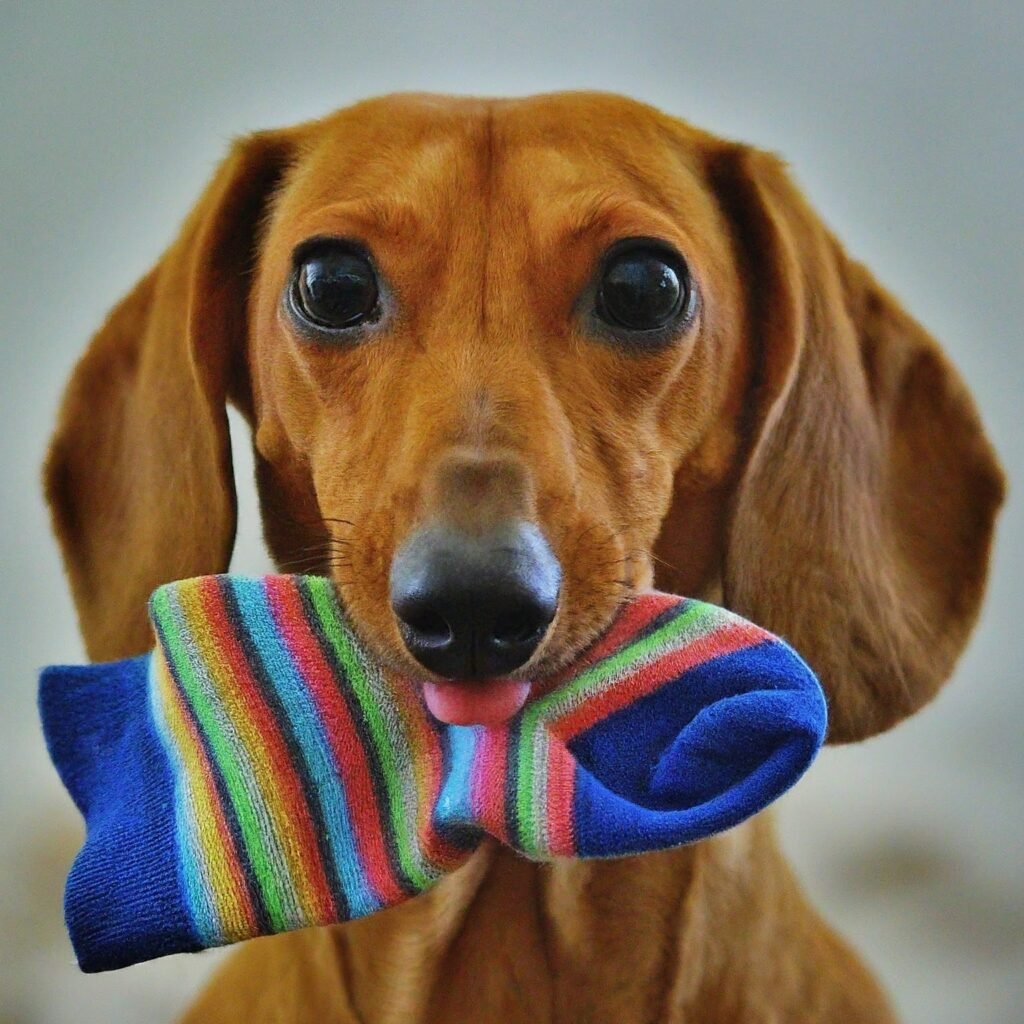
Why Do Dogs Like Socks? If you’re a dog owner, you may have experienced the peculiar phenomenon of finding your socks mysteriously missing, only to discover them nestled among your dog’s toys.
This behaviour is not just a quirky habit; it stems from a combination of instinctual drives, sensory attraction, and emotional comfort.
Understanding why dogs like socks can help you manage this behaviour effectively.
The Allure of Scent: Why Do Dogs Like Socks?
To humans, a dirty sock might be unpleasant, but it is a treasure trove of delightful scents to dogs.
Dogs have an extraordinary sense of smell, estimated to be 10,000 to 100,000 times more sensitive than humans.
When your dog sniffs your sock, they are not just detecting the fabric but immersing themselves in your unique scent, which can be comforting and familiar.
This connection to their owner can help alleviate loneliness or anxiety, making socks feel like a security blanket for your furry friend.
Texture and Comfort: Another Reason Why Dogs Like Socks
The texture of socks also plays a significant role in their appeal. The soft, fluffy fabric is enjoyable to chew and provides comfort, especially for teething puppies.
Chewing on a sock can soothe their gums and serve as a comforting activity that mimics cuddling with a favourite toy.
This tactile experience can be especially beneficial for dogs that experience separation anxiety, as it allows them to feel closer to their owner.
Boredom and Curiosity: Exploring Why Dogs Like Socks
Dogs are naturally curious creatures, and a sock can represent an intriguing object to explore.
If dogs are not adequately stimulated through play and exercise, they may turn to household items like socks for entertainment.
Chewing and playing with socks can become a way for them to alleviate boredom and engage their instincts to explore their environment.
Attention-Seeking Behavior: Understanding Why Dogs Like Socks
Interestingly, sock stealing can also be a learned behaviour that garners attention from owners.
Suppose a dog notices that stealing a sock leads to a chase or playful interaction. In that case, they may repeat the behaviour to engage with their owner.
In this sense, any positive or negative reaction can reinforce the behaviour, making it more likely to occur again.
How do I get my dog to stop playing with socks?
Why Do Dogs Like Socks? Uncover the Surprising Reasons! 3
Watching your dog parade around with your socks can be amusing. Still, this behaviour can lead to potential issues, especially if your dog swallows fabric.
Here are some strategies to manage this behaviour:
Provide Alternatives: Offer your dog designated chew toys that mimic the texture of socks. This can satisfy their urge to chew without the risk of them consuming something harmful.
Increase Stimulation: Engage your dog with regular exercise and interactive play to reduce boredom. Activities like fetch, agility training, or puzzle toys can entertain them.
Redirect Attention: If your dog steals a sock, avoid chasing them. Instead, calmly redirect their attention to a toy or command them to “drop it.” Reward them with a treat when they comply with reinforcing positive behaviour.
Keep Socks Out of Reach: Store your socks in inaccessible places for your dog. This will help prevent them from developing a habit of stealing your belongings.
Conclusion: Embracing the Quirkiness of Why Dogs Like Socks
Understanding why dogs like socks can help owners manage this quirky behaviour more effectively.
From their owner’s comforting scent to the fabric’s soft texture, socks fulfil various needs for dogs.
By providing appropriate alternatives and ensuring your dog is mentally and physically stimulated, you can minimize sock theft while keeping your furry friend happy and healthy.
Embrace the quirks of dog ownership, and remember that these behaviours often stem from a place of love and connection.
Dogs are big fans of games, especially tug of war. Ever wondered Why Do Dogs Like Tug of War so much? Let’s find out together.
Playing tug of war is not just fun but also makes dogs healthy and happy. This article dives into the ‘why’ behind this love, shedding light on their natural impulses.
We’ll also uncover its rewarding physical and mental impacts. Lastly, we’ll reveal how playing this game nurtures the priceless bond between dogs and their owners.
Why do Dogs Like Tug of War?
Instinctual Drives
Dogs come from wolves. A lot of the things dogs do come from their hunting instincts. The game of tug of war is like catching prey and other stuff wolves have to fight for. Dogs playing tug of war lets them show these instincts in a safe way.
Collaborative Play
Pull-and-release, a playful activity, boosts togetherness among dogs and their human friends. It’s a splendid method for dogs to socialize, enhance relationships with their people, and share in fun experiences.
Enjoyment of Chewing
Pups possess muscular jaws and love using them. Playing pull of rope gives their biting urge a good workout, offering a safe way to satisfy this natural instinct.
Benefits of Playing Tug of War with Your Dog
Builds Bonds
Tug of war with your dog is great for bonding. You both have fun and interact, enhancing your connection. Whether with a new pup or an old friend, tug of war strengthens relationships.
Builds Trust
Tug of war boosts trust. It’s especially good for new dogs or adoptees needing to trust you. The game’s team nature reveals you as both a fun playmate and a trusted companion.
Provides Good Exercise
Tug of war might look simple, but it works many muscles. A few minutes of play offer a good workout for your dog’s jaw, neck, shoulders, legs, and back. This physical activity keeps your dog fit and healthy.
Prevents Unwanted Behaviors
Playing tug of war can prevent negative behaviors by burning off extra energy. Dogs with plenty of exercise are less likely to behave badly, like chewing furniture or barking too much. Tug of war mentally and physically stimulates, making your dog happier and healthier.
Mental Stimulation
Your dog’s mind stays active and focused by planning and using their power in playtime. Keeping their brain busy is key to stop boredom and damaging acts. It helps promote brain health and keeps your clever pet joyful.
Safety Considerations
Playing tug of war can be fun! But remember, safety for you and your pup is key. Here’s how to do it right:
Choose the Right Toy: Go for robust ones made especially for tugging. Stay clear of toys that can tear apart easily or have sharp parts, as these can cause choking.
Proper Technique: Hold the toy right. You and your dog should both get a good grip on it before starting. A carpet or a grassy field is the best place to play. Keep the toy close to the ground to evade injury.
Monitor Play Time: Keep an eye on your pup. If they’re tired or panting a lot, they may need a break. Pulling for 5 to 10 minutes works well.
Let Them Win: Lastly, let your dog have their moment of victory now and then. It helps keep them excited about the game, boosts their self-confidence and keeps them involved.
There are several reasons why your dog might love tug-of-war. It taps into their natural prey drive, mimicking the chase and capture of prey. It also strengthens the bond between you and your dog through interactive play and positive reinforcement. Additionally, tug-of-war offers physical benefits like building muscle and improving stamina, as well as mental stimulation to keep your dog engaged. (Focus Keyword mentioned)
Is tug-of-war bad for my dog’s teeth?
Not necessarily, if played safely. Choose a sturdy tug toy appropriate for your dog’s size and chewing habits. Avoid letting them pull on furniture or inappropriate objects. Keep the game focused on the toy and redirect your dog if they get too mouthy.
What are some good tug toys for dogs?
Popular choices include strong rope toys or durable rubber toys. Consider the thickness and overall strength to ensure the toy can withstand enthusiastic tugging.
Are there any dog breeds that shouldn’t play tug-of-war?
While generally safe, tug-of-war might not be suitable for very young puppies or dogs with dental problems or jaw issues. Consult your veterinarian if you have any concerns.
How often can I play tug-of-war with my dog?
Short, supervised sessions are best. A few minutes a day or a couple of times a week is a good starting point. Adjust the frequency based on your dog’s energy level and avoid overexertion.
Conclusion
Many dogs and their owners enjoy a good game of tug of war. All you need is a strong rope toy and practically any place works.
Dogs simply love tug of war due to their natural instincts and their fondness for dynamic play.
This game also helps them bond with their humans. So, play safely, recognize the game’s advantages, and relish this enjoyable activity with your pet.
It certainly bolsters your connection and keeps your four-legged pal cheerful and robust.
Recall training, or teaching your dog to come when called, is one of the most important commands you can teach your canine companion. It not only ensures their safety but also strengthens the bond between you and your dog. In this article, we will delve into the importance of recall training, how to choose the best recall words for dogs, effective training techniques, and tips for maintaining a reliable recall response. By the end, you’ll have a clear understanding of how to successfully train your dog and enjoy the benefits of a well-trained, happy pet.
Why Recall Training is Essential
Safety Benefits
A reliable recall can be a lifesaver. It can prevent your dog from running into dangerous situations, such as traffic or approaching harmful animals. By having a strong recall, you can quickly regain control in unexpected circumstances, ensuring your dog’s safety.
Enhancing Dog-Owner Relationship
Recall training enhances communication and trust between you and your dog. It fosters a deeper connection, as your dog learns to look to you for guidance and rewards. This improved relationship translates to better overall behavior and cooperation.
Freedom for the Dog
A well-trained dog with a reliable recall can enjoy more off-leash freedom. Whether it’s at the park, on hiking trails, or in your backyard, knowing your dog will come when called allows them to explore and play safely.
Choosing the Best Recall Words for Dogs
Criteria for Selection
When choosing recall words, simplicity and consistency are key. The word should be easy for your dog to understand and distinct from other commands.
It’s also important to choose a word that you can use consistently in various situations.
Examples of Effective Recall Words
Come
Here
To Me
Come Here
These words are short, clear, and easily distinguishable, making them effective for recall training.
Words to Avoid
Avoid using common words or phrases that your dog might hear frequently in everyday conversation.
Words that sound similar to other commands or have negative associations should also be avoided to prevent confusion.
How to Train Your Dog to Respond to Recall Words
Step-by-Step Training Guide
Start Indoors: Begin training in a quiet, distraction-free environment. This helps your dog focus on learning the new command without outside interference.
Use High-Value Rewards: Identify a treat or toy your dog loves. High-value rewards are crucial for motivating your dog to respond to the recall word.
Call Your Dog: Say the recall word clearly and enthusiastically. Ensure you have your dog’s attention before giving the command.
Reward Immediately: As soon as your dog responds and comes to you, reward them promptly with praise and the high-value treat.
Repeat: Practice in short, frequent sessions to build reliability. Consistency is key to reinforcing the behavior.
Positive Reinforcement Techniques
Positive reinforcement is the most effective training method for recall. Use treats, praise, and play to create a positive association with the recall word.
Avoid using punishment, as it can create fear and reluctance, undermining your training efforts.
Common Mistakes to Avoid
Repeating the Recall Word: Avoid repeating the recall word multiple times. This can teach your dog that they don’t need to respond immediately.
Using the Recall Word in Negative Situations: Never use the recall word to call your dog for something they find unpleasant, like a bath or vet visit. This can create a negative association with the command.
Tips for Successful Recall Training
Consistency and Patience
Consistency is crucial for successful recall training. Use the same word and reward system every time. Be patient, as some dogs may take longer to learn than others. Celebrate small successes to keep both you and your dog motivated.
Using High-Value Rewards
High-value rewards, such as favorite treats or toys, are essential for recall training. These rewards make the recall command more enticing and reinforce the positive behavior. Experiment with different rewards to find what your dog responds to best.
Practicing in Different Environments
Once your dog reliably responds to the recall command indoors, gradually introduce them to different environments.
Start with low-distraction areas like your backyard, then move to parks and other outdoor spaces.
Increasing the level of distractions helps generalize the command, ensuring your dog responds reliably in various situations.
Maintaining Reliable Recall
Regular Practice
Regular practice is essential for maintaining a reliable recall. Incorporate recall training into your daily routine to keep the behavior fresh in your dog’s mind. Consistent reinforcement ensures that your dog remembers and responds to the command.
Gradual Increase in Distractions
As your dog becomes more reliable with the recall command, gradually increase the level of distractions. This might include practicing in busier parks, around other dogs, or in new environments. Gradual exposure helps your dog learn to focus and respond regardless of distractions.
Refreshing Training Periodically
Periodically refreshing recall training helps maintain your dog’s responsiveness. Revisit the basics occasionally and practice in new situations to reinforce the behavior. This ongoing practice prevents regression and keeps the command strong.
Recall training is an essential skill for every dog, offering safety, freedom, and a stronger bond with their owner.
By choosing the right recall words, using positive reinforcement, and practicing consistently, you can ensure your dog responds reliably every time.
Start your recall training journey today and enjoy the peace of mind that comes with a well-trained, happy dog.
Final Tips for Success
Keep training sessions short, fun, and engaging.
Be patient and celebrate small victories.
Always end training on a positive note to keep your dog motivated and eager to learn.
With dedication and consistent practice, you’ll soon have a dog that comes running joyfully whenever you call, ensuring their safety and your peace of mind.
This comprehensive guide will cover everything you need to know about How to Teach Your Dog Tricks? From understanding your dog’s temperament and preparing for training to mastering basic commands and advancing to complex tricks, we will provide step-by-step instructions and expert tips to help you succeed. Whether you’re a beginner or an experienced dog owner, this guide will offer valuable insights and practical advice to enhance your training efforts.
Importance of Training Dogs
Training your dog is an essential part of responsible pet ownership.
It not only helps establish a harmonious relationship between you and your furry friend but also ensures the safety and well-being of both the dog and the people around it.
Proper training can prevent behavioral problems, reduce anxiety, and enhance the bond between you and your pet.
Benefits of Teaching Tricks
Teaching your dog tricks goes beyond simple commands like “sit” and “stay.” Tricks can provide mental stimulation, exercise, and a sense of accomplishment for your dog.
They can also be a fun way to entertain friends and family, and even help your dog become more sociable and confident.
Moreover, trick training can be a great way for you to spend quality time with your dog, strengthening your bond and creating lasting memories.
Basic Dog Training Principles
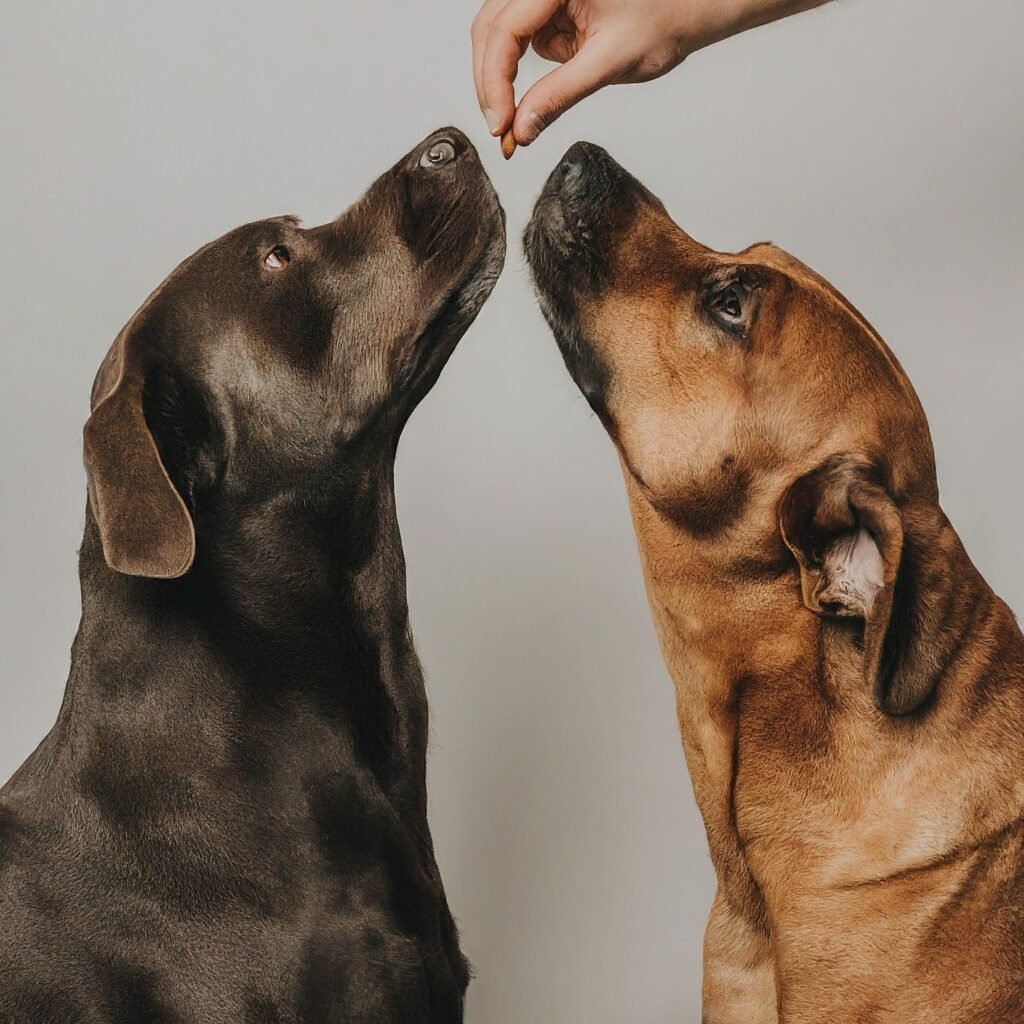
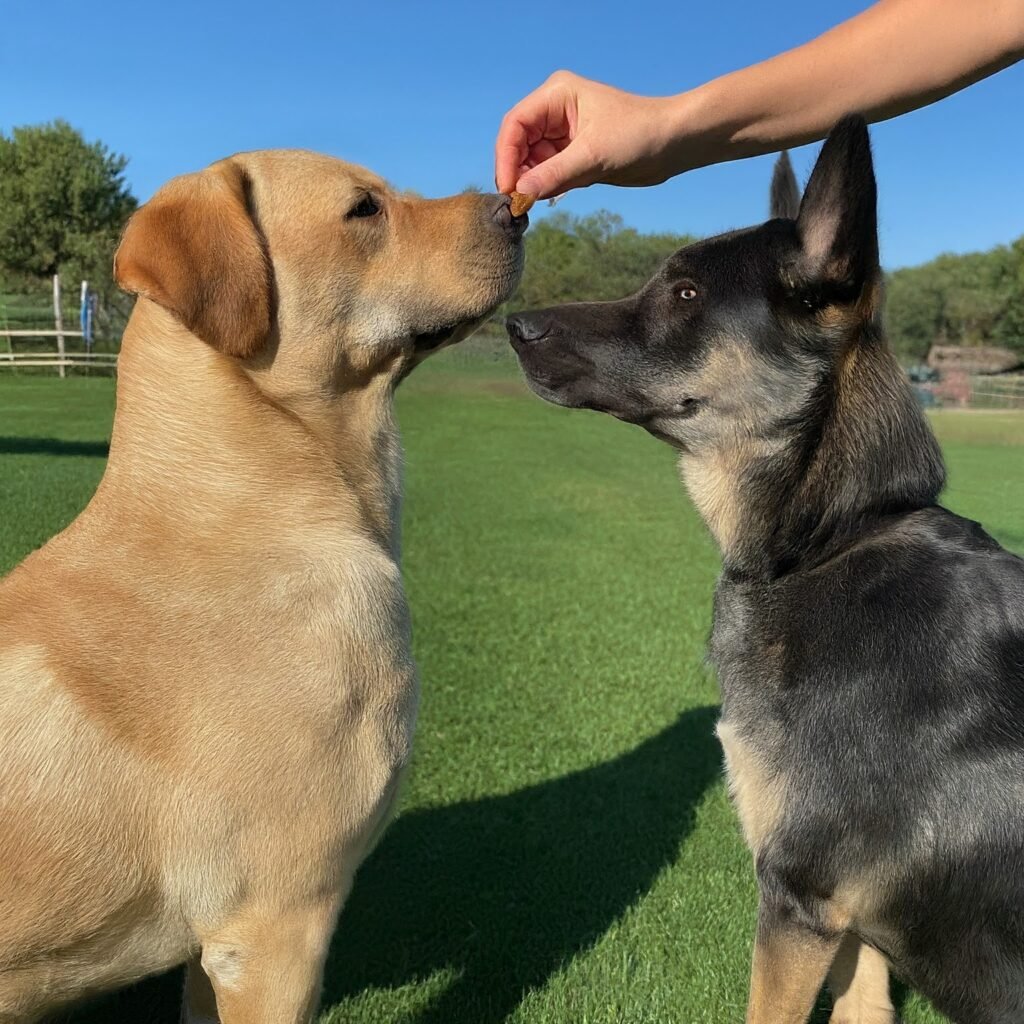
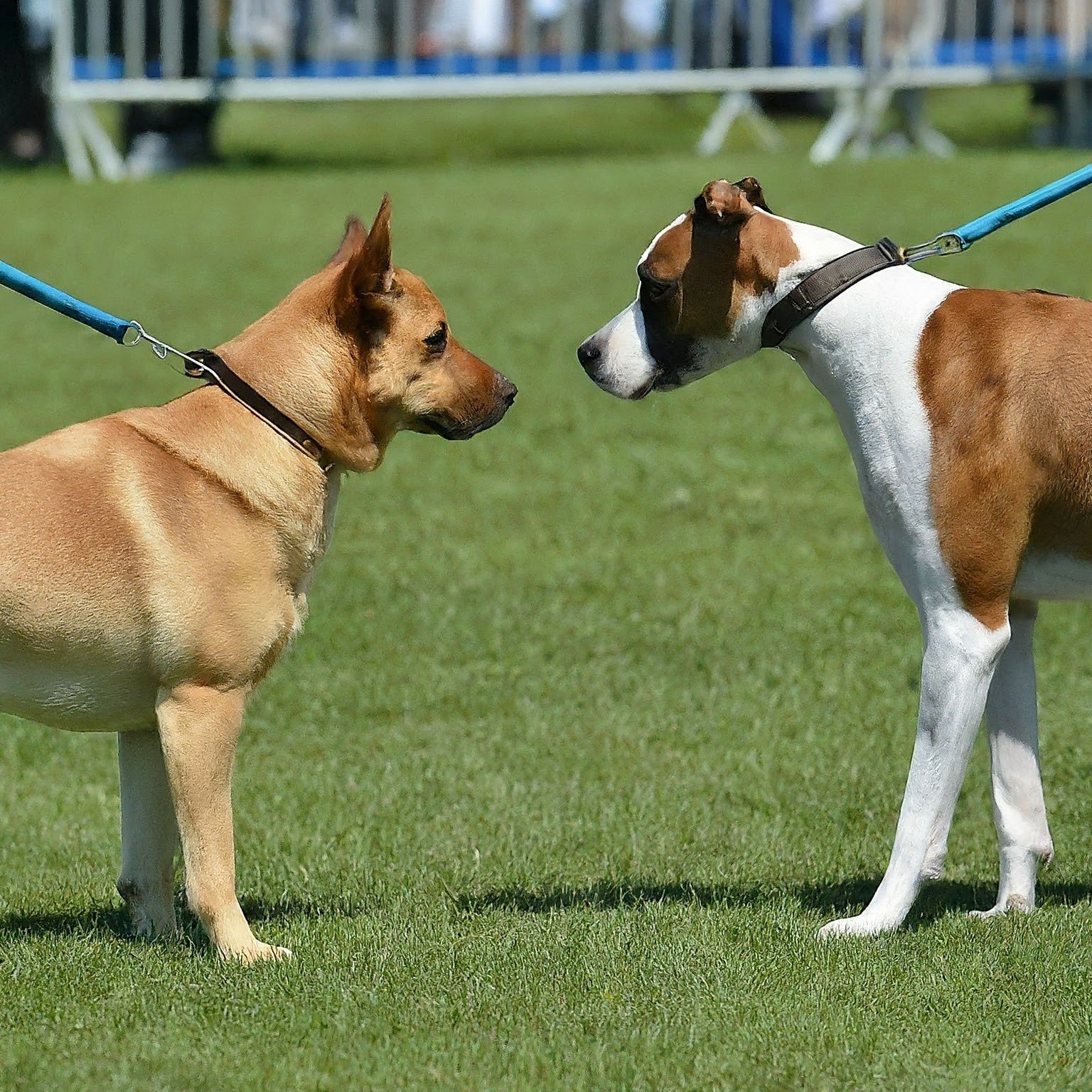
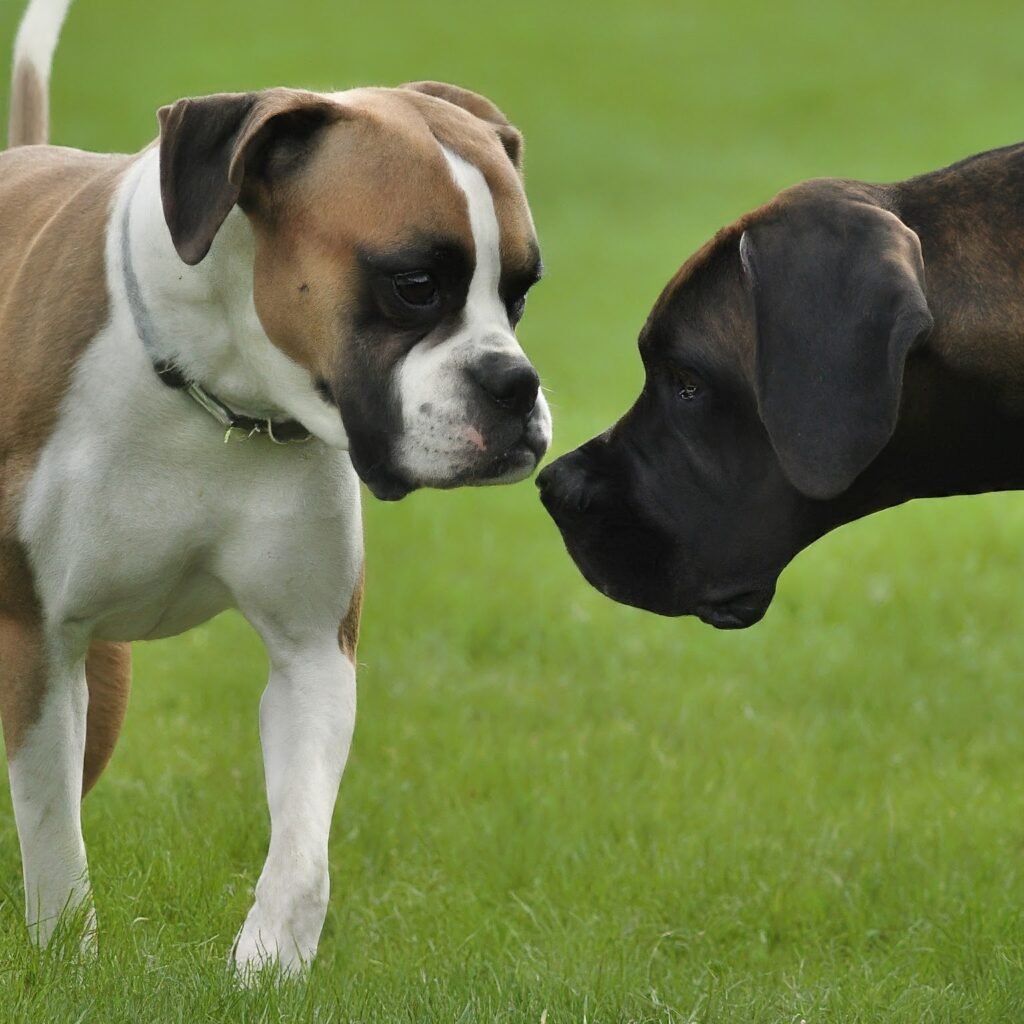
giving treats to two dogs sniffing each other
Positive Reinforcement
Positive reinforcement involves rewarding your dog for performing desired behaviors, which increases the likelihood of those behaviors being repeated. This method is highly effective and fosters a trusting and respectful relationship between you and your dog.
Steps:
Identify the Behavior: Clearly define the behavior you want to encourage, such as sitting, staying, or fetching.
Choose a Reward: Select a high-value reward that your dog loves, such as treats, praise, or playtime.
Mark the Behavior: Use a clicker or a verbal marker like “Yes!” to indicate the exact moment your dog performs the desired behavior.
Immediate Reward: Give the reward immediately after the marker to reinforce the behavior.
Repeat: Consistently reward the behavior each time it occurs to build a strong association.
Tips:
Keep rewards varied to maintain your dog’s interest.
Use small treats to avoid overfeeding during training sessions.
Gradually phase out treats and rely more on praise and affection as your dog masters the behavior.
Consistency and Patience
Consistency and patience are crucial for effective dog training. Consistent commands, rewards, and routines help your dog understand expectations and learn more quickly.
Steps:
Consistent Commands: Use the same words and gestures for each command. Ensure everyone in the household uses the same commands.
Regular Practice: Schedule regular training sessions, ideally at the same time each day, to create a routine.
Repeat and Reinforce: Repeat commands and reinforce behaviors consistently to help your dog understand and remember.
Patient Attitude: Maintain a calm and patient demeanor during training. Avoid showing frustration or anger, as this can confuse and stress your dog.
Short Sessions: Keep training sessions short (5-10 minutes) to maintain your dog’s attention and prevent fatigue.
Tips:
End each session on a positive note to keep your dog motivated.
Be patient with progress, especially with more complex behaviors.
Use consistent body language and tone of voice to avoid confusion.
Understanding Dog Body Language
Understanding your dog’s body language is essential for effective training. Dogs communicate their feelings and intentions through their posture, facial expressions, and movements.
Key Signals:
Relaxed Body: A relaxed dog will have a loose, wagging tail, relaxed ears, and an open mouth.
Alertness: An alert dog may stand tall, with ears perked up, mouth closed, and tail held high.
Stress Signals: Signs of stress or anxiety include yawning, lip licking, panting, and avoiding eye contact. A tucked tail and flattened ears are also indicators.
Playfulness: Playful dogs often display a “play bow,” with their front legs stretched out, rear end up, and a wagging tail.
Aggression: Aggressive signals include a stiff body, raised hackles, bared teeth, growling, and direct staring.
Tips:
Observe your dog’s body language regularly to understand their mood and comfort level.
Adjust training sessions based on your dog’s signals. If they appear stressed or tired, take a break.
Use positive body language yourself, such as relaxed posture and gentle movements, to create a calm training environment.
Timing and Rewards
Timing is critical in dog training. The reward must be given immediately after the desired behavior to create a clear association in your dog’s mind.
Steps:
Immediate Marking: Use a clicker or a verbal marker (like “Yes!”) at the exact moment your dog performs the desired behavior.
Quick Reward: Follow the marker with a reward within 1-2 seconds to reinforce the behavior.
Gradual Delays: As your dog becomes proficient, you can gradually delay the reward by a few seconds to build self-control.
Tips:
Practice your timing to ensure rewards are given promptly.
Keep treats easily accessible during training sessions.
Use a variety of rewards, including treats, toys, and verbal praise, to maintain interest.
Setting Realistic Goals
Setting realistic and achievable training goals helps ensure steady progress and prevents frustration for both you and your dog.
Steps:
Assess Your Dog: Consider your dog’s age, breed, temperament, and previous training experience.
Start Small: Begin with simple commands and gradually increase the difficulty.
Break Down Behaviors: Divide complex behaviors into smaller, manageable steps.
Celebrate Progress: Acknowledge and reward small successes to keep your dog motivated.
Adjust Goals: Be flexible and adjust your training goals based on your dog’s progress and response.
Tips:
Keep a training journal to track progress and adjust goals as needed.
Celebrate every small achievement to build confidence and motivation.
Avoid comparing your dog’s progress to others; each dog learns at their own pace.
Creating a Positive Training Environment
A positive training environment is essential for successful dog training. A calm, distraction-free space helps your dog focus and feel comfortable.
Steps:
Choose a Quiet Area: Select a training area with minimal distractions, such as a quiet room or a fenced yard.
Remove Distractions: Ensure the area is free from toys, other pets, and loud noises.
Use Positive Energy: Approach training with a positive attitude and calm energy.
Short Sessions: Keep training sessions short and engaging to maintain your dog’s attention.
Regular Breaks: Allow regular breaks to prevent fatigue and stress.
Tips:
Use calming aids, such as soothing music or pheromone sprays, if needed.
Ensure the training area is safe and comfortable for your dog.
Gradually introduce distractions as your dog becomes more proficient.
Socialization and Exposure
Socialization and exposure to various environments, people, and other animals are crucial for a well-rounded, confident dog.
Steps:
Early Socialization: Begin socializing your dog as early as possible, ideally during puppyhood.
Controlled Exposure: Introduce your dog to new experiences gradually and in a controlled manner.
Positive Associations: Create positive associations with new experiences using treats and praise.
Regular Outings: Take your dog on regular outings to different environments, such as parks, stores, and neighborhoods.
Monitor Reactions: Observe your dog’s reactions and adjust the exposure based on their comfort level.
Tips:
Avoid overwhelming your dog with too many new experiences at once.
Use positive reinforcement to build confidence in new situations.
Be patient and supportive, allowing your dog to explore at their own pace.
Dog Training Techniques and Tips
How to Teach Your Dog Tricks – The Best Guide 11
Clicker Training
Clicker training is a method that uses a small mechanical device that makes a clicking sound to mark the desired behavior at the precise moment it occurs.
This clear signal helps your dog understand exactly what action is being rewarded.
Steps:
Charge the Clicker: Start by associating the clicker with a reward. Click the device, then immediately give your dog a treat. Repeat this several times until your dog anticipates a treat upon hearing the click.
Marking Behavior: When your dog performs the desired action, click immediately and then give a treat. The timing of the click is crucial; it must happen exactly when the behavior occurs.
Repetition: Repeat the process until your dog consistently performs the behavior in response to the command.
Fading the Clicker: Once your dog reliably performs the behavior, gradually reduce the use of the clicker, replacing it with verbal praise or other rewards.
Advantages:
Clear and precise communication with your dog.
Effective for shaping complex behaviors.
Enhances learning speed.
Lure and Reward
Lure and reward training involves using a treat or toy to guide your dog into performing the desired behavior, then rewarding them once they succeed.
Steps:
Lure: Hold a treat close to your dog’s nose to get their attention.
Guide: Move the treat to lead your dog into the desired position or action. For example, to teach “sit,” move the treat upward and slightly back over their head.
Reward: As soon as your dog follows the lure and performs the behavior, give them the treat and praise.
Repetition: Practice the behavior several times, gradually reducing the use of the lure as your dog learns the command.
Advantages:
Simple and intuitive for both dog and trainer.
Effective for teaching basic commands.
Can be adapted for more complex tricks.
Shaping Behavior
Shaping involves rewarding successive approximations of the desired behavior. This technique is particularly useful for teaching complex tricks by breaking them down into smaller, manageable steps.
Steps:
Identify the Goal: Clearly define the final behavior you want to achieve.
Break Down the Behavior: Divide the final behavior into smaller steps.
Reward Approximations: Start by rewarding any behavior that resembles the first step toward the goal. Gradually require closer approximations of the final behavior before giving a reward.
Build Up: Continue rewarding closer approximations until your dog performs the entire behavior.
Advantages:
Encourages problem-solving and creativity in your dog.
Ideal for complex or multi-step tricks.
Strengthens the bond through cooperative learning.
Capturing Natural Behaviors
Capturing involves waiting for your dog to naturally perform a desired behavior and then marking and rewarding it. This method leverages your dog’s spontaneous actions to teach tricks.
Steps:
Observe: Watch your dog for instances when they naturally perform the desired behavior.
Mark the Behavior: Use a clicker or verbal marker (like “Yes!”) the moment the behavior occurs.
Reward: Immediately follow the marker with a treat or praise.
Add a Command: Once your dog consistently performs the behavior, introduce a verbal cue or hand signal.
Advantages:
Utilizes natural behavior, making it easy for the dog to understand.
Reduces frustration since the dog is performing a behavior they already know.
Can be used for a wide range of tricks and commands.
Using Hand Signals
Hand signals provide a visual cue to accompany verbal commands, enhancing communication between you and your dog. Many dogs respond well to visual signals, especially in noisy environments.
Steps:
Pair Signals with Commands: Start by pairing a hand signal with a verbal command. For example, use a raised hand for “sit.”
Practice Together: Consistently use the hand signal and verbal command together until your dog understands the association.
Fade Verbal Commands: Gradually reduce the use of the verbal command, relying more on the hand signal.
Reinforce: Continue practicing and reinforcing with treats or praise when your dog responds correctly to the hand signal.
Advantages:
Effective for dogs with hearing impairments.
Useful in noisy environments where verbal commands may be lost.
Enhances overall communication and responsiveness.
Preparing for Training
How to Teach Your Dog Tricks – The Best Guide 12
Understanding Your Dog’s Temperament
Before you start training, it’s crucial to understand your dog’s temperament and personality.
Some dogs are naturally eager to learn and quick to pick up new tricks, while others may be more independent or easily distracted.
Assessing your dog’s breed, age, energy level, and temperament will help you tailor your training approach to suit their individual needs.
Essential Training Supplies
To begin training, you’ll need some basic supplies:
Treats: High-value treats are a must for rewarding your dog during training. Choose small, soft treats that your dog loves.
Clicker: A clicker can be a useful tool for marking desired behaviors and reinforcing positive actions.
Leash and Collar: A sturdy leash and collar are essential for maintaining control during training sessions.
Training Mats: A designated training area with a non-slip mat can help your dog focus and feel secure.
Toys: Toys can be used as rewards or distractions, depending on the trick you’re teaching.
Setting Up a Training Schedule
Consistency is key to successful training. Set up a regular training schedule that fits into your daily routine (Printable Dog Training Plan Template).
Short, frequent sessions (5-10 minutes each) are more effective than long, sporadic ones.
Aim for 2-3 sessions per day, and always end on a positive note to keep your dog motivated and engaged.
How to Teach Your Dog Tricks?
How to Teach Your Dog Tricks – The Best Guide 13
Here’s a step-by-step guide on how to teach your dog tricks –
Foundational Commands
Sit
The “Sit” command is one of the most fundamental and essential commands to teach your dog. It is the foundation for many other commands and helps in managing your dog’s behavior in various situations.
Steps:
Get Your Dog’s Attention: Hold a treat close to your dog’s nose.
Lure the Sit: Move your hand upward, allowing your dog’s head to follow the treat. This will naturally cause their bottom to lower to the ground.
Command and Reward: As soon as your dog’s bottom touches the ground, say “Sit,” give them the treat, and offer praise.
Repetition: Practice this multiple times until your dog responds to the “Sit” command without needing the lure.
Tips:
Be consistent with the verbal command and hand signal.
Practice in various environments to reinforce the behavior.
Gradually phase out the use of treats, relying on praise and petting instead.
Stay
The “Stay” command helps in teaching your dog impulse control and can prevent them from running into dangerous situations.
Steps:
Start with Sit: Ask your dog to sit.
Command Stay: Open your palm in front of you and say “Stay.”
Increase Distance: Take a few steps back while maintaining eye contact. If your dog stays, return and reward them.
Gradual Progression: Gradually increase the distance and duration of the stay before giving the reward.
Release Command: Introduce a release word like “Okay” or “Free” to let your dog know when the stay command has ended.
Tips:
Begin training in a distraction-free environment.
Reward your dog frequently during the initial stages.
If your dog breaks the stay, calmly reset them in the original position and try again.
Come
The “Come” command is vital for your dog’s safety, ensuring they return to you when called, especially in potentially dangerous situations.
Steps:
Leash Practice: Start with your dog on a leash in a quiet area.
Call and Reward: Crouch down, open your arms, and say “Come” in an enthusiastic tone. Gently pull the leash to guide your dog towards you.
Reward: When your dog reaches you, reward them with a treat and praise.
Practice Off-Leash: Gradually practice in a safe, enclosed area without the leash.
Tips:
Always reward your dog for coming to you, even if they took their time.
Avoid using the “Come” command for negative experiences, like ending playtime.
Make the recall rewarding and fun for your dog.
Heel
The “Heel” command teaches your dog to walk beside you, maintaining control and preventing pulling on the leash.
Steps:
Start with Leash: Attach a leash and hold it in your right hand, keeping treats in your left hand.
Command and Lure: Say “Heel” and start walking. Use a treat to lure your dog to walk beside your left leg.
Reward: Reward your dog frequently while they maintain the heel position.
Increase Duration: Gradually increase the distance and duration of the walk while rewarding less frequently.
Tips:
Keep training sessions short and positive.
Use a happy, encouraging tone.
Practice in different environments to generalize the behavior.
Down
The “Down” command helps in managing your dog’s behavior by encouraging them to relax and stay in one place.
Steps:
Start with Sit: Ask your dog to sit.
Lure the Down: Hold a treat near your dog’s nose, then slowly lower it to the ground. Your dog should follow the treat and lie down.
Command and Reward: As soon as your dog’s elbows touch the ground, say “Down,” give them the treat, and offer praise.
Repetition: Practice repeatedly until your dog responds to the “Down” command without the lure.
Tips:
Be patient, as some dogs may take longer to learn this command.
Avoid pushing your dog into position, as this can cause discomfort and resistance.
Practice in different settings to reinforce the command.
Intermediate Tricks
Shake Hands/Paw
Teaching your dog to shake hands or give paw is a simple yet impressive trick that also builds trust and communication.
Steps:
Sit Position: Start with your dog in a sitting position.
Lift Paw: Gently lift one of their paws while saying “Shake” or “Paw.”
Reward: Reward your dog with a treat and praise immediately.
Repetition: Repeat the process until your dog lifts their paw on their own when you give the command.
Tips:
Use a calm, encouraging tone.
Be consistent with the command and hand gesture.
Practice with both paws for variety.
Roll Over
The “Roll Over” trick is a fun and engaging way to challenge your dog’s agility and coordination.
Steps:
Down Position: Start with your dog in a lying down position.
Lure the Roll: Hold a treat near their nose and move it towards their shoulder. Say “Roll Over” as they follow the treat and roll onto their back.
Reward: Give them the treat and praise once they complete the roll.
Repetition: Practice until your dog rolls over on command without the treat lure.
Tips:
Break the trick into smaller steps if needed.
Use enthusiastic praise to keep your dog motivated.
Practice on a soft surface to ensure comfort.
Play Dead
The “Play Dead” trick, often paired with the cue “Bang,” is an entertaining and theatrical command that showcases your dog’s ability to follow detailed instructions.
Steps:
Down Position: Ask your dog to lie down.
Lure the Side: Hold a treat near their nose and move it towards their shoulder. Say “Bang” or “Play Dead” as they roll onto their side.
Reward: Reward them when they’re lying still on their side.
Repetition: Practice until your dog responds to the command without the treat lure.
Tips:
Use a distinct hand signal, like a finger pointing like a gun, for added flair.
Keep sessions fun and light-hearted.
Gradually increase the duration your dog stays in the “dead” position.
Fetch
“Fetch” is a classic game that provides both physical exercise and mental stimulation for your dog.
Steps:
Interest in Toy: Use a toy or ball your dog likes.
Throw and Command: Throw the toy a short distance and say “Fetch.”
Encourage Return: Encourage your dog to bring the toy back. When they do, reward them with a treat and praise.
Repetition: Gradually increase the distance and reinforce the command.
Tips:
Start with short distances to keep your dog engaged.
Use a consistent command for retrieving and returning the toy.
Ensure the fetch toy is safe and appropriate for your dog’s size and breed.
Spin
“Spin” is a fun trick that showcases your dog’s agility and ability to follow directional cues.
Steps:
Lure the Spin: Hold a treat near your dog’s nose and move it in a circle. Say “Spin” as they follow the treat.
Reward: Give them the treat and praise once they complete the circle.
Repetition: Practice until your dog spins on command without the treat lure.
Tips:
Practice spinning in both directions for balance.
Use clear and consistent hand signals.
Keep sessions short and engaging.
Advanced Tricks
Speak
The “Speak” command teaches your dog to bark on cue, which can be a fun party trick and also useful for alerting you.
Steps:
Find the Trigger: Identify what naturally makes your dog bark, like the doorbell or a specific toy.
Command and Reward: When your dog barks, say “Speak,” then immediately reward them with a treat and praise.
Repetition: Repeat until your dog barks on command.
Tips:
Avoid encouraging excessive barking.
Use the command sparingly to prevent nuisance barking.
Pair with a “Quiet” command to control barking.
Whisper
“Whisper” is a softer version of the “Speak” command, teaching your dog to make quieter vocalizations.
Steps:
Start with Speak: Teach your dog to “Speak” first.
Encourage Softer Bark: Gradually reward softer barks. Say “Whisper” and reward quieter vocalizations.
Repetition: Practice until your dog responds to the “Whisper” command.
Tips:
Use a calm and quiet tone.
Be patient, as this trick may take time to perfect.
Reward progressively quieter barks.
Back Up
The “Back Up” command teaches your dog to walk backward on cue, enhancing their spatial awareness and control.
Steps:
Stand in Front: Stand in front of your dog with a treat in your hand.
Move Toward Dog: Step toward your dog while saying “Back Up.” Use the treat to guide them backward.
Reward: Reward your dog as soon as they take steps backward.
Repetition: Practice until your dog backs up on command.
Tips:
Use clear hand signals.
Practice in a confined space to make it easier.
Be consistent with the verbal command.
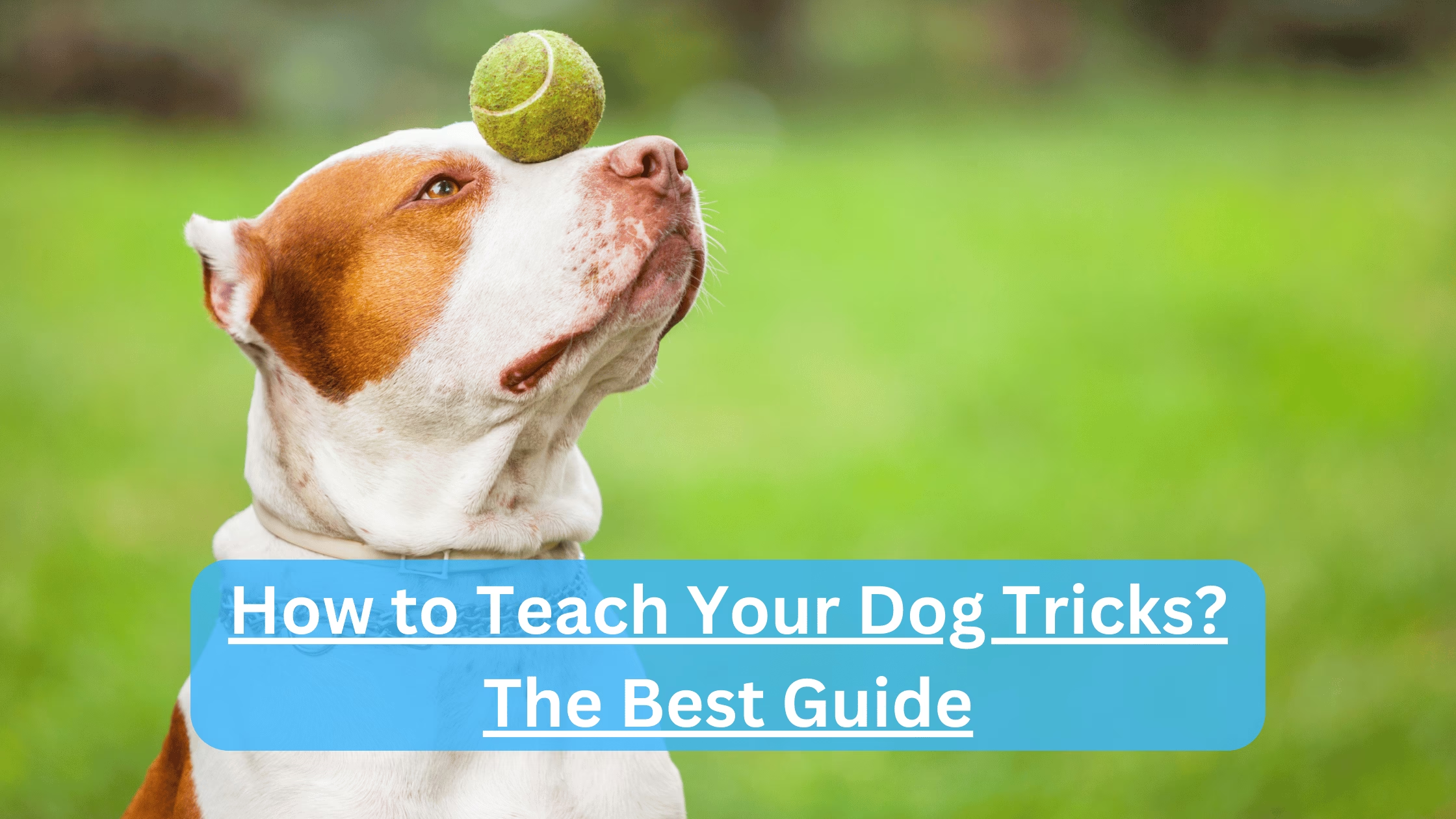
Balance a Treat
Balancing a treat on your dog’s nose is a great way to improve their patience and self-control.
Steps:
Sit or Down Position: Ask your dog to sit or lie down.
Place Treat: Gently place a treat on your dog’s nose. Say “Wait” to keep them still.
Reward: After a few seconds, give the command to catch the treat and reward them.
Increase Duration: Gradually increase the duration your dog balances the treat.
Tips:
Start with short durations to build confidence.
Use a small, lightweight treat to begin with.
Reward heavily to make the exercise fun.
Open/Close Doors
Teaching your dog to open and close doors is a useful and impressive trick that showcases their intelligence and problem-solving skills.
Steps:
Attach a Tug Toy: Attach a cloth or rope to the door handle.
Encourage Tugging: Encourage your dog to tug on the toy by saying “Open” or “Close” and rewarding them when they pull the door.
Reward: Reward your dog when they successfully open or close the door.
Repetition: Practice until your dog performs the task on command.
Tips:
Ensure the door is easy for your dog to move.
Use positive reinforcement and patience.
Avoid using this trick on heavy or potentially dangerous doors.
Creative and Fun Tricks
High Five
“High Five” is a simple, engaging trick that strengthens your bond with your dog and impresses onlookers.
Steps:
Sit Position: Start with your dog in a sitting position.
Raise Paw: Hold a treat at your dog’s nose level. As they lift their paw to touch your hand, say “High Five.”
Reward: Reward immediately with a treat and praise.
Repetition: Practice until your dog raises their paw on command.
Tips:
Use a clear hand signal.
Practice with both paws for variety.
Keep sessions positive and fun.
Take a Bow
“Take a Bow” is a charming trick where your dog lowers their front legs while keeping their rear up, as if taking a bow.
Steps:
Lure the Bow: Hold a treat near the ground and move it backward between your dog’s front legs. Say “Bow” as they follow the treat.
Reward: Reward your dog when they lower their front legs while keeping their rear up.
Repetition: Practice until your dog bows on command.
Tips:
Use a clear hand signal for the bow.
Keep sessions light-hearted and enjoyable.
Gradually phase out the lure.
Dance
“Dance” involves your dog standing on their hind legs and moving in a circle, showcasing their balance and coordination.
Steps:
Stand on Hind Legs: Hold a treat above your dog’s head to encourage them to stand on their hind legs.
Command and Spin: Say “Dance” and move the treat in a circle to guide them.
Reward: Reward your dog once they complete the spin.
Repetition: Practice until your dog dances on command.
Tips:
Use a treat your dog loves to keep them motivated.
Practice on a soft surface to prevent injury.
Keep sessions short to avoid strain.
Wave
“Waving” is an extension of the “Shake” command, teaching your dog to lift their paw without making contact.
Steps:
Sit Position: Start with your dog in a sitting position.
Command and Gesture: Use the “Shake” command and then move your hand away before they touch it, saying “Wave.”
Reward: Reward your dog when they lift their paw in the air.
Repetition: Practice until your dog waves on command.
Tips:
Use a clear and distinct hand gesture.
Be consistent with rewards and praise.
Practice in various environments to generalize the behavior.
Find It
“Find It” is a fun scent game where your dog uses their nose to locate a hidden treat or toy.
Steps:
Show the Treat: Let your dog sniff a treat or toy.
Hide the Treat: Hide the treat in an easy-to-find location while your dog watches.
Command and Search: Say “Find it” and encourage your dog to search for the treat.
Reward: Reward your dog when they find the treat.
Increase Difficulty: Gradually increase the difficulty of hiding spots.
Tips:
Use high-value treats to maintain interest.
Start with simple hiding spots and gradually increase the challenge.
Incorporate this game into daily activities for mental stimulation.
Dealing with Common Challenges
Overcoming Distractions
Distractions can significantly impact training sessions, especially in environments with lots of stimuli. Training your dog to focus despite distractions is crucial for effective learning.
Steps:
Start Small: Begin training in a quiet, familiar environment with minimal distractions.
Gradual Exposure: Slowly introduce mild distractions, such as background noise or moving objects.
Use High-Value Rewards: Offer more enticing treats or toys to maintain your dog’s focus.
Practice Focus Exercises: Teach commands like “watch me” or “focus” to help your dog learn to concentrate on you.
Increase Distractions Gradually: Gradually increase the level of distraction as your dog becomes more proficient at focusing.
Tips:
Keep training sessions short and engaging.
Use a leash or long line to maintain control in distracting environments.
Be patient and consistent.
Addressing Fear and Anxiety
Fear and anxiety can hinder your dog’s ability to learn. Identifying and addressing these emotions is essential for creating a positive training experience.
Steps:
Identify Triggers: Observe your dog to identify what causes fear or anxiety.
Desensitization: Gradually expose your dog to the trigger at a low intensity, rewarding calm behavior.
Counter-Conditioning: Pair the trigger with positive experiences, such as treats or play, to change your dog’s emotional response.
Provide a Safe Space: Ensure your dog has a safe, quiet place to retreat when feeling overwhelmed.
Consult a Professional: If fear or anxiety persists, consider consulting a professional trainer or behaviorist.
Tips:
Avoid forcing your dog into fearful situations.
Use calming aids like pheromone diffusers or anxiety wraps.
Maintain a calm and reassuring demeanor.
Managing Hyperactivity
Hyperactive dogs can struggle with impulse control, making training challenging. Strategies to manage energy levels and improve focus are essential.
Steps:
Exercise: Ensure your dog receives adequate physical exercise before training sessions.
Mental Stimulation: Provide mental challenges, such as puzzle toys or scent work, to tire your dog mentally.
Structured Training: Use structured training sessions to teach impulse control and focus.
Teach Calm Behaviors: Train your dog to settle on a mat or bed using commands like “place” or “settle.”
Short Sessions: Keep training sessions short to match your dog’s attention span.
Tips:
Use a variety of rewards to maintain interest.
Practice impulse control exercises, such as “wait” and “leave it.”
Be consistent with rules and boundaries.
Correcting Unwanted Behavior
Unwanted behaviors can interfere with training and daily life. Correcting these behaviors involves consistent training and positive reinforcement.
Steps:
Identify the Behavior: Clearly identify the unwanted behavior and its triggers.
Redirect: Redirect your dog’s attention to an appropriate behavior, rewarding them for complying.
Teach Alternative Behaviors: Train your dog to perform an alternative, desired behavior instead of the unwanted one.
Consistency: Be consistent in addressing the behavior every time it occurs.
Positive Reinforcement: Reinforce desired behaviors with treats, praise, or play.
Tips:
Avoid using punishment, as it can increase fear and anxiety.
Be patient and persistent.
Provide ample opportunities for your dog to engage in acceptable behaviors.
By understanding your dog’s temperament, using positive reinforcement, and practicing consistency and patience, you can successfully teach a wide range of tricks.
Training is an ongoing process that requires dedication and creativity. Keep exploring new tricks and techniques to keep your dog engaged and challenged.
Remember, the journey of training is just as important as the end result.
With the right approach and a positive attitude, you can turn training sessions into enjoyable and productive experiences for both you and your dog.
Celebrate each small victory and enjoy the time spent together, knowing that you are helping your dog become a happier, healthier, and more well-behaved companion.
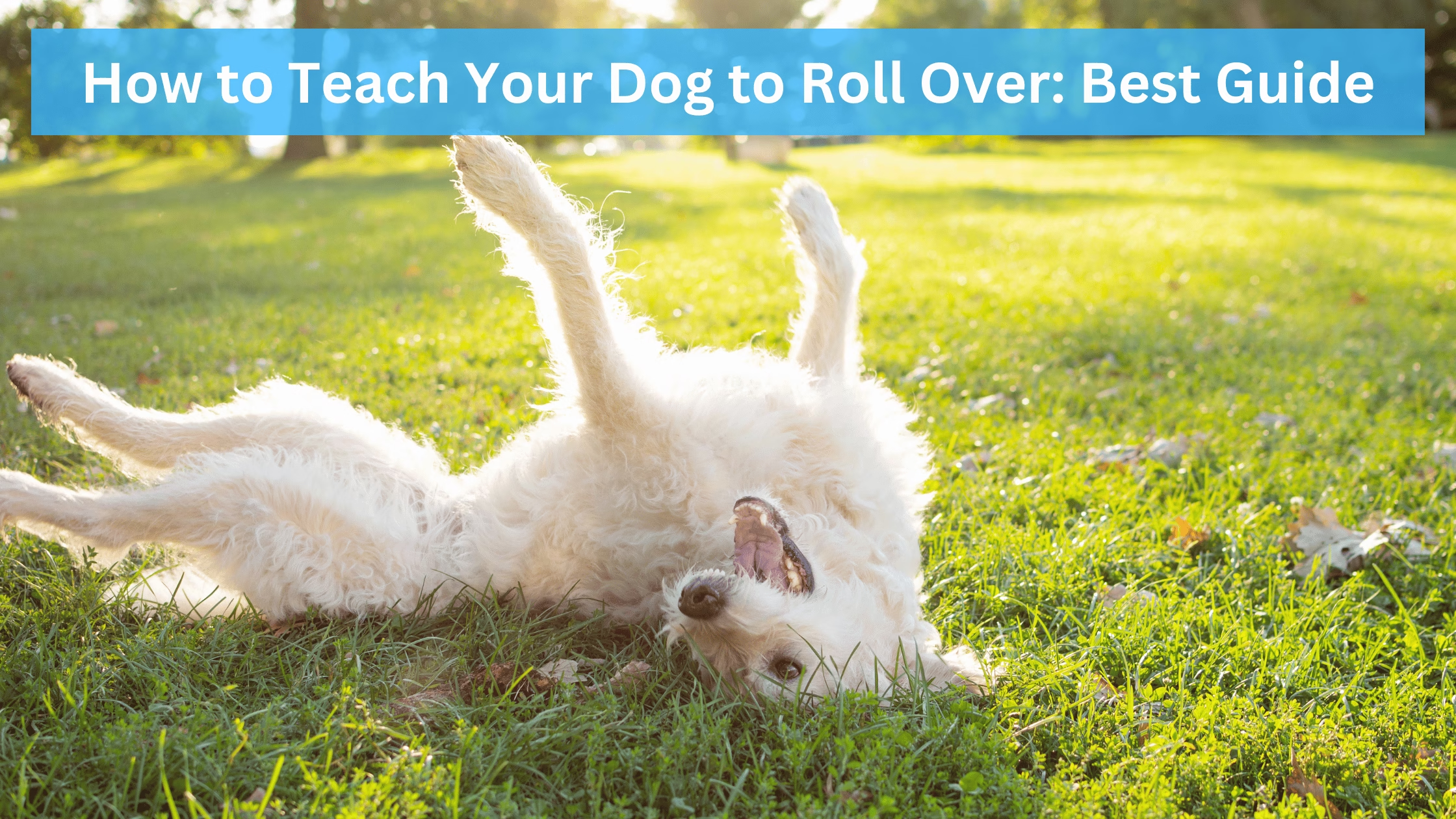
Teaching your dog to roll over is not only a fun trick but also a great way to bond with your furry friend and provide them with mental stimulation. This step-by-step guide will help you teach your dog to roll over using positive reinforcement techniques. Whether you’re a seasoned dog owner or a beginner, these tips will make the process enjoyable for both you and your dog.
Why Teach Your Dog to Roll Over?
How to Teach Your Dog to Roll Over: Best Guide 16
Before diving into the steps, it’s essential to understand the benefits of teaching your dog to roll over:
Mental Stimulation: Engages your dog’s mind and helps prevent boredom.
Physical Exercise: Encourages movement and flexibility.
Bonding: Strengthens the relationship between you and your dog.
Impress Your Friends: It’s a fun trick that will surely impress your friends and family.
Step-by-Step Guide to Teaching Your Dog to Roll Over
Step 1: Gather Your Supplies
You’ll need the following supplies:
Treats: Choose small, high-value treats that your dog loves.
Clicker (optional): A clicker can help mark the exact moment your dog performs the desired behavior.
Patience and Positivity: Training should be a fun and positive experience for your dog.
Step 2: Find a Quiet Training Space
Choose a quiet, distraction-free area where you and your dog can focus. This could be a room in your house or a fenced backyard.
Step 3: Start with the Basic Commands
Before teaching your dog to roll over, ensure they are comfortable with the basic commands like “sit” and “lie down.” These commands are the foundation for the roll-over trick.
Step 4: Get Your Dog to Lie Down
Command your dog to lie down. You can do this by holding a treat close to their nose and slowly moving it to the ground. As they follow the treat, their body will naturally lower into a lying position. Once they’re lying down, reward them with a treat and praise.
Step 5: Guide Them into a Roll Over
With your dog lying down, hold a treat near their nose. Slowly move the treat towards their shoulder, causing them to turn their head and body to follow the treat. As they start to roll onto their side, continue moving the treat in a circular motion to encourage them to complete the roll.
Step 6: Use a Verbal Cue
As your dog begins to understand the motion, introduce a verbal cue like “roll over.” Say the cue just before they start to roll, and reward them with a treat and praise once they complete the roll.
Step 7: Practice and Reinforce
Practice the roll-over trick several times a day in short sessions. Consistency is key to reinforcing the behavior. Always use positive reinforcement, rewarding your dog with treats and praise for their efforts.
Step 8: Gradually Fade the Treat
As your dog becomes more proficient at rolling over, start to phase out the use of treats. Use the verbal cue and hand signal without showing the treat, rewarding your dog after they complete the roll.
Troubleshooting Tips
Be Patient: Every dog learns at their own pace. If your dog seems confused or frustrated, take a break and try again later.
Keep Sessions Short: Training sessions should be fun and engaging. Keep them short, around 5-10 minutes, to maintain your dog’s interest.
Use High-Value Treats: Use treats that your dog finds irresistible to keep them motivated.
Conclusion
Teaching your dog to roll over is a fun and rewarding experience that enhances your bond and provides mental and physical stimulation for your furry friend. With patience, consistency, and positive reinforcement, your dog will be rolling over in no time. Happy training!
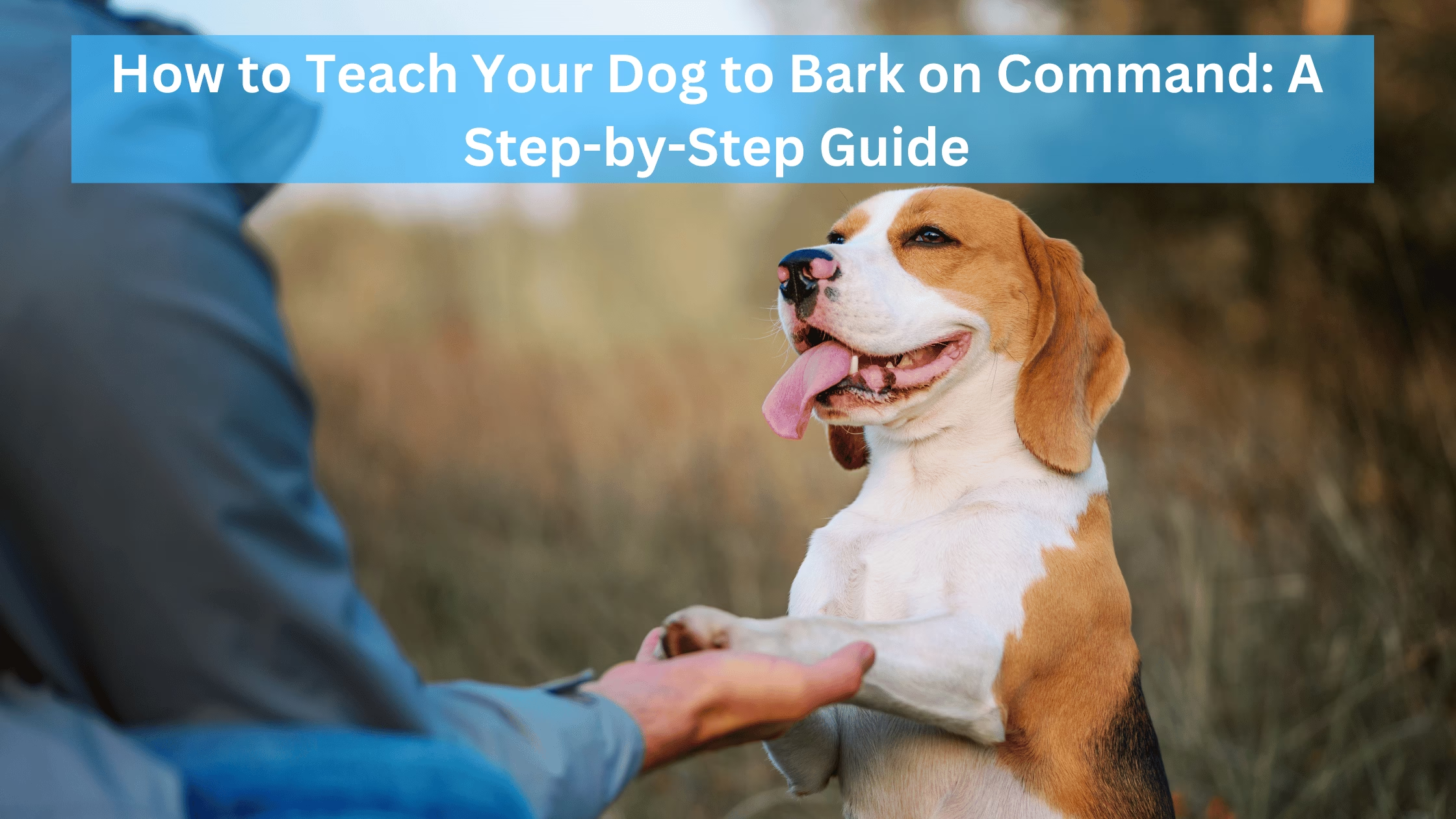
How to teach your dog to bark on command is not just a fun trick; it can also be useful for alerting you to potential dangers or intruders. This blog post will guide you through the process, ensuring that your furry friend learns this command in a way that is effective and permanent.
Why Teach Your Dog to Bark on Command?
Before diving into the training steps, it’s important to understand why this skill can be beneficial:
Alertness: Your dog can alert you to strangers or unusual activity.
Communication: It enhances communication between you and your dog.
Mental Stimulation: Learning new commands provides mental stimulation for your dog.
Control: Teaching to bark on command can help manage excessive barking.
Step-by-Step Guide to How to Teach Your Dog to Bark on Command
Giving treats to two dogs sniffing each other coming close.
Step 1: Choose the Right Command and Reward
Select a command word like “speak” or “bark”. Consistency is key, so stick with one command. Also, choose a reward that your dog loves, such as treats, toys, or praise.
Step 2: Find the Right Setting
Start in a quiet, distraction-free environment to help your dog focus on the training session.
Step 3: Trigger the Bark
To teach your dog to bark, you need to find a trigger. This could be the sound of a doorbell, a knock, or even you barking (yes, you read that right!). Once you find what makes your dog bark, you’re ready to move on to the next step.
Step 4: Pair the Command with the Action
When your dog barks due to the trigger, immediately say your command word “speak” and then give a treat. The sequence should be:
Trigger the bark.
Say the command (“speak”).
Reward the bark.
Step 5: Practice and Repeat
Consistency is essential. Practice this multiple times a day, but keep sessions short (5-10 minutes) to avoid frustrating your dog. Repetition will help your dog associate the command with the action.
Step 6: Remove the Trigger
Once your dog starts barking on command consistently with the trigger, begin to remove the trigger. Say the command word “speak” without using the trigger and reward the dog if they bark.
Step 7: Reinforce the Behavior
Continue to reinforce the behavior by practicing regularly. Gradually increase the difficulty by introducing distractions and practicing in different environments.
Step 8: Add a “Quiet” Command
To maintain control over the barking, teach your dog a “quiet” command. After your dog barks on command, say “quiet” and wait for them to stop barking. Reward them when they do. This teaches your dog to stop barking when told.
Troubleshooting Common Issues
Dog Doesn’t Bark
Some dogs are naturally quieter. If your dog doesn’t respond to typical triggers, try to find what excites or startles them. Patience is key, and using high-value rewards can also help.
Inconsistent Barking
If your dog is inconsistent, revisit the training steps. Ensure you’re using the same command and reward every time. Consistency and repetition are crucial.
Over-Barking
If your dog starts barking excessively, reinforce the “quiet” command and only reward controlled barking. Do not reward if they bark excessively.
Frequently Asked Questions (FAQs)
How long does it take to teach a dog to bark on command?
It varies depending on the dog, but with consistent training, many dogs learn within a few weeks.
Can all dogs learn to bark on command?
Yes, most dogs can learn this command, although some might take longer depending on their temperament and breed.
Should I use a clicker for training?
A clicker can be a helpful tool for marking the exact moment your dog performs the desired behavior, making the training process clearer for them.
If your dog starts barking excessively, reinforce the “quiet” command and only reward controlled barking. Do not reward if they bark excessively.
Conclusion
Teaching your dog to bark on command is a rewarding experience that strengthens your bond. With patience, consistency, and positive reinforcement, your dog will master this command. Remember to practice regularly and reinforce the behavior to ensure it becomes a permanent skill.
For more tips on dog training and behavior, subscribe to our newsletter and follow us on social media!
By following these steps, you’ll be well on your way to having a dog that can bark on command, providing both entertainment and practical benefits. Happy training!
Welcome to the Ultimate Guide to Dog Obedience Training!
This comprehensive module combines foundational principles with advanced techniques to provide you with a complete understanding of how to train and communicate effectively with your canine companion.
From basic commands to addressing complex behavioral issues, from selecting the right training tools to tailoring your approach to your dog’s breed, this guide covers everything you need to know to become an expert in dog obedience training.
Lesson 1: Introduction to Dog Obedience Training
Two leashed dogs sniffing the ground in a park
Welcome to Lesson 1 of the Ultimate Guide to Dog Obedience Training! In this lesson, we’ll delve into the fundamental aspects of obedience training and why it’s essential for building a strong relationship with your dog.
1. Why Obedience Training Matters:
Obedience training is not just about teaching your dog to follow commands; it’s about fostering a harmonious relationship built on mutual respect and understanding.
When your dog learns to respond to your commands reliably, it creates a sense of security and safety for both you and your pet.
Obedience training also enhances your dog’s quality of life by providing mental stimulation and opportunities for socialization.
Furthermore, a well-trained dog is more likely to be welcomed in public spaces and can enjoy more freedom and interaction with their environment.
2. Building Trust and Communication:
Obedience training is a powerful tool for strengthening the bond between you and your dog.
Through positive reinforcement techniques, you’ll establish trust and clear communication with your pet.
By consistently rewarding desired behaviors and gently correcting unwanted behaviors, you’ll create a language that your dog understands.
This mutual understanding fosters a deeper connection, allowing you to work together as a cohesive team.
3. Setting Realistic Expectations:
It’s important to approach obedience training with realistic expectations. Every dog is unique, and learning takes time and patience.
Understand that progress may be gradual, and setbacks are normal. Consistency, repetition, and positive reinforcement are key to success.
Set achievable goals and celebrate small victories along the way.
Remember, the journey of obedience training is as rewarding as the destination, so enjoy the process of learning and growing with your furry companion.
By recognizing the significance of obedience training, prioritizing trust and communication, and maintaining realistic expectations, you’ll lay the foundation for a successful training journey with your dog.
Stay tuned for the upcoming lessons, where we’ll dive deeper into specific training techniques and behaviors.
Lesson 2: Positive Reinforcement Training
giving treats to two dogs sniffing each other
In this lesson, we’ll explore the powerful technique of positive reinforcement training and how it can transform your relationship with your dog.
1. The Power of Positive Reinforcement:
Positive reinforcement is a training method based on rewarding desired behaviors to encourage their repetition.
By rewarding your dog for good behavior with something they enjoy, such as treats, praise, or play, you’re reinforcing that behavior and increasing the likelihood of it occurring again in the future.
Positive reinforcement creates a positive association with training, making it enjoyable and rewarding for your dog.
It also strengthens the bond between you and your pet, as it fosters trust, respect, and cooperation.
2. Choosing the Right Rewards:
When it comes to positive reinforcement training, the rewards you choose play a crucial role in its effectiveness.
Rewards should be highly motivating to your dog and tailored to their preferences. For some dogs, treats like small pieces of chicken or cheese may be irresistible, while others may prefer toys or verbal praise.
Experiment with different rewards to determine what motivates your dog the most. Additionally, vary the rewards to keep training sessions exciting and engaging for your pet.
3. Timing and Consistency:
Timing and consistency are key principles of positive reinforcement training. Timing refers to the importance of delivering the reward immediately after your dog performs the desired behavior.
This allows your dog to associate the reward with the specific behavior you’re reinforcing, making the connection clear and reinforcing the behavior effectively.
It’s important to be consistent in your training approach to prevent confusion and ensure clarity for your dog.
By harnessing the power of positive reinforcement, choosing the right rewards, and maintaining impeccable timing and consistency in your training sessions, you’ll set the stage for success in teaching your dog new behaviors and strengthening your bond.
Stay tuned for the upcoming lessons, where we’ll delve deeper into specific obedience commands and advanced training techniques.
Lesson 3: Basic Obedience Commands
Basic Obedience Commands
In this lesson, we’ll cover essential basic obedience commands that form the foundation of your dog’s training.
1. Sit:
The “sit” command is one of the first commands many dog owners teach their dogs.
It’s a versatile command that can be used in various situations, such as greeting visitors, waiting at doors, or during meal times.
To teach your dog to sit, hold a treat close to their nose and slowly move your hand upward.
As your dog’s head follows the treat, their bottom will naturally lower into a sitting position.
Once they’re sitting, praise and reward them with the treat. Repeat this process until your dog reliably sits on command.
2. Stay:
The “stay” command teaches your dog to remain in a specific position until released. Start by asking your dog to sit or lie down.
Then, with an open palm facing your dog, say “stay” in a firm but calm tone.
Step back a few paces, maintaining eye contact with your dog.
If your dog stays in place, return to them, praise them, and reward them with a treat.
Gradually increase the duration and distance of the stay as your dog becomes more proficient.
3. Come:
The “come” command, also known as recall, is crucial for your dog’s safety and your peace of mind.
Start in a low-distraction environment and call your dog’s name followed by the command “come.”
Use an enthusiastic tone of voice and encourage your dog to come to you.
When they reach you, praise them and offer a reward.
Practice the recall command frequently, gradually increasing distractions and distance as your dog becomes more reliable.
4. Heel:
The “heel” command teaches your dog to walk calmly and closely beside you without pulling on the leash.
Begin with your dog on your left side and hold a treat in your left hand.
With your dog’s leash in your right hand, start walking forward, encouraging your dog to stay beside you.
If your dog begins to pull ahead, gently redirect them back to your side with the treat. Reward your dog for walking calmly beside you, using verbal praise and treats.
5. Down:
The “down” command instructs your dog to lie down on their belly with their elbows touching the ground.
Start with your dog in a sitting position. Hold a treat in your hand and lower it to the ground in front of your dog’s nose.
Slowly move the treat forward and downward, encouraging your dog to follow it with their nose.
As your dog lowers their body to reach the treat, say “down” and praise them when they’re lying down.
6. Leave It:
The “leave it” command teaches your dog to ignore objects, people, or other animals on command.
Start by placing a treat in your closed hand and presenting it to your dog. When your dog shows interest in the closed hand, say “leave it” in a firm tone.
Wait for your dog to lose interest or look away from the hand, then praise and reward them with a different treat from your other hand.
7. Drop It:
The “drop it” command teaches your dog to release items from their mouth on command. Begin by offering your dog a toy or object to hold in their mouth.
Hold a treat near their nose to encourage them to drop the object.
As soon as they release it, say “drop it” and praise them. Reward them with the treat and retrieve the object.
8. Wait:
The “wait” command teaches your dog to pause or hold a position temporarily.
Use this command when you want your dog to pause before proceeding, such as at doorways, before crossing the street, or during meal times.
Start with your dog in a sit or stand position. Hold your hand up like a stop sign and say “wait” in a calm but firm tone.
Step forward, and if your dog stays in place, praise them and offer a reward.
Practice these basic obedience commands regularly in short, positive training sessions to reinforce your dog’s understanding and reliability.
Consistency, patience, and positive reinforcement are key to success. In the next lessons, we’ll explore advanced training techniques and behaviors to further enhance your dog’s obedience skills.
Lesson 4: Advanced Training Techniques
dogTraining
In this lesson, we’ll explore advanced training techniques that will challenge your dog mentally and physically, strengthening your bond and enhancing their obedience skills.
1. Agility Training:
Agility training involves guiding your dog through an obstacle course consisting of jumps, tunnels, weave poles, and other equipment.
Not only is agility training a fun and stimulating activity for your dog, but it also improves their coordination, strength, and confidence.
Start with basic agility equipment and gradually increase the complexity of the course as your dog becomes more proficient.
Use positive reinforcement techniques to encourage your dog and keep the training sessions enjoyable.
2. Scent Work:
Scent work, also known as nose work, taps into your dog’s natural scenting abilities by teaching them to locate specific odors.
This type of training can be used for various purposes, including search and rescue, detection work, and recreational activities.
Start by introducing your dog to a specific scent, such as a treat or essential oil, and encouraging them to find it using their nose.
Gradually increase the difficulty by hiding the scent in different locations and challenging environments.
Scent work provides mental stimulation and builds your dog’s confidence and focus.
3. Trick Training:
Trick training is a fun and creative way to engage with your dog and teach them new behaviors.
From basic tricks like “roll over” and “play dead” to more complex tricks like “fetch the newspaper” or “bow,” the possibilities are endless.
Break down each trick into small, manageable steps and use positive reinforcement techniques to reward your dog for their efforts.
Trick training builds your dog’s problem-solving skills, strengthens your bond, and provides mental stimulation.
4. Off-Leash Training:
Off-leash training allows your dog to enjoy freedom and explore their surroundings while still maintaining control and responsiveness to your commands.
Start by practicing off-leash training in a safe, enclosed area with minimal distractions.
Begin with basic obedience commands like “come,” “stay,” and “heel,” gradually increasing the distance and duration off-leash.
Use high-value rewards and positive reinforcement to reinforce desired behaviors and encourage your dog to stay focused on you.
Off-leash training requires trust, consistency, and a strong recall command to ensure your dog’s safety and reliability.
Incorporate these advanced training techniques into your dog’s routine to keep them mentally stimulated, physically active, and obedient.
Remember to keep training sessions fun and rewarding for your dog, and always prioritize their safety and well-being.
In the next lessons, we’ll explore problem-solving and troubleshooting techniques for addressing common behavioral issues.
Lesson 5: Problem-Solving and Troubleshooting
Dog Obedience Training – The Pawsitively Perfect Training. 28
In this lesson, we’ll explore common behavioral issues that many dog owners face and discuss effective strategies for addressing them.
1. Addressing Leash Pulling:
Leash pulling can make walks stressful and unpleasant for both you and your dog.
To address leash pulling, start by teaching your dog loose leash walking techniques using positive reinforcement.
Encourage your dog to walk beside you with a loose leash, rewarding them for walking calmly without pulling.
Use techniques such as stopping and changing direction when your dog pulls to redirect their focus back to you.
2. Dealing with Jumping:
Jumping up on people is a common behavior problem in dogs, especially when greeting visitors.
To discourage jumping, teach your dog an alternative behavior, such as sitting or standing calmly, when greeting people.
Ignore jumping behaviors and only reward your dog when they greet people politely.
Consistency and positive reinforcement are key to effectively addressing jumping behavior.
3. Managing Barking:
Excessive barking can be a nuisance and may indicate underlying issues such as boredom, anxiety, or territorial behavior.
Identify the triggers for your dog’s barking and address them accordingly.
Provide mental and physical stimulation through activities like puzzle toys, interactive games, and regular exercise.
Use positive reinforcement to reward quiet behavior and teach your dog a “quiet” command.
4. Overcoming Fear and Anxiety:
Fear and anxiety can manifest in various ways in dogs, including trembling, hiding, excessive barking, or aggression.
Identify the source of your dog’s fear or anxiety and gradually expose them to it in a controlled and positive manner.
Use counterconditioning and desensitization techniques to change your dog’s emotional response to the trigger.
Provide a safe and secure environment for your dog and seek professional help if needed.
5. Dealing with Aggression:
Aggression in dogs can be dangerous and requires careful management and intervention.
Identify the triggers for your dog’s aggressive behavior and avoid exposing them to situations that provoke aggression.
Work with a qualified professional, such as a certified dog trainer or behaviorist, to develop a behavior modification plan tailored to your dog’s specific needs.
Use positive reinforcement techniques to teach your dog alternative, incompatible behaviors and reinforce calm, non-aggressive behavior.
6. Managing Separation Anxiety:
Separation anxiety is a common problem in dogs and can manifest in destructive behavior, excessive vocalization, and house soiling when left alone.
Create a predictable routine for your dog and gradually accustom them to being alone through short absences.
Provide enrichment activities, such as puzzle toys and interactive games, to keep your dog mentally stimulated when alone.
Use desensitization and counterconditioning techniques to help your dog associate being alone with positive experiences.
7. Addressing Resource Guarding:
Resource guarding occurs when a dog exhibits aggressive behavior to protect their possessions, such as food, toys, or sleeping areas.
To address resource guarding, teach your dog to willingly exchange items by trading them for high-value treats.
Avoid triggering resource guarding behavior by respecting your dog’s space and possessions.
Work with a professional trainer to implement a behavior modification plan and ensure the safety of everyone involved.
By implementing these strategies and techniques, you can effectively address common behavioral issues and strengthen your bond with your dog.
Remember to be patient, consistent, and compassionate in your approach, and seek professional help if needed.
In the next lessons, we’ll explore training tools and equipment, breed-specific considerations, and training in different environments.
Lesson 6: Training Tools and Equipment
Dog Obedience Training – The Pawsitively Perfect Training. 29
In this lesson, we’ll explore various tools and equipment that can enhance your training sessions and help you effectively communicate with your dog.
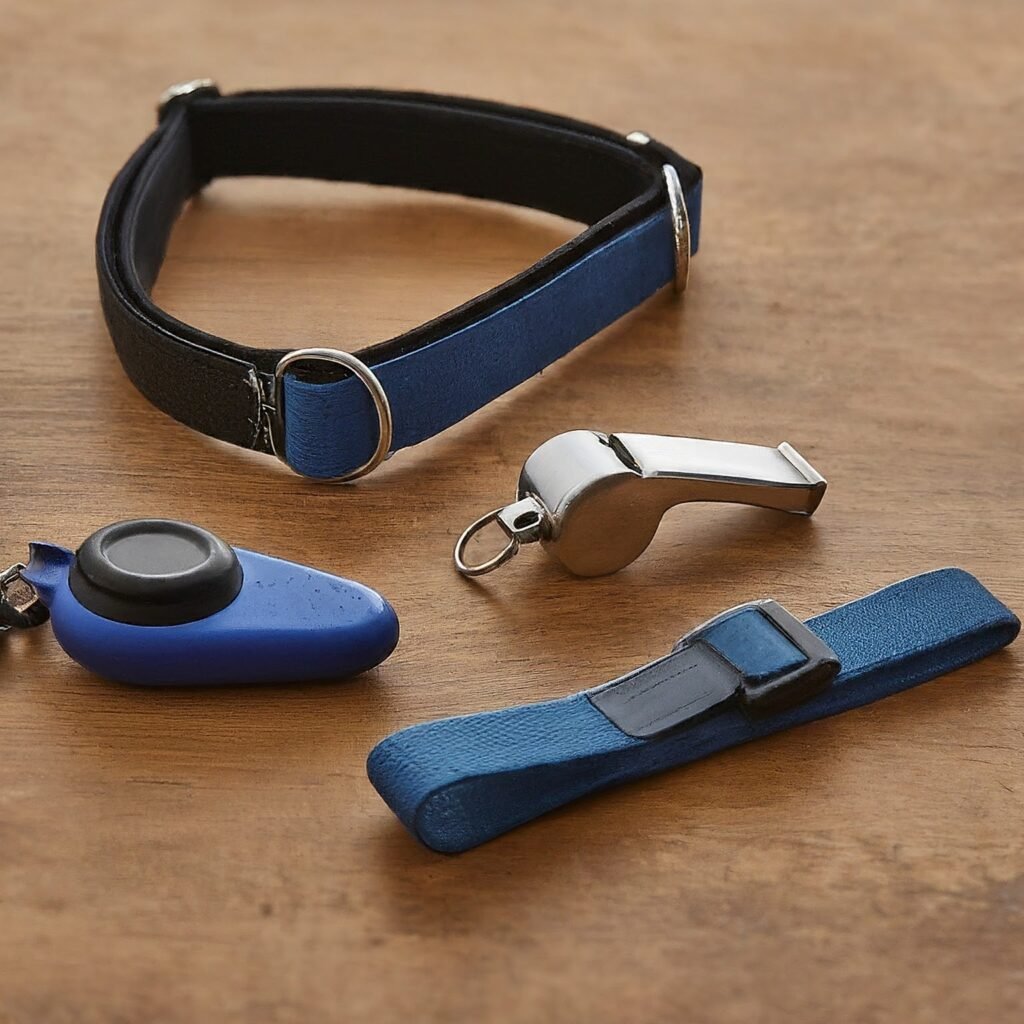
1. Clicker Training:
Clicker training is a popular and effective method of positive reinforcement training.
A clicker is a small handheld device that makes a distinct clicking sound when pressed.
The clicker serves as a marker to signal to your dog that they have performed a desired behavior correctly.
Pair the sound of the clicker with a treat or reward to reinforce the behavior.
Clicker training allows for precise timing and clear communication, making it an excellent tool for teaching new behaviors and shaping complex behaviors.
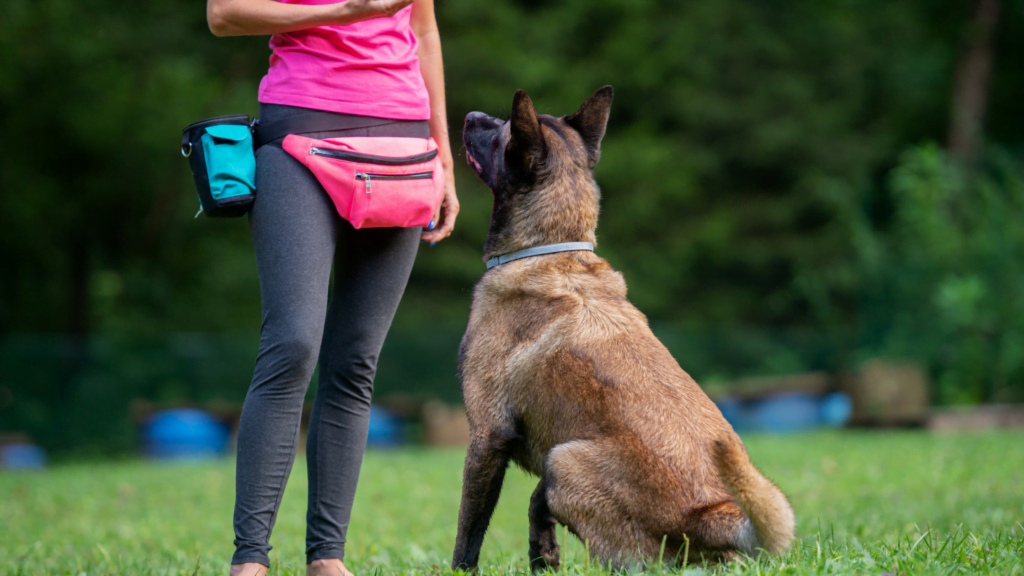
2. Treat Pouches and Reinforcers:
Treat pouches are convenient containers that allow you to carry treats during training sessions.
A treat pouch keeps your hands free and makes it easy to access treats quickly when rewarding your dog.
Choose a treat pouch with multiple compartments to store different types of treats and keep them fresh.
Experiment with a variety of treats to determine what motivates your dog the most, whether it’s small pieces of meat, cheese, or commercial dog treats.
3. Harnesses and Collars:
Harnesses and collars are essential tools for controlling and guiding your dog during training sessions and walks.
Choose a harness or collar that fits your dog comfortably and securely without restricting their movement.
Harnesses are ideal for dogs that tend to pull on the leash, as they distribute pressure more evenly across the body and reduce the risk of injury.
Collars, such as flat collars or martingale collars, are suitable for dogs that walk politely on leash and require minimal control.
4. Training Aids: Whistles, Target Sticks, etc.:
Training aids such as whistles, target sticks, and other tools can be valuable additions to your training toolkit.
Whistles can be used to provide clear and consistent signals to your dog from a distance, making them ideal for off-leash training and recall exercises.
Target sticks are used to guide your dog’s movements and teach them to touch or follow a specific target.
Other training aids, such as agility equipment or interactive toys, can provide additional mental and physical stimulation for your dog during training sessions.
When using training tools and equipment, remember to prioritize your dog’s comfort, safety, and well-being.
Choose tools that align with your training goals and methods, and always introduce new equipment gradually to prevent overwhelming your dog.
With the right tools and techniques, you can enhance your training sessions and strengthen the bond between you and your canine companion.
In the next lesson, we’ll explore breed-specific training considerations and techniques to tailor your training approach to your dog’s individual characteristics and needs.
Lesson 7: Breed-Specific Training Considerations
Dog Obedience Training – The Pawsitively Perfect Training. 30
In this lesson, we’ll explore how different breeds have unique characteristics and instincts that influence their training needs.
By understanding your dog’s breed-specific traits, you can tailor your training approach to maximize success and strengthen your bond with your canine companion.
Herding breeds, such as Border Collies, Australian Shepherds, and German Shepherds, have strong instincts to control the movement of animals.
When training herding breeds, it’s essential to provide opportunities for them to engage in activities that simulate their natural herding behaviors.
Consider enrolling your dog in herding classes or participating in dog sports like agility or flyball, which allow them to use their natural instincts in a controlled environment.
Channel their energy and intelligence into constructive activities, and be mindful of their herding tendencies during training sessions.
2. Working Breeds: Providing Mental Stimulation
Working breeds, such as Labrador Retrievers, Boxers, and Doberman Pinschers, were bred to perform specific tasks, such as retrieving, guarding, or pulling.
These breeds thrive on mental stimulation and enjoy having a job to do.
Incorporate training exercises that challenge their problem-solving skills and engage their minds.
Teach them new tricks, play interactive games, or introduce them to scent work or tracking activities to keep their minds sharp and satisfied.
Consistent mental stimulation will help prevent boredom and destructive behaviors in working breeds.
3. Toy Breeds: Tailoring Training to Size and Energy Levels
Toy breeds, such as Chihuahuas, Pomeranians, and Yorkshire Terriers, have unique training needs due to their small size and energy levels.
When training toy breeds, use gentle, positive reinforcement techniques and avoid overwhelming them with intense or demanding exercises.
Break training sessions into short, manageable segments to accommodate their shorter attention spans.
Choose training activities that are suitable for their size and physical capabilities, such as agility courses with lower obstacles or obedience exercises in a safe, enclosed space.
4. Sporting Breeds: Incorporating Physical Exercise into Training
Sporting breeds, such as Golden Retrievers, Pointers, and Spaniels, were bred for hunting and retrieving game.
These breeds have high energy levels and require plenty of physical exercise to stay happy and healthy.
Incorporate physical exercise into your training sessions by incorporating activities like running, hiking, or playing fetch.
Provide opportunities for your dog to engage in activities that allow them to use their natural hunting instincts, such as scent work or retrieving games.
Regular exercise will help burn off excess energy and keep sporting breeds mentally stimulated and well-balanced.
By understanding and accommodating your dog’s breed-specific traits and instincts, you can tailor your training approach to meet their individual needs and set them up for success.
Remember to be patient, consistent, and compassionate in your training efforts, and always prioritize your dog’s well-being and enjoyment.
In the next lesson, we’ll explore how to generalize obedience commands to different environments and distractions for real-world reliability.
Lesson 8: Training in Different Environments
Dog Obedience Training – The Pawsitively Perfect Training. 31
In this lesson, we’ll explore how to generalize obedience commands to different environments and distractions for real-world reliability.
1. Generalization Techniques:
Generalization is the process of teaching your dog to respond to commands in various environments and situations.
Start by practicing obedience commands in a familiar and controlled environment, such as your home or backyard.
Once your dog understands the commands in this setting, gradually introduce new environments with increasing levels of distraction, such as parks, streets, or busy areas.
Use consistent cues and rewards to reinforce desired behaviors and help your dog generalize commands across different contexts.
2. Training in Public Spaces:
Training your dog in public spaces is essential for ensuring that they can respond reliably to commands in real-world situations.
Start by choosing quiet, low-distraction areas, such as empty parks or quiet streets, to practice obedience commands.
Gradually increase the level of distraction by exposing your dog to more challenging environments, such as crowded parks or busy city streets.
Use positive reinforcement and rewards to keep your dog focused and motivated, and be patient as they adjust to new surroundings.
3. Distraction Training:
Distraction training involves teaching your dog to maintain focus and respond to commands despite the presence of distractions.
Start by introducing mild distractions, such as toys or food, during training sessions at home.
As your dog becomes more proficient, gradually increase the level of distraction by introducing more challenging stimuli, such as other dogs, people, or noises.
Use high-value rewards and positive reinforcement to encourage your dog to stay focused on you and respond to commands reliably, even in distracting environments.
4. Incorporating Real-Life Scenarios:
Incorporating real-life scenarios into your training sessions helps prepare your dog for everyday situations they may encounter.
Practice obedience commands during daily activities, such as walks, visits to the park, or outings to pet-friendly stores.
Use these opportunities to reinforce desired behaviors and address any challenges or issues that arise.
By integrating training into your daily routine, you’ll help your dog develop good manners and obedience skills that translate into real-life situations.
By utilizing generalization techniques, training in public spaces, practicing distraction training, and incorporating real-life scenarios into your training sessions, you’ll help your dog become more reliable and obedient in various environments.
Remember to be patient, consistent, and positive in your training approach, and celebrate your dog’s progress along the way.
With dedication and perseverance, you’ll set your dog up for success in any situation they encounter.
Congratulations on completing the Ultimate Guide to Dog Obedience Training!